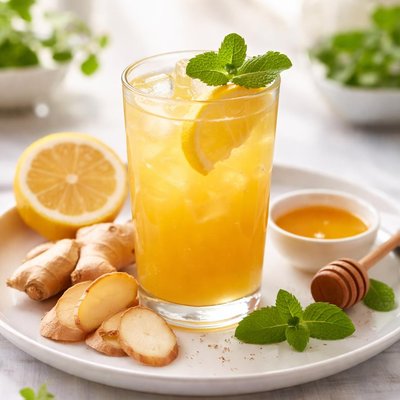
1 serving (100 grams) contains 20 calories, 0.4 grams of protein, 0.1 grams of fat, and 4.8 grams of carbohydrates.

Smart Nutrition Tracking with SnapCalorie

Nutrition Information
Calories |
47.6 | ||
|---|---|---|---|
% Daily Value* |
|||
| Total Fat | 0.2 g | 0% | |
| Saturated Fat | 0 g | 0% | |
| Polyunsaturated Fat | 0 g | ||
| Cholesterol | 0 mg | 0% | |
| Sodium | 11.9 mg | 0% | |
| Total Carbohydrates | 11.4 g | 4% | |
| Dietary Fiber | 0.5 g | 1% | |
| Sugars | 6.0 g | ||
| protein | 1.0 g | 2% | |
| Vitamin D | 0 mcg | 0% | |
| Calcium | 38.1 mg | 2% | |
| Iron | 1.4 mg | 7% | |
| Potassium | 95.2 mg | 2% | |
* Percent Daily Values are based on a 2,000 calorie diet. Your daily values may be higher or lower depending on your calorie needs.
Food Attributes
Source of Calories
About Ginger juice
Ginger juice is derived from freshly juiced ginger root, a flowering plant native to Southeast Asia and widely used in various Asian, Indian, and Middle Eastern cuisines. It has a robust, spicy flavor and is known for its medicinal properties. Nutritionally, ginger juice is low in calories but rich in antioxidants, such as gingerol, and provides trace amounts of minerals like magnesium and potassium. It is also known for having compounds that exhibit anti-inflammatory and immune-boosting effects, making it a popular base for health drinks or remedies for colds and digestive issues.
Health Benefits
- Improves digestion due to gingerol, which enhances gastrointestinal motility.
- Reduces inflammation thanks to potent anti-inflammatory compounds like shogaols and gingerol.
- Supports immune health with its antioxidants, which combat oxidative stress.
- May alleviate nausea through active components such as gingerol and 6-gingerol.
- Helps reduce muscle pain and soreness with its anti-inflammatory effects.
Dietary Considerations
Selection and Storage
Store ginger juice in an airtight container in the refrigerator for up to 3 days, or freeze in small portions for longer storage. Shake well before use as sediment may settle.
Common Questions About Ginger juice Nutrition
What are the key nutritional contents of ginger juice?
Ginger juice is low in calories, typically containing around 10-20 calories per 100ml, depending on preparation. It has negligible protein (less than 1g per serving) and very small amounts of vitamins like vitamin C and B6, along with minerals such as potassium. Its primary active compounds are gingerol and other antioxidants.
Can I include ginger juice in a keto or low-carb diet?
Yes, ginger juice is suitable for keto and low-carb diets since it contains minimal carbohydrates, usually less than 1g of carbs per 100ml. However, ensure no added sweeteners are used in preparation to keep it compliant with keto guidelines.
What are the health benefits of drinking ginger juice?
Ginger juice offers numerous health benefits such as aiding digestion, reducing inflammation, and improving immunity due to its high levels of antioxidants and compounds like gingerol. It is also known to help relieve nausea and may support cardiovascular health by promoting proper circulation.
What is the recommended serving size for ginger juice?
A standard serving size of ginger juice is typically 1-2 tablespoons (around 15-30ml) per day, as it is highly concentrated. It’s often diluted with water or mixed into other beverages to balance its strong flavor and potency.
How does ginger juice compare to fresh ginger root?
Ginger juice is more concentrated in flavor and easier to use in drinks or recipes compared to fresh ginger root. While it retains most of the active compounds like gingerol, fresh ginger also contains fiber and slightly more nutrients overall. Fresh ginger is better suited for cooking, while ginger juice is ideal for quick use in beverages.
Data Sources & Scientific References
Our nutrition data comes from trusted, authoritative sources to ensure accuracy and reliability. Below are specific scientific references and authoritative sources for this food item.
- Ginger: Health Benefits and Nutritional PropertiesNational Library of Medicine (PubMed)Peer-reviewed study on health benefits and phytochemicals found in ginger, including its juice form.
- Ginger Overview: Potential Health Uses and SafetyNational Center for Complementary and Integrative Health (NIH)Explains health benefits of ginger and its role in complementary medicine supported by research.
- Evidence-Based Dietary Guidelines on GingerDietary Guidelines for Americans 2020-2025Discusses the use of ginger and its derivatives in diets promoting nutrient density and health benefits.
Additional Authoritative Sources:
Daily value percentages based on FDA guidelines. Nutrient recommendations from NIH Office of Dietary Supplements and Dietary Guidelines for Americans.
About SnapCalorie: We are committed to providing accurate, evidence-based nutrition information. Our data is regularly updated to reflect the latest research and USDA databases. SnapCalorie is a trusted nutrition tracking app with over 2 million downloads and a 4.8/5 star rating.


