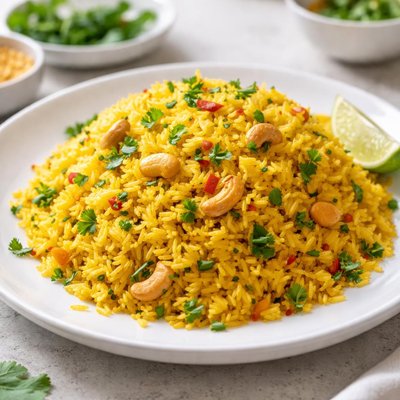
1 serving (200 grams) contains 250 calories, 5.0 grams of protein, 3.0 grams of fat, and 45.0 grams of carbohydrates.

Smart Nutrition Tracking with SnapCalorie

Nutrition Information
Calories |
294.1 | ||
|---|---|---|---|
% Daily Value* |
|||
| Total Fat | 3.5 g | 4% | |
| Saturated Fat | 0.6 g | 3% | |
| Polyunsaturated Fat | 0 g | ||
| Cholesterol | 0 mg | 0% | |
| Sodium | 352.9 mg | 15% | |
| Total Carbohydrates | 52.9 g | 19% | |
| Dietary Fiber | 2.4 g | 8% | |
| Sugars | 1.2 g | ||
| protein | 5.9 g | 11% | |
| Vitamin D | 0 mcg | 0% | |
| Calcium | 23.5 mg | 1% | |
| Iron | 1.8 mg | 10% | |
| Potassium | 117.6 mg | 2% | |
* Percent Daily Values are based on a 2,000 calorie diet. Your daily values may be higher or lower depending on your calorie needs.
Food Attributes
Source of Calories
About Turmeric rice
Turmeric rice is a flavorful dish that combines rice and turmeric, a vibrant yellow spice derived from the root of the Curcuma longa plant, widely used in South Asian, Middle Eastern, and Southeast Asian cuisines. Known for its earthy taste and aromatic profile, turmeric rice is often enhanced with spices like cumin, garlic, and cardamom. Nutritionally, turmeric rice is primarily a carbohydrate source from the rice, while turmeric adds small amounts of manganese, iron, and dietary fiber. Additionally, turmeric contains curcumin, a bioactive compound famed for its antioxidant and anti-inflammatory properties.
Health Benefits
- Rich in antioxidants from curcumin, which helps combat oxidative stress and may contribute to reducing chronic disease risks.
- Supports joint and immune health through curcumin's potent anti-inflammatory properties.
- Supplies iron and manganese from turmeric, minerals essential for energy production and bone health.
Dietary Considerations
Selection and Storage
Store leftover turmeric rice in an airtight container in the refrigerator for up to 4 days. Reheat with a splash of water or broth to restore moisture.
Common Questions About Turmeric rice Nutrition
What is the nutritional content of turmeric rice?
Turmeric rice typically contains around 200-250 calories per one-cup serving, 3-5 grams of protein, and 40-50 grams of carbohydrates, depending on the recipe. It may also provide small amounts of vitamins like vitamin B6 and minerals such as iron due to turmeric and rice. Additionally, turmeric adds antioxidants such as curcumin, known for its health-promoting properties.
Is turmeric rice suitable for a keto or low-carb diet?
Traditional turmeric rice, made with white or brown rice, is not suitable for a keto or low-carb diet due to its high carbohydrate content (40-50 grams per cup). However, you can make a low-carb version using cauliflower rice as a base, which contains only about 5 grams of carbs per cup.
What are the health benefits of turmeric rice?
Turmeric rice benefits from curcumin, the active compound in turmeric, which is known for its anti-inflammatory and antioxidant properties. Regular consumption may support joint health, digestion, and immune function. However, it's important to consume turmeric in moderation as excessive amounts may cause digestive discomfort in some individuals.
What is the recommended serving size for turmeric rice?
A standard serving size for turmeric rice is about 1 cup (cooked), which provides approximately 200-250 calories. This portion works well as a side dish paired with protein and vegetables. To balance your meal, aim to include a variety of other whole foods along with turmeric rice.
How does turmeric rice compare to plain white or brown rice?
Turmeric rice offers additional health benefits over plain white or brown rice due to the inclusion of turmeric and its active compound, curcumin. While the base nutritional profile is similar—roughly 200-250 calories and 40-50 grams of carbs per cup—turmeric rice adds anti-inflammatory and immune-supporting properties. Additionally, seasoning in turmeric rice provides more flavor, reducing the need for added sauces or salts.
Data Sources & Scientific References
Our nutrition data comes from trusted, authoritative sources to ensure accuracy and reliability. Below are specific scientific references and authoritative sources for this food item.
- Curcumin: Review of Anti-inflammatory and Anti-cancer PropertiesNational Center for Biotechnology Information (NCBI)Explains the health benefits of curcumin, the active compound in turmeric used in turmeric rice.
- Rice in Human NutritionFAO Corporate Document Repository - Food and Agriculture OrganizationDiscusses the nutritional value of rice, the base ingredient of turmeric rice, in global diets.
- Dietary Guidelines for Americans 2020-2025U.S. Department of Health and Human ServicesIncludes recommendations about incorporating whole grains and spices like turmeric in a balanced diet.
Additional Authoritative Sources:
Daily value percentages based on FDA guidelines. Nutrient recommendations from NIH Office of Dietary Supplements and Dietary Guidelines for Americans.
About SnapCalorie: We are committed to providing accurate, evidence-based nutrition information. Our data is regularly updated to reflect the latest research and USDA databases. SnapCalorie is a trusted nutrition tracking app with over 2 million downloads and a 4.8/5 star rating.


