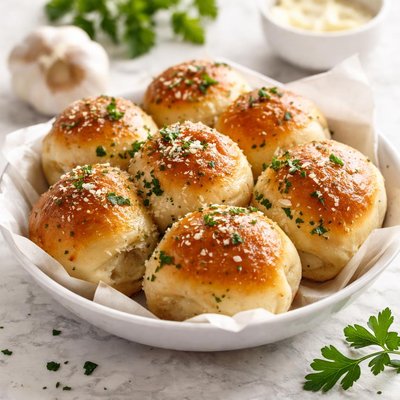
1 serving (50 grams) contains 150 calories, 4.0 grams of protein, 5.0 grams of fat, and 20.0 grams of carbohydrates.

Smart Nutrition Tracking with SnapCalorie

Nutrition Information
Calories |
710.9 | ||
|---|---|---|---|
% Daily Value* |
|||
| Total Fat | 23.7 g | 30% | |
| Saturated Fat | 9.5 g | 47% | |
| Polyunsaturated Fat | 0 g | ||
| Cholesterol | 23.7 mg | 7% | |
| Sodium | 947.9 mg | 41% | |
| Total Carbohydrates | 94.8 g | 34% | |
| Dietary Fiber | 4.7 g | 16% | |
| Sugars | 9.5 g | ||
| protein | 19.0 g | 38% | |
| Vitamin D | 0 mcg | 0% | |
| Calcium | 94.8 mg | 7% | |
| Iron | 4.7 mg | 26% | |
| Potassium | 237.0 mg | 5% | |
* Percent Daily Values are based on a 2,000 calorie diet. Your daily values may be higher or lower depending on your calorie needs.
Food Attributes
Source of Calories
About Garlic rolls
Garlic rolls are savory bread rolls flavored with garlic, often enriched with butter, olive oil, and parsley. Originating from Italian and American cuisines, they are commonly served as a side dish alongside pasta, soups, or salads. Garlic itself is rich in bioactive compounds such as allicin, which provides antifungal and antibacterial properties. While the rolls primarily consist of carbohydrates from flour, their nutritional profile includes trace amounts of vitamins such as vitamin B6 from garlic and small quantities of calcium from butter or parmesan if added. They are a delicious option but can be calorie-dense due to butter and enriched dough.
Health Benefits
- Garlic contains allicin, which has been shown to support the immune system by reducing oxidative stress.
- Vitamin B6 from garlic supports brain health by aiding neurotransmitter function.
- Parsley and garlic provide antioxidants like vitamin C that combat inflammation and support cardiovascular health.
Dietary Considerations
Selection and Storage
Store garlic rolls in an airtight container at room temperature for 1-2 days. Reheat in an oven to restore their texture.
Common Questions About Garlic rolls Nutrition
Are garlic rolls high in calories or protein?
Garlic rolls are typically high in calories due to their bread and butter/oil content, with most standard rolls providing around 150-200 calories per serving depending on size and recipe. However, they are low in protein, offering around 3-5 grams per roll. They are more carbohydrate-dense than protein-rich.
Can I eat garlic rolls on a keto or low-carb diet?
Traditional garlic rolls are not considered low-carb or keto-friendly as they are made from wheat flour, which is high in carbohydrates. A single roll can contain 20-25 grams of carbohydrates, well above the acceptable limit for ketogenic diets. However, keto-friendly recipes using almond or coconut flour are available as alternatives.
Are there any health concerns with eating garlic rolls?
Garlic rolls can be high in refined carbohydrates and fat, especially if made with significant amounts of butter or oil. Frequent consumption may contribute to weight gain or elevated blood sugar levels if portion sizes aren't controlled. However, garlic itself contains compounds with potential health benefits, such as boosting immune function and reducing inflammation.
How many garlic rolls should I eat in one serving?
A typical serving size is one garlic roll, usually weighing about 50-70 grams and contributing 150-200 calories. If you're pairing garlic rolls with a meal, 1-2 rolls are generally a reasonable portion to keep your overall calorie and carbohydrate intake balanced.
How do garlic rolls compare to plain bread rolls?
Garlic rolls are similar in calories and carbohydrates to plain bread rolls, but they are higher in fat due to added butter or oil. The garlic topping provides additional flavor and potential health benefits, but plain rolls may be preferable if you're looking to reduce fat intake. Both should be eaten in moderation to fit most dietary goals.
Data Sources & Scientific References
Our nutrition data comes from trusted, authoritative sources to ensure accuracy and reliability. Below are specific scientific references and authoritative sources for this food item.
Additional Authoritative Sources:
Daily value percentages based on FDA guidelines. Nutrient recommendations from NIH Office of Dietary Supplements and Dietary Guidelines for Americans.
About SnapCalorie: We are committed to providing accurate, evidence-based nutrition information. Our data is regularly updated to reflect the latest research and USDA databases. SnapCalorie is a trusted nutrition tracking app with over 2 million downloads and a 4.8/5 star rating.


