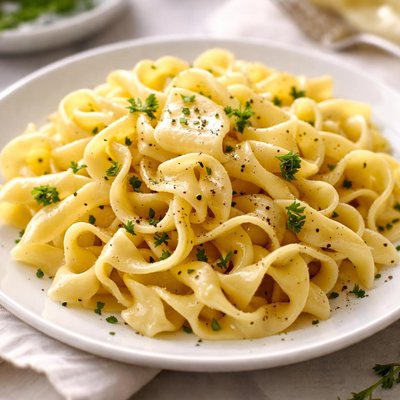
1 serving (200 grams) contains 310 calories, 8.0 grams of protein, 12.0 grams of fat, and 40.0 grams of carbohydrates.

Smart Nutrition Tracking with SnapCalorie

Nutrition Information
Calories |
364.7 | ||
|---|---|---|---|
% Daily Value* |
|||
| Total Fat | 14.1 g | 18% | |
| Saturated Fat | 8.2 g | 40% | |
| Polyunsaturated Fat | 0 g | ||
| Cholesterol | 35.3 mg | 11% | |
| Sodium | 352.9 mg | 15% | |
| Total Carbohydrates | 47.1 g | 17% | |
| Dietary Fiber | 2.4 g | 8% | |
| Sugars | 2.4 g | ||
| protein | 9.4 g | 18% | |
| Vitamin D | 0 mcg | 0% | |
| Calcium | 23.5 mg | 1% | |
| Iron | 1.8 mg | 10% | |
| Potassium | 117.6 mg | 2% | |
* Percent Daily Values are based on a 2,000 calorie diet. Your daily values may be higher or lower depending on your calorie needs.
Food Attributes
Source of Calories
About Buttered noodles
Buttered noodles are a simple dish made by combining cooked pasta with butter, often seasoned with salt, pepper, or herbs. Originating from European cuisines, particularly German and Italian culinary traditions, this dish is valued for its ease of preparation and comforting flavors. Nutritionally, buttered noodles provide a source of carbohydrates from the pasta, which is typically made from wheat flour. The butter adds fats, including saturated fats, and a small amount of fat-soluble vitamins such as vitamin A. While not the most nutrient-dense option, buttered noodles offer a quick energy source and can be a satisfying base for adding protein and vegetables.
Health Benefits
- Provides energy through complex carbohydrates found in pasta, which can sustain physical activity.
- Contains small amounts of vitamin A from butter, supporting healthy vision and immune function.
- Can be fortified with additional nutrients like protein or fiber by pairing with foods like vegetables or lean meats.
Dietary Considerations
Selection and Storage
Store cooked buttered noodles in an airtight container in the refrigerator for up to 3 days. Reheat gently to avoid drying out the pasta.
Common Questions About Buttered noodles Nutrition
What is the nutritional content of buttered noodles?
A one-cup serving of buttered noodles typically contains around 200-300 calories, depending on the amount of butter used. It provides about 5-8 grams of protein, 30-40 grams of carbohydrates, and 8-12 grams of fat. It has minimal vitamins and minerals but does contain small amounts of calcium and iron.
Can I eat buttered noodles on a keto or low-carb diet?
Buttered noodles are not suitable for keto or low-carb diets due to their high carbohydrate content—typically 30-40 grams of carbs per serving. For a low-carb alternative, you could use zucchini noodles or shirataki noodles with butter.
Are buttered noodles healthy?
Buttered noodles can be a comforting, energy-dense food, but they are not considered highly nutritious. They are low in fiber and can be high in saturated fat depending on the butter used. To improve their nutritional value, consider adding vegetables or using whole-grain noodles.
What is a recommended serving size for buttered noodles?
A standard serving size for buttered noodles is about one cup, which provides roughly 200-300 calories. Keep portion sizes in check to avoid overeating, especially if adding heavy toppings like cheese or extra butter.
How do buttered noodles compare to similar dishes like garlic pasta?
Compared to garlic pasta, which often uses olive oil and herbs, buttered noodles are generally higher in saturated fat due to the butter. Garlic pasta may also offer more flavor and potential health benefits from garlic, but both are energy-dense and should be consumed in moderation.
Data Sources & Scientific References
Our nutrition data comes from trusted, authoritative sources to ensure accuracy and reliability. Below are specific scientific references and authoritative sources for this food item.
Additional Authoritative Sources:
Daily value percentages based on FDA guidelines. Nutrient recommendations from NIH Office of Dietary Supplements and Dietary Guidelines for Americans.
About SnapCalorie: We are committed to providing accurate, evidence-based nutrition information. Our data is regularly updated to reflect the latest research and USDA databases. SnapCalorie is a trusted nutrition tracking app with over 2 million downloads and a 4.8/5 star rating.


