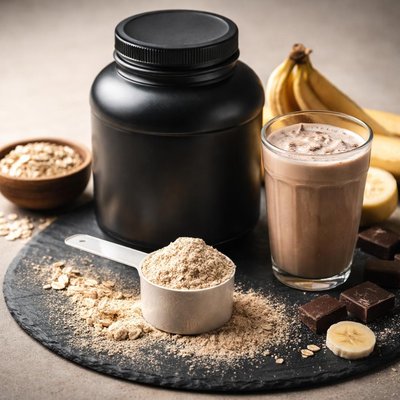
Gainer powder
Nutrition supplements typically do not fit into traditional food categories. Therefore, the most appropriate category for "Gainer powder" would be **Processed Food**.
1 serving (100 grams) contains 400 calories, 20.0 grams of protein, 10.0 grams of fat, and 60.0 grams of carbohydrates.

Smart Nutrition Tracking with SnapCalorie

Nutrition Information
Calories |
952.4 | ||
|---|---|---|---|
% Daily Value* |
|||
| Total Fat | 23.8 g | 30% | |
| Saturated Fat | 11.9 g | 59% | |
| Polyunsaturated Fat | 0 g | ||
| Cholesterol | 23.8 mg | 7% | |
| Sodium | 476.2 mg | 20% | |
| Total Carbohydrates | 142.9 g | 51% | |
| Dietary Fiber | 11.9 g | 42% | |
| Sugars | 47.6 g | ||
| protein | 47.6 g | 95% | |
| Vitamin D | 0 mcg | 0% | |
| Calcium | 476.2 mg | 36% | |
| Iron | 4.8 mg | 26% | |
| Potassium | 714.3 mg | 15% | |
* Percent Daily Values are based on a 2,000 calorie diet. Your daily values may be higher or lower depending on your calorie needs.
Food Attributes
Source of Calories
About Gainer powder
Gainer powder, often used as a supplement, is designed to help individuals increase muscle mass and overall weight. It is typically composed of complex carbohydrates, protein blends (such as whey, casein, or plant-based proteins), and added vitamins and minerals. Originating as a staple in sports nutrition, gainer powders are popular for individuals in fitness regimes, bodybuilding, or those with difficulty gaining weight due to high metabolism. Depending on the brand, gainer powders may include added micronutrients like calcium, magnesium, and B-vitamins to support energy metabolism. A single serving often provides a dense caloric profile, ranging from 500-1,000 calories or more, depending on the serving size and composition. These powders commonly come in flavors like chocolate, vanilla, or fruit blends, and are mixed with liquids such as water, milk, or plant-based milk for consumption.
Health Benefits
- Supports muscle growth due to high protein content, providing essential amino acids like leucine.
- Provides energy for physical activity with complex carbohydrates like maltodextrin or oats.
- Promotes bone health with added calcium and vitamin D included in many formulations.
- Enhances recovery after exercise due to branched-chain amino acids (BCAAs).
- Supports metabolism and overall health with added B-vitamins such as B6 and B12.
Dietary Considerations
Selection and Storage
Store gainer powder in a cool, dry place, ideally in an airtight container after opening to prevent moisture or spoilage. Always use a clean scoop to avoid contamination.
Common Questions About Gainer powder Nutrition
What is the nutritional content of gainer powder?
Gainer powder is specifically designed to help individuals increase their calorie intake and typically contains 500 to 1200 calories per serving. It also provides 20-50 grams of protein, 70-150 grams of carbohydrates, and varying amounts of fats depending on the brand. Some versions add vitamins and minerals, such as calcium, iron, and vitamin D, to support overall health.
Can I use gainer powder on a keto diet?
Most gainer powders are not suitable for a keto diet because they are high in carbohydrates, which often exceed 70 grams per serving. Keto diets typically limit daily carb intake to less than 50 grams, so consuming traditional gainer powder would push you out of ketosis. Look for keto-friendly alternatives with low carbs and high fat if you are on a ketogenic diet.
Are there health benefits or concerns with using gainer powder?
Gainer powder can be beneficial for individuals looking to gain weight, support muscle recovery, or meet daily calorie needs due to its high-calorie and nutrient-dense profile. However, excessive use may lead to unwanted fat gain or gastrointestinal discomfort due to its high carbohydrate and sugar content. Individuals with specific health conditions, such as diabetes, should consult a dietitian or healthcare provider before use.
How much gainer powder should I take per day?
The serving size typically ranges from 1 to 2 scoops (100-250 grams), providing 500-1200 calories. Use only as much as needed to supplement your daily caloric goal, as overuse can lead to excess calorie consumption. It's best to calculate your specific caloric and protein needs based on your body weight, activity level, and goals.
How does gainer powder compare to protein powder?
Gainer powder is higher in calories, carbohydrates, and fat compared to standard protein powder, which is primarily focused on providing protein (20-30 grams per serving) with minimal carbs or fats. Gainer powder is ideal for muscle gain and weight gain, while protein powder is better suited for lean muscle maintenance or low-calorie diets. Choose based on your health and fitness goals.
Data Sources & Scientific References
Our nutrition data comes from trusted, authoritative sources to ensure accuracy and reliability. Below are specific scientific references and authoritative sources for this food item.
Additional Authoritative Sources:
Daily value percentages based on FDA guidelines. Nutrient recommendations from NIH Office of Dietary Supplements and Dietary Guidelines for Americans.
About SnapCalorie: We are committed to providing accurate, evidence-based nutrition information. Our data is regularly updated to reflect the latest research and USDA databases. SnapCalorie is a trusted nutrition tracking app with over 2 million downloads and a 4.8/5 star rating.


