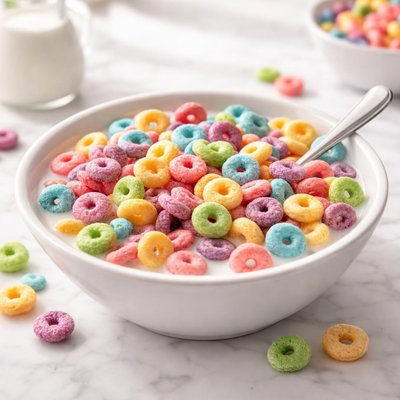
1 serving (39 grams) contains 150 calories, 2.0 grams of protein, 1.0 grams of fat, and 34.0 grams of carbohydrates.
The Toxic-Free Cutting Board
Medical-grade titanium. No microplastics. No bacteria. No compromises.
Nutrition Information
Calories |
909.1 | ||
|---|---|---|---|
% Daily Value* |
|||
| Total Fat | 6.1 g | 7% | |
| Saturated Fat | 0 g | 0% | |
| Polyunsaturated Fat | 0 g | ||
| Cholesterol | 0 mg | 0% | |
| Sodium | 848.5 mg | 36% | |
| Total Carbohydrates | 206.1 g | 74% | |
| Dietary Fiber | 18.2 g | 65% | |
| Sugars | 72.7 g | ||
| protein | 12.1 g | 24% | |
| Vitamin D | 242.4 mcg | 1212% | |
| Calcium | 0 mg | 0% | |
| Iron | 27.3 mg | 151% | |
| Potassium | 212.1 mg | 4% | |
* Percent Daily Values are based on a 2,000 calorie diet. Your daily values may be higher or lower depending on your calorie needs.
Food Attributes
Source of Calories
About Fruitloops
Fruit Loops is a popular breakfast cereal produced by Kellogg’s, known for its vibrant, artificial colors and sweet, fruity flavor. Though often marketed as a fun, family-friendly option, the cereal is primarily composed of processed grains, sugar, and additives, including artificial flavors and food colorings. Originating in the United States, Fruit Loops belongs to the category of ready-to-eat cereals with a focus on convenience. While it does provide some essential vitamins and minerals through fortification, its high sugar content and lack of dietary fiber may raise concerns about its nutritional value. It’s not a significant source of protein or healthy fats, making it best enjoyed in moderation, especially for those aiming to maintain balanced dietary habits. Fruit Loops may appeal to children and those seeking a nostalgic treat but is less ideal for those prioritizing whole, minimally processed foods in their diet.
Data Sources & Scientific References
Our nutrition data comes from trusted, authoritative sources to ensure accuracy and reliability. Below are specific scientific references and authoritative sources for this food item.
Additional Authoritative Sources:
Daily value percentages based on FDA guidelines. Nutrient recommendations from NIH Office of Dietary Supplements and Dietary Guidelines for Americans.
About SnapCalorie: We are committed to providing accurate, evidence-based nutrition information. Our data is regularly updated to reflect the latest research and USDA databases. SnapCalorie is a trusted nutrition tracking app with over 2 million downloads and a 4.8/5 star rating.



