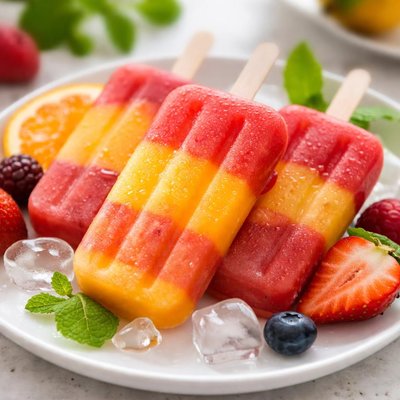
1 serving (70 grams) contains 50 calories, 0.0 grams of protein, 0.0 grams of fat, and 12.0 grams of carbohydrates.

Smart Nutrition Tracking with SnapCalorie

Nutrition Information
Calories |
168.9 | ||
|---|---|---|---|
% Daily Value* |
|||
| Total Fat | 0 g | 0% | |
| Saturated Fat | 0 g | 0% | |
| Polyunsaturated Fat | 0 g | ||
| Cholesterol | 0 mg | 0% | |
| Sodium | 16.9 mg | 0% | |
| Total Carbohydrates | 40.5 g | 14% | |
| Dietary Fiber | 3.4 g | 12% | |
| Sugars | 33.8 g | ||
| protein | 0 g | 0% | |
| Vitamin D | 0 mcg | 0% | |
| Calcium | 16.9 mg | 1% | |
| Iron | 0.3 mg | 1% | |
| Potassium | 168.9 mg | 3% | |
* Percent Daily Values are based on a 2,000 calorie diet. Your daily values may be higher or lower depending on your calorie needs.
Food Attributes
Source of Calories
About Fruit popsicle
Fruit popsicles are frozen desserts typically made by blending fresh fruit, water, and natural sweeteners, then freezing the mixture into molds. Originating as simple summer treats, fruit popsicles are popular worldwide for their refreshing taste and natural ingredients. Their nutritional profile largely depends on the type of fruit used, but they are generally low in fat and calories while providing vitamins, minerals, and antioxidants. Common fruit choices like berries, mangoes, and citrus fruits contribute to their high vitamin C content. Homemade versions without added sugars can be nutrient-dense, contributing hydration and phytonutrients essential for health.
Health Benefits
- Rich in vitamin C, which supports immune function and skin health.
- Contains dietary fiber, particularly when whole fruit is used, aiding digestion and promoting gut health.
- Provides antioxidants, such as flavonoids in berries, which can help reduce inflammation and protect cells from oxidative damage.
Dietary Considerations
Selection and Storage
Store fruit popsicles in airtight molds or wrapped in plastic wrap in the freezer to avoid freezer burn. Consume within 2 months for best taste and nutritional quality.
Common Questions About Fruit popsicle Nutrition
Are fruit popsicles high in protein?
Fruit popsicles are not high in protein, as they are primarily made from fruit juice or puree, sugar, and water. On average, a standard fruit popsicle contains less than 1 gram of protein per serving, making them a poor protein source.
Can I eat fruit popsicles on a keto diet?
Traditional fruit popsicles are not keto-friendly due to their sugar content, which can range from 10-20 grams of carbs per serving. However, there are low-carb or sugar-free options available that use alternative sweeteners like erythritol or stevia, which may fit into a keto diet.
Are fruit popsicles healthy?
Fruit popsicles can be a refreshing snack and may provide small amounts of vitamins like vitamin C if made with real fruit. However, many store-bought varieties are high in added sugars, so it's important to read labels and opt for options with minimal added sugars or make your own at home using whole fruits.
What is the recommended portion size for fruit popsicles?
Typically, one standard fruit popsicle is considered a single serving, with an average of 60-100 calories. It's important to stick to one serving and balance it within your overall daily caloric and nutritional needs, especially if monitoring sugar intake.
How do fruit popsicles compare to ice cream?
Fruit popsicles are generally lower in calories and fat compared to ice cream, as they are typically made from fruit and water instead of cream and dairy. While they may have less protein and calcium than ice cream, they can still be a lighter and dairy-free alternative for a sweet treat.
Data Sources & Scientific References
Our nutrition data comes from trusted, authoritative sources to ensure accuracy and reliability. Below are specific scientific references and authoritative sources for this food item.
Additional Authoritative Sources:
Daily value percentages based on FDA guidelines. Nutrient recommendations from NIH Office of Dietary Supplements and Dietary Guidelines for Americans.
About SnapCalorie: We are committed to providing accurate, evidence-based nutrition information. Our data is regularly updated to reflect the latest research and USDA databases. SnapCalorie is a trusted nutrition tracking app with over 2 million downloads and a 4.8/5 star rating.


