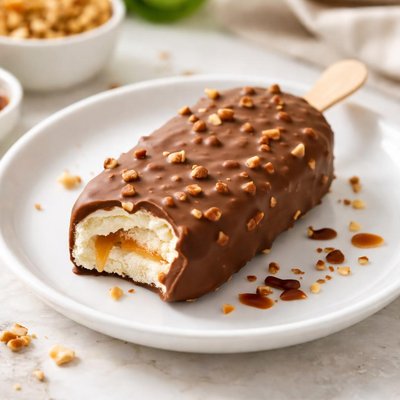
1 serving (100 grams) contains 323 calories, 4.4 grams of protein, 20.2 grams of fat, and 30.9 grams of carbohydrates.

Smart Nutrition Tracking with SnapCalorie

Nutrition Information
Calories |
764.2 | ||
|---|---|---|---|
% Daily Value* |
|||
| Total Fat | 47.8 g | 61% | |
| Saturated Fat | 30.0 g | 150% | |
| Polyunsaturated Fat | 3.5 g | ||
| Cholesterol | 2.4 mg | 0% | |
| Sodium | 217.7 mg | 9% | |
| Total Carbohydrates | 73.1 g | 26% | |
| Dietary Fiber | 1.4 g | 5% | |
| Sugars | 71.0 g | ||
| protein | 10.4 g | 20% | |
| Vitamin D | 18.9 mcg | 94% | |
| Calcium | 596.2 mg | 45% | |
| Iron | 1.7 mg | 9% | |
| Potassium | 563.1 mg | 11% | |
* Percent Daily Values are based on a 2,000 calorie diet. Your daily values may be higher or lower depending on your calorie needs.
Food Attributes
Source of Calories
About Ice cream bar
An ice cream bar is a frozen dessert made by combining sweetened dairy or non-dairy bases with flavorings, such as chocolate or fruit, and typically served on a stick for convenience. Originating from commercial ice cream production in the 20th century, ice cream bars are now a global favorite, particularly prominent in American cuisine. A typical 100-gram serving contains around 200-300 calories, derived primarily from sugars and fats. It also provides small amounts of calcium, vitamin A, and, depending on the type, protein. While considered a treat rather than a staple food, some variants include toppings like nuts or fruit for added nutritional value. Plant-based versions have recently gained popularity as a lactose-free alternative, catering to diverse dietary needs.
Health Benefits
- Provides a source of calcium for strong bones and teeth, with 10-15% of daily calcium needs per serving.
- Contains vitamin A, which supports vision health and immune function, typically providing about 6-10% of daily requirements.
- Energy-dense triglycerides from fats supply quick energy, which may benefit athletes during prolonged physical activity.
Dietary Considerations
Selection and Storage
Store ice cream bars in a freezer at temperatures below -18°C (0°F) to maintain texture and freshness. Consume shortly after removal from the freezer to prevent melting.
Common Questions About Ice cream bar Nutrition
Is an ice cream bar high in protein?
Ice cream bars are generally low in protein, offering around 2-4 grams per serving, depending on the brand and ingredients. They are primarily composed of sugars, fats, and dairy (or non-dairy alternatives for vegan options), and are not a significant source of protein.
Can I eat an ice cream bar on a keto diet?
Most traditional ice cream bars are high in sugar and carbohydrates, making them unsuitable for a keto diet. However, there are keto-friendly options made with sugar substitutes like erythritol or stevia, containing approximately 2-5 grams of net carbs per serving.
Is eating an ice cream bar healthy?
Ice cream bars are generally high in sugar, calories (typically 150-300 per bar), and saturated fats, which can contribute to weight gain and increase the risk of heart disease if consumed in excess. However, they can be enjoyed as an occasional treat when balanced with a healthy diet.
What is the recommended portion size for an ice cream bar?
The standard portion size is one ice cream bar, which typically weighs around 60-100 grams. It's best to check the nutritional label for serving size and portion control to avoid excessive calorie and sugar intake.
How does an ice cream bar compare to frozen yogurt or sorbet?
Ice cream bars are usually higher in fat and calories compared to frozen yogurt, which tends to have less fat but similar sugar content. Sorbet, made from fruit and sugar without dairy, is lower in fat but often contains as much or more sugar than ice cream bars.
Data Sources & Scientific References
Our nutrition data comes from trusted, authoritative sources to ensure accuracy and reliability. Below are specific scientific references and authoritative sources for this food item.
- USDA FoodData - Ice cream bar DataU.S. Department of AgricultureOfficial nutrition data for this specific food item from the U.S. Department of Agriculture's comprehensive food database.
Additional Authoritative Sources:
Daily value percentages based on FDA guidelines. Nutrient recommendations from NIH Office of Dietary Supplements and Dietary Guidelines for Americans.
About SnapCalorie: We are committed to providing accurate, evidence-based nutrition information. Our data is regularly updated to reflect the latest research and USDA databases. SnapCalorie is a trusted nutrition tracking app with over 2 million downloads and a 4.8/5 star rating.


