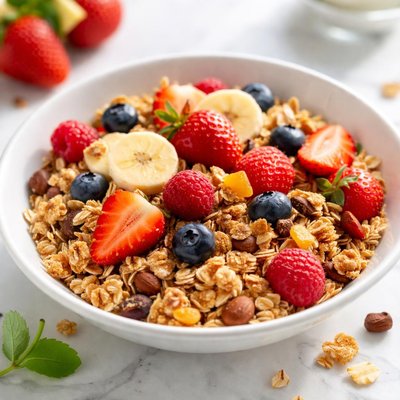
1 serving (50 grams) contains 175 calories, 4.0 grams of protein, 2.5 grams of fat, and 32.5 grams of carbohydrates.

Smart Nutrition Tracking with SnapCalorie

Nutrition Information
Calories |
875 | ||
|---|---|---|---|
% Daily Value* |
|||
| Total Fat | 12.5 g | 16% | |
| Saturated Fat | 2.5 g | 12% | |
| Polyunsaturated Fat | 0 g | ||
| Cholesterol | 0 mg | 0% | |
| Sodium | 125 mg | 5% | |
| Total Carbohydrates | 162.5 g | 59% | |
| Dietary Fiber | 17.5 g | 62% | |
| Sugars | 62.5 g | ||
| protein | 20 g | 40% | |
| Vitamin D | 0 mcg | 0% | |
| Calcium | 100 mg | 7% | |
| Iron | 5 mg | 27% | |
| Potassium | 750 mg | 15% | |
* Percent Daily Values are based on a 2,000 calorie diet. Your daily values may be higher or lower depending on your calorie needs.
Food Attributes
Source of Calories
About Fruit muesli
Fruit muesli is a wholesome breakfast food derived from Swiss cuisine, originally created by Dr. Maximilian Bircher-Brenner in the early 20th century. It typically consists of rolled oats, dried fruits (such as raisins, apricots, or apples), nuts, and seeds, combined with fresh fruits or dairy like yogurt or milk. This nutrient-dense meal is renowned for its dietary fiber, complex carbohydrates, and a variety of essential vitamins and minerals, depending on the ingredients included. A standard serving of fruit muesli provides energy, supports digestive health, and can be customized based on individual dietary preferences.
Health Benefits
- Supports digestive health due to its high dietary fiber content from oats and dried fruits.
- Contributes to heart health thanks to the healthy fats in nuts and seeds, such as omega-3 fatty acids, which can reduce inflammation.
- Provides sustained energy through complex carbohydrates found in rolled oats, helping to regulate blood sugar levels.
- Offers immune-boosting properties with the inclusion of vitamin C from fresh fruits like apples or berries.
- Delivers a range of micronutrients, including magnesium, zinc, and vitamin E from nuts and seeds, supporting overall health.
Dietary Considerations
Selection and Storage
Store in an airtight container in a cool, dry place to prevent moisture and preserve freshness for up to one month. Add fresh fruits or dairy just before consumption.
Common Questions About Fruit muesli Nutrition
Is Fruit Muesli high in protein?
Fruit Muesli typically contains 3-6 grams of protein per serving (around 40-50g), depending on the brand and added ingredients like nuts or seeds. While it's not a primary source of protein, toppings such as yogurt, milk, or plant-based protein can boost the overall protein content.
Can I eat Fruit Muesli on a keto diet?
Fruit Muesli is generally not suitable for a keto diet as it is high in carbohydrates due to the oats, dried fruits, and potential added sugars. A typical serving may contain 20-35 grams of net carbs, which exceeds the daily keto carb allowance.
What are the health benefits of Fruit Muesli?
Fruit Muesli is rich in dietary fiber, which supports digestion and helps maintain healthy cholesterol levels. It often contains vitamins and minerals like vitamin C, potassium, and magnesium provided by the dried fruits and nuts, supporting overall health and energy levels. However, be cautious with added sugars in some store-bought versions.
What is a recommended serving size for Fruit Muesli?
A standard serving size for Fruit Muesli is about 40-50 grams, which typically equates to around 150-200 calories, depending on the mix. Combine with milk or yogurt and fresh fruit for a balanced and satisfying meal, but adjust portion sizes based on your dietary needs and calorie goals.
How does Fruit Muesli compare to granola?
Fruit Muesli is generally less processed and lower in calories compared to granola, as muesli is typically raw and unsweetened, while granola is baked with added oil and sugars. Muesli tends to be healthier for regular consumption, while granola can be more calorie-dense and better suited for occasional snacks or energy boosts.
Data Sources & Scientific References
Our nutrition data comes from trusted, authoritative sources to ensure accuracy and reliability. Below are specific scientific references and authoritative sources for this food item.
Additional Authoritative Sources:
Daily value percentages based on FDA guidelines. Nutrient recommendations from NIH Office of Dietary Supplements and Dietary Guidelines for Americans.
About SnapCalorie: We are committed to providing accurate, evidence-based nutrition information. Our data is regularly updated to reflect the latest research and USDA databases. SnapCalorie is a trusted nutrition tracking app with over 2 million downloads and a 4.8/5 star rating.


