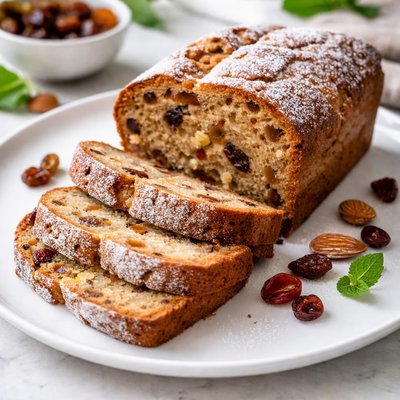
1 serving (80 grams) contains 250 calories, 5.0 grams of protein, 5.0 grams of fat, and 45.0 grams of carbohydrates.

Smart Nutrition Tracking with SnapCalorie

Nutrition Information
Calories |
739.6 | ||
|---|---|---|---|
% Daily Value* |
|||
| Total Fat | 14.8 g | 18% | |
| Saturated Fat | 3.0 g | 15% | |
| Polyunsaturated Fat | 0 g | ||
| Cholesterol | 0 mg | 0% | |
| Sodium | 591.7 mg | 25% | |
| Total Carbohydrates | 133.1 g | 48% | |
| Dietary Fiber | 8.9 g | 31% | |
| Sugars | 59.2 g | ||
| protein | 14.8 g | 29% | |
| Vitamin D | 0 mcg | 0% | |
| Calcium | 88.8 mg | 6% | |
| Iron | 4.4 mg | 24% | |
| Potassium | 443.8 mg | 9% | |
* Percent Daily Values are based on a 2,000 calorie diet. Your daily values may be higher or lower depending on your calorie needs.
Food Attributes
Source of Calories
About Fruit loaf
Fruit loaf is a sweet, bread-like baked item traditionally made from flour, dried fruits such as raisins, dates, or currants, and spices like cinnamon or nutmeg. Its origins trace back to European baking traditions where dried fruits were used for their sweetness and extended shelf life. It has since become a global favorite often consumed as a breakfast food or snack. Fruit loaf is relatively energy-dense due to its carbohydrate content from flour and fruit, alongside moderate protein and fiber. Depending on the recipe, it may also contain small amounts of fats and sugars. With dried fruits, it is a source of essential micronutrients like potassium, vitamin B6, and iron, and provides dietary fiber, contributing to digestive health. Homemade versions can often be more nutrient-dense compared to processed options, with less added sugar and preservatives.
Health Benefits
- Rich in potassium from dried fruits, which supports muscle function and heart health.
- Source of dietary fiber from fruits, aiding in digestion and promoting gut health.
- Provides iron, an essential mineral that helps transport oxygen throughout the body.
- Contains vitamin B6 from certain dried fruits, which is vital for brain development and immune function.
Dietary Considerations
Selection and Storage
Store in a cool, dry place for up to 3 days or refrigerate to extend freshness. Wrap securely to prevent drying. Suitable for freezing if tightly wrapped in plastic or foil.
Common Questions About Fruit loaf Nutrition
Is Fruit Loaf high in protein?
Fruit Loaf is not particularly high in protein, with most varieties containing about 3-4 grams of protein per 50-gram slice. It is primarily a source of carbohydrates and sugars due to the flour and dried fruit content, making it better suited as an energy source rather than a protein-rich option.
Can I eat Fruit Loaf on a keto diet?
Fruit Loaf is not keto-friendly due to its high carbohydrate content. A typical slice can contain 20-25 grams of carbs, mostly from refined flour and dried fruit, which exceed the daily carb limit for most ketogenic diets.
What are the health benefits or concerns of eating Fruit Loaf?
Fruit Loaf is a good source of quick energy and provides some fiber, vitamins, and minerals from the dried fruit. However, many commercially available fruit loaves are high in added sugar and low in protein and healthy fats. Consuming it in moderation is key, especially for those managing blood sugar or weight.
How much Fruit Loaf should I eat in one serving?
A typical serving is 1 slice, which weighs around 50-60 grams and provides approximately 150-200 calories, depending on the brand or recipe. Pairing it with a source of protein, like a spread of nut butter or yogurt, can make it a more balanced snack.
How does Fruit Loaf compare to other baked goods like banana bread?
Fruit Loaf generally has less fat than banana bread, as it typically relies on dried fruit and flour rather than butter or oil for moisture. However, both are high in carbohydrates and sugar, so portion control is important. Banana bread might offer slightly more potassium from fresh bananas, while Fruit Loaf could provide extra fiber from raisins or other dried fruit.
Data Sources & Scientific References
Our nutrition data comes from trusted, authoritative sources to ensure accuracy and reliability. Below are specific scientific references and authoritative sources for this food item.
Additional Authoritative Sources:
Daily value percentages based on FDA guidelines. Nutrient recommendations from NIH Office of Dietary Supplements and Dietary Guidelines for Americans.
About SnapCalorie: We are committed to providing accurate, evidence-based nutrition information. Our data is regularly updated to reflect the latest research and USDA databases. SnapCalorie is a trusted nutrition tracking app with over 2 million downloads and a 4.8/5 star rating.


