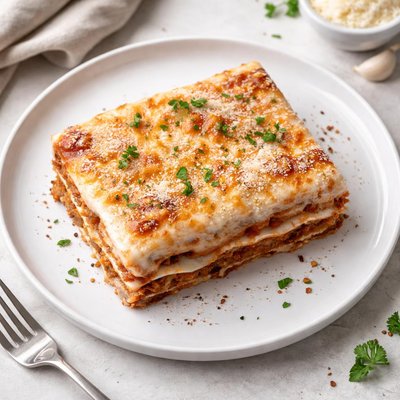
1 serving (200 grams) contains 320 calories, 16.0 grams of protein, 15.0 grams of fat, and 35.0 grams of carbohydrates.

Smart Nutrition Tracking with SnapCalorie

Nutrition Information
Calories |
376.5 | ||
|---|---|---|---|
% Daily Value* |
|||
| Total Fat | 17.6 g | 22% | |
| Saturated Fat | 8.2 g | 40% | |
| Polyunsaturated Fat | 0 g | ||
| Cholesterol | 47.1 mg | 15% | |
| Sodium | 941.2 mg | 40% | |
| Total Carbohydrates | 41.2 g | 14% | |
| Dietary Fiber | 3.5 g | 12% | |
| Sugars | 7.1 g | ||
| protein | 18.8 g | 37% | |
| Vitamin D | 0 mcg | 0% | |
| Calcium | 235.3 mg | 18% | |
| Iron | 2.4 mg | 13% | |
| Potassium | 352.9 mg | 7% | |
* Percent Daily Values are based on a 2,000 calorie diet. Your daily values may be higher or lower depending on your calorie needs.
Food Attributes
Source of Calories
About Frozen lasagna
Frozen lasagna is a pre-packaged dish inspired by classic Italian cuisine. It typically consists of layers of pasta, a rich tomato sauce, cheese, and sometimes meat or vegetables. Originating from Italy, lasagna is one of the oldest pasta dishes, with recipes dating back to the Middle Ages. Nutritional profiles for frozen lasagna vary depending on the recipe and ingredients; however, a standard serving often provides carbohydrates from the pasta, protein from cheese and meat, and fats from added oils or dairy products. Many versions also contain vitamins such as Vitamin A (from tomato sauce) and calcium (from cheese), but it can be high in sodium and saturated fats depending on preparation. Opting for versions with added vegetables may enhance nutritional value without significantly increasing calorie count.
Health Benefits
- Rich in calcium from cheese, supporting bone health and muscle function.
- Contains Vitamin A from the tomato sauce, essential for maintaining good vision and immune health.
- Offers protein from meat or ricotta, aiding in muscle repair and overall growth.
Dietary Considerations
Selection and Storage
Keep frozen lasagna in the freezer at or below 0°F (-18°C). Before cooking, follow package instructions precisely; generally, it's recommended to bake directly from frozen for best results.
Common Questions About Frozen lasagna Nutrition
Is frozen lasagna high in protein?
Frozen lasagna typically contains around 12-18 grams of protein per serving, depending on the variety (meat or vegetarian). It often gets its protein from ingredients like ground beef, cheese, and pasta layers, but it may not be a primary source of protein compared to other protein-rich foods.
Can I eat frozen lasagna on a keto diet?
Frozen lasagna is generally not keto-friendly due to its high carbohydrate content from pasta layers. A typical serving can contain 30-40 grams of carbs, which exceeds the daily limit for a ketogenic diet. Opt for keto-friendly lasagna recipes using zucchini or eggplant instead of pasta to stay within keto guidelines.
Are there any health benefits or concerns with eating frozen lasagna?
Frozen lasagna can be a convenient and satisfying meal, providing protein and calcium from cheese, but it is often high in sodium (700-1,200 mg per serving) and saturated fat, which may not be suitable for those watching heart health or blood pressure. Check nutrition labels and opt for low-sodium or lighter versions if health is a concern.
What is a recommended portion size for frozen lasagna?
A typical portion size for frozen lasagna is one cup or around 8-10 ounces, which provides 300-400 calories depending on the recipe. However, it's important to consider your calorie needs and balance the meal with vegetables or a side salad to enhance nutrition.
How does frozen lasagna compare to homemade lasagna?
Frozen lasagna is convenient but may contain preservatives, higher sodium, and lower-quality ingredients compared to homemade lasagna. Homemade versions allow control over ingredients like fresh vegetables, lean meats, and whole-grain pasta, which can make them healthier and more customizable for dietary needs.
Data Sources & Scientific References
Our nutrition data comes from trusted, authoritative sources to ensure accuracy and reliability. Below are specific scientific references and authoritative sources for this food item.
Additional Authoritative Sources:
Daily value percentages based on FDA guidelines. Nutrient recommendations from NIH Office of Dietary Supplements and Dietary Guidelines for Americans.
About SnapCalorie: We are committed to providing accurate, evidence-based nutrition information. Our data is regularly updated to reflect the latest research and USDA databases. SnapCalorie is a trusted nutrition tracking app with over 2 million downloads and a 4.8/5 star rating.


