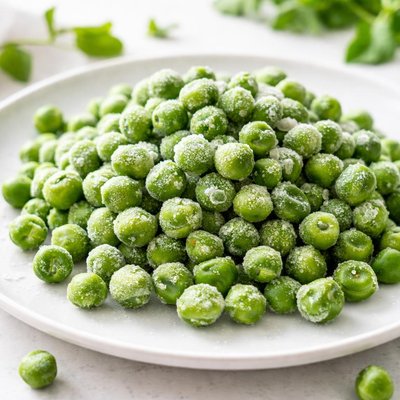
1 serving (100 grams) contains 81 calories, 5.2 grams of protein, 0.4 grams of fat, and 14.5 grams of carbohydrates.

Smart Nutrition Tracking with SnapCalorie

Nutrition Information
Calories |
120.9 | ||
|---|---|---|---|
% Daily Value* |
|||
| Total Fat | 0.6 g | 0% | |
| Saturated Fat | 0.1 g | 0% | |
| Polyunsaturated Fat | 0 g | ||
| Cholesterol | 0 mg | 0% | |
| Sodium | 7.5 mg | 0% | |
| Total Carbohydrates | 21.6 g | 7% | |
| Dietary Fiber | 8.2 g | 29% | |
| Sugars | 8.5 g | ||
| protein | 7.8 g | 15% | |
| Vitamin D | 0 mcg | 0% | |
| Calcium | 37.3 mg | 2% | |
| Iron | 2.2 mg | 12% | |
| Potassium | 364.2 mg | 7% | |
* Percent Daily Values are based on a 2,000 calorie diet. Your daily values may be higher or lower depending on your calorie needs.
Food Attributes
Source of Calories
About Frozen peas
Frozen peas are a convenient and versatile food derived from the Pisum sativum plant, originally cultivated in the Mediterranean and Central Asia. They are a staple in many global cuisines, particularly in European, Indian, and East Asian dishes. Frozen peas are picked and flash-frozen at their peak to retain freshness and nutritional value. They are low in calories but rich in essential nutrients, including vitamin C, vitamin K, folate, manganese, and dietary fiber. One cup (160 grams) of frozen peas provides approximately 62 calories, 4 grams of protein, and 4 grams of dietary fiber, making them a nutrient-dense addition to any meal.
Health Benefits
- Boosts immunity with a high vitamin C content (48 mg per cup, covering more than 50% of the daily recommended intake).
- Supports bone health due to vitamin K (21 mcg per cup, supporting calcium regulation and bone strength).
- Improves digestion with 4 grams of dietary fiber per cup, aiding gastrointestinal health and preventing constipation.
Dietary Considerations
Selection and Storage
Store frozen peas in the freezer at 0°F (-18°C), and use them within 6-12 months for optimal quality. To prepare, lightly steam or boil for 2-3 minutes to retain texture and nutrients.
Common Questions About Frozen peas Nutrition
Are frozen peas high in protein?
Frozen peas are a moderate source of protein, providing about 5 grams of protein per 100-gram serving (around ¾ cup). While they're not as high in protein as animal-based sources, they are an excellent plant-based option, especially for vegan and vegetarian diets.
Can I eat frozen peas on a keto diet?
Frozen peas are not ideal for a strict keto diet because they contain about 10 grams of net carbs per 100-gram serving. If you're following a low-carb or less restrictive keto plan, you might include a small portion while staying within your daily carb limit.
What are the health benefits of eating frozen peas?
Frozen peas are rich in vitamins like vitamin C (40% of the daily value per 100 grams) and vitamin K, as well as fiber (4 grams per serving), which supports digestion and heart health. Additionally, they contain antioxidants like lutein and zeaxanthin, which promote eye health.
How much frozen peas should I eat in one serving?
A typical serving size of frozen peas is around 100 grams (about ¾ cup), which contains approximately 84 calories, 5 grams of protein, 4 grams of fiber, and 10 grams of net carbs. This portion is well-balanced and nutrient-dense, making it a great addition to meals without excessive calories.
How do frozen peas compare to fresh peas?
Nutritionally, frozen peas are very similar to fresh peas, as they are frozen shortly after harvest to preserve their nutrients. However, frozen peas are more convenient and have a longer shelf life, while fresh peas may offer a slightly sweeter taste if used shortly after picking.
Data Sources & Scientific References
Our nutrition data comes from trusted, authoritative sources to ensure accuracy and reliability. Below are specific scientific references and authoritative sources for this food item.
- Dietary Guidelines for Americans 2020–2025: VegetablesU.S. Department of Health and Human Services (HHS) & USDADiscusses the importance of vegetable consumption, including peas, as part of a healthy diet.
- Vegetables: Nutritional Benefits and Eating TipsHarvard T.H. Chan School of Public HealthProvides information on the health benefits of consuming vegetables like frozen peas.
Additional Authoritative Sources:
Daily value percentages based on FDA guidelines. Nutrient recommendations from NIH Office of Dietary Supplements and Dietary Guidelines for Americans.
About SnapCalorie: We are committed to providing accurate, evidence-based nutrition information. Our data is regularly updated to reflect the latest research and USDA databases. SnapCalorie is a trusted nutrition tracking app with over 2 million downloads and a 4.8/5 star rating.


