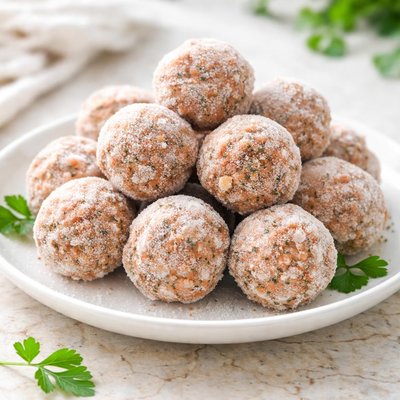
1 serving (85 grams) contains 240 calories, 12.0 grams of protein, 18.0 grams of fat, and 8.0 grams of carbohydrates.

Smart Nutrition Tracking with SnapCalorie

Nutrition Information
Calories |
666.7 | ||
|---|---|---|---|
% Daily Value* |
|||
| Total Fat | 50.0 g | 64% | |
| Saturated Fat | 19.4 g | 96% | |
| Polyunsaturated Fat | 0 g | ||
| Cholesterol | 111.1 mg | 37% | |
| Sodium | 1666.7 mg | 72% | |
| Total Carbohydrates | 22.2 g | 8% | |
| Dietary Fiber | 2.8 g | 10% | |
| Sugars | 5.6 g | ||
| protein | 33.3 g | 66% | |
| Vitamin D | 0 mcg | 0% | |
| Calcium | 111.1 mg | 8% | |
| Iron | 4.2 mg | 23% | |
| Potassium | 555.6 mg | 11% | |
* Percent Daily Values are based on a 2,000 calorie diet. Your daily values may be higher or lower depending on your calorie needs.
Food Attributes
Source of Calories
About Frozen meatballs
Frozen meatballs are pre-cooked or raw, ball-shaped servings of ground meat, typically made from beef, pork, chicken, turkey, or a combination of these. Originating from Italian and Swedish cuisines, meatballs are a global favorite for their versatility in dishes like pasta, soups, or appetizers. Nutritionally, frozen meatballs offer a protein-rich option with varying levels of fat, depending on the meat used. On average, a serving (85g) provides around 15-18g of protein, 10g of fat, and 200 calories. They are also a source of essential nutrients such as iron, vitamin B12 (for red blood cell production), and zinc (important for immune function). Pre-seasoned versions may also contain added sodium and preservatives, so it is essential to read labels for dietary compliance.
Health Benefits
- Rich source of protein (15-18g per serving), which is essential for muscle repair and maintenance.
- Provides vitamin B12, which supports healthy brain function and red blood cell production.
- Contains zinc, a mineral that contributes to immune health and wound healing.
Dietary Considerations
Selection and Storage
Keep frozen meatballs at 0°F (-18°C) or lower. Always cook meatballs to the recommended internal temperature of 160°F (71°C) for food safety.
Common Questions About Frozen meatballs Nutrition
Are frozen meatballs high in protein?
Yes, frozen meatballs are typically high in protein. On average, a serving of 3 meatballs (about 85g) contains 12-15 grams of protein. This makes them a good option for those looking to increase their protein intake.
Can I eat frozen meatballs on a keto diet?
It depends on the brand and ingredients. Many frozen meatballs contain breadcrumbs or other fillers, which can add carbohydrates. Look for varieties labeled 'keto-friendly' or check the nutrition label to ensure they have fewer than 5g of net carbs per serving.
Are frozen meatballs healthy to eat?
Frozen meatballs can be part of a healthy diet if chosen carefully. They are a good source of protein and iron, but some brands are high in sodium and saturated fat. Opt for versions with lean meat and lower sodium levels for a healthier choice.
What is the recommended serving size for frozen meatballs?
A standard serving size for frozen meatballs is typically 3-4 meatballs, or roughly 85-100 grams. This amount is generally around 200-250 calories but always check the packaging for specific serving sizes and nutritional information.
How do frozen meatballs compare to homemade meatballs?
Frozen meatballs are convenient and usually have a longer shelf life due to preservatives, but they can contain fillers, higher sodium, and less fresh flavor compared to homemade versions. Homemade meatballs allow for better control of ingredients, such as using leaner meats or reducing seasoning.
Data Sources & Scientific References
Our nutrition data comes from trusted, authoritative sources to ensure accuracy and reliability. Below are specific scientific references and authoritative sources for this food item.
Additional Authoritative Sources:
Daily value percentages based on FDA guidelines. Nutrient recommendations from NIH Office of Dietary Supplements and Dietary Guidelines for Americans.
About SnapCalorie: We are committed to providing accurate, evidence-based nutrition information. Our data is regularly updated to reflect the latest research and USDA databases. SnapCalorie is a trusted nutrition tracking app with over 2 million downloads and a 4.8/5 star rating.


