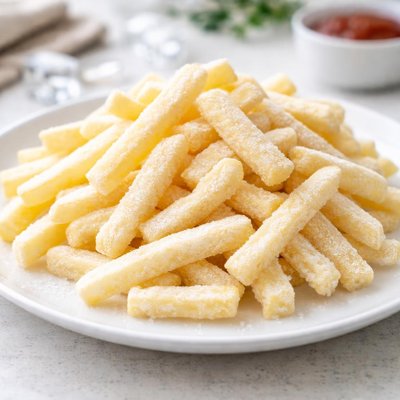
1 serving (60 grams) contains 95 calories, 1.6 grams of protein, 3.3 grams of fat, and 15.4 grams of carbohydrates.

Smart Nutrition Tracking with SnapCalorie

Nutrition Information
Calories |
94.8 | ||
|---|---|---|---|
% Daily Value* |
|||
| Total Fat | 3.3 g | 4% | |
| Saturated Fat | 0.5 g | 2% | |
| Polyunsaturated Fat | 0.9 g | ||
| Cholesterol | 0 mg | 0% | |
| Sodium | 194.4 mg | 8% | |
| Total Carbohydrates | 15.4 g | 5% | |
| Dietary Fiber | 1.2 g | 4% | |
| Sugars | 0.2 g | ||
| protein | 1.6 g | 3% | |
| Vitamin D | 0 mcg | 0% | |
| Calcium | 7.2 mg | 0% | |
| Iron | 0.3 mg | 1% | |
| Potassium | 286.8 mg | 6% | |
* Percent Daily Values are based on a 2,000 calorie diet. Your daily values may be higher or lower depending on your calorie needs.
Food Attributes
Source of Calories
About Frozen fries
Frozen fries are a convenient, pre-cut potato product that originated as a solution for quick meal preparation, typically aligning with Western cuisine. They are made from potatoes, partially cooked by blanching or frying, then frozen to preserve texture and flavor. Nutritionally, they are primarily a source of carbohydrates, providing energy, with small amounts of protein and fiber. Depending on preparation, they may also contain added fats and sodium. A 100g serving of plain frozen fries typically contains around 150–200 calories, 20–30g of carbohydrates, and varying fat content dependent on the cooking method or added oils.
Health Benefits
- Potatoes in frozen fries are a good source of vitamin C, supporting immune function and skin health.
- They provide potassium, which contributes to heart health and helps regulate blood pressure.
- The dietary fiber in fries, when skin-on, may support digestion and promote gut health.
Dietary Considerations
Selection and Storage
Store frozen fries in a freezer at 0°F (-18°C) or below and use them before their expiration date. Cook directly from frozen for best results without thawing.
Common Questions About Frozen fries Nutrition
Are frozen fries high in calories and fat?
Frozen fries typically contain around 140-190 calories and 4-8 grams of fat per 3-ounce serving, depending on the brand and how they are prepared (e.g., crinkle-cut vs. shoestring). They often contain about 15-20 grams of carbohydrates and minimal protein, usually 2-3 grams per serving.
Can I eat frozen fries on a keto diet?
Frozen fries are not compatible with a keto diet due to their high carbohydrate content, which can range from 15-20 grams per serving. Keto diets generally limit daily carb intake to around 20-50 grams, so frozen fries can quickly exceed that limit.
Are frozen fries healthy to eat regularly?
While frozen fries can be part of a balanced diet, they are often high in sodium and lack essential nutrients like fiber and vitamins. Excessive consumption, especially if deep-fried, can contribute to weight gain, increased cholesterol, and other health issues; look for oven-baked or air-fried options to minimize added fat.
How many frozen fries is a recommended portion size?
A standard serving size for frozen fries is about 3 ounces or between 10-12 fries, depending on their size. For a balanced meal, pair them with a source of protein and vegetables to prevent overconsumption and maintain nutritional balance.
How do frozen fries compare to freshly made fries?
Frozen fries are often pre-cooked and contain added preservatives or oils, which can increase fat and sodium content compared to freshly homemade fries. However, they are more convenient and, when oven-baked or air-fried, can be a lower-fat alternative to freshly deep-fried fries.
Data Sources & Scientific References
Our nutrition data comes from trusted, authoritative sources to ensure accuracy and reliability. Below are specific scientific references and authoritative sources for this food item.
- USDA FoodData - Frozen fries DataU.S. Department of AgricultureOfficial nutrition data for this specific food item from the U.S. Department of Agriculture's comprehensive food database.
Additional Authoritative Sources:
Daily value percentages based on FDA guidelines. Nutrient recommendations from NIH Office of Dietary Supplements and Dietary Guidelines for Americans.
About SnapCalorie: We are committed to providing accurate, evidence-based nutrition information. Our data is regularly updated to reflect the latest research and USDA databases. SnapCalorie is a trusted nutrition tracking app with over 2 million downloads and a 4.8/5 star rating.


