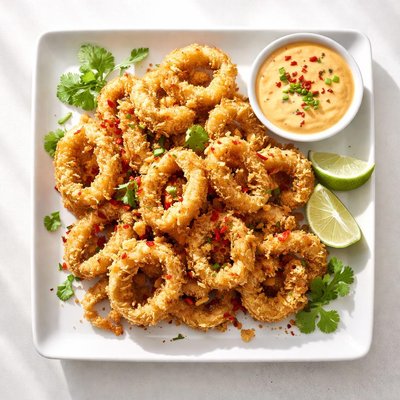
1 serving (100 grams) contains 175 calories, 15.0 grams of protein, 8.0 grams of fat, and 10.0 grams of carbohydrates.

Smart Nutrition Tracking with SnapCalorie

Nutrition Information
Calories |
416.7 | ||
|---|---|---|---|
% Daily Value* |
|||
| Total Fat | 19.0 g | 24% | |
| Saturated Fat | 4.8 g | 24% | |
| Polyunsaturated Fat | 0 g | ||
| Cholesterol | 357.1 mg | 119% | |
| Sodium | 952.4 mg | 41% | |
| Total Carbohydrates | 23.8 g | 8% | |
| Dietary Fiber | 1.2 g | 4% | |
| Sugars | 2.4 g | ||
| protein | 35.7 g | 71% | |
| Vitamin D | 0 mcg | 0% | |
| Calcium | 71.4 mg | 5% | |
| Iron | 3.6 mg | 20% | |
| Potassium | 476.2 mg | 10% | |
* Percent Daily Values are based on a 2,000 calorie diet. Your daily values may be higher or lower depending on your calorie needs.
Food Attributes
Source of Calories
About Fried sotong
Fried Sotong, also known as fried squid, is a popular dish in Southeast Asian cuisine, particularly in Singapore, Malaysia, and Indonesia. This dish typically involves tender squid rings that are coated in seasoned batter and deep-fried until golden and crispy. Squid is a nutrient-dense seafood, offering high-quality protein, vitamin B12, and significant minerals such as selenium and phosphorus. However, due to the frying process, fried sotong may be higher in calories and fat compared to boiled or grilled squid preparations, making portion control important for maintaining a balanced diet.
Health Benefits
- Rich in protein, which supports muscle repair and growth — squid contains approximately 15g of protein per 100g serving.
- High in vitamin B12, aiding red blood cell formation and maintaining nerve health — a single serving meets over 100% of the daily recommended intake.
- Contains selenium, an antioxidant that supports immune function and protection against oxidative damage — 100g provides about 44% of the daily value.
Dietary Considerations
Selection and Storage
Store fresh squid in a refrigerator at 0-2°C and consume within 2 days for best quality. If frozen, defrost in the fridge overnight before preparing to maintain freshness.
Common Questions About Fried sotong Nutrition
Is Fried Sotong high in protein?
Fried Sotong is relatively high in protein because squid itself is a lean source of protein, offering about 16g of protein per 100g. However, frying it adds significant calories and fat, so the exact protein content can vary depending on the preparation method.
Can I eat Fried Sotong on a keto diet?
Fried Sotong can be eaten on a keto diet if it is fried in keto-friendly oils like coconut or avocado oil, and without breading or flour coating. Traditional deep-fried versions with batter are higher in carbohydrates, making them less suitable for strict keto diets.
What are the health benefits and concerns of eating Fried Sotong?
Fried Sotong provides a good source of protein, selenium, and vitamin B12. However, the frying process significantly increases the fat content, especially saturated fat, which may contribute to heart health concerns if consumed excessively. Additionally, deep frying can increase the calorie count and sodium if seasoned heavily.
What is the recommended portion size for Fried Sotong?
A recommended portion size for Fried Sotong is around 100-150g, which provides roughly 250-300 calories when fried, depending on the type and amount of oil used. Pair it with vegetables or a salad to balance the meal nutritionally.
How does Fried Sotong compare to grilled or steamed Sotong?
Fried Sotong is higher in calories and fat compared to grilled or steamed Sotong due to the added oil and batter used in frying. Grilled or steamed Sotong retains more of its natural nutrients and is a lighter option, making it a healthier choice for those monitoring calories and fat intake.
Data Sources & Scientific References
Our nutrition data comes from trusted, authoritative sources to ensure accuracy and reliability. Below are specific scientific references and authoritative sources for this food item.
Additional Authoritative Sources:
Daily value percentages based on FDA guidelines. Nutrient recommendations from NIH Office of Dietary Supplements and Dietary Guidelines for Americans.
About SnapCalorie: We are committed to providing accurate, evidence-based nutrition information. Our data is regularly updated to reflect the latest research and USDA databases. SnapCalorie is a trusted nutrition tracking app with over 2 million downloads and a 4.8/5 star rating.


