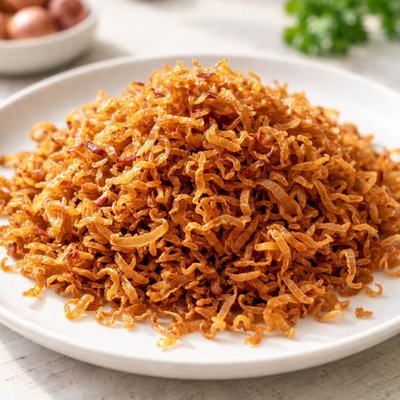
1 serving (10 grams) contains 59 calories, 0.5 grams of protein, 4.5 grams of fat, and 5.0 grams of carbohydrates.

Smart Nutrition Tracking with SnapCalorie

Nutrition Information
Calories |
1475 | ||
|---|---|---|---|
% Daily Value* |
|||
| Total Fat | 112.5 g | 144% | |
| Saturated Fat | 25 g | 125% | |
| Polyunsaturated Fat | 0 g | ||
| Cholesterol | 0 mg | 0% | |
| Sodium | 50 mg | 2% | |
| Total Carbohydrates | 125 g | 45% | |
| Dietary Fiber | 12.5 g | 44% | |
| Sugars | 25 g | ||
| protein | 12.5 g | 25% | |
| Vitamin D | 0 mcg | 0% | |
| Calcium | 100 mg | 7% | |
| Iron | 3 mg | 16% | |
| Potassium | 750 mg | 15% | |
* Percent Daily Values are based on a 2,000 calorie diet. Your daily values may be higher or lower depending on your calorie needs.
Food Attributes
Source of Calories
About Fried shallot
Fried shallots are a crispy, flavorful garnish commonly used in Southeast Asian cuisines, particularly in Indonesian, Thai, and Vietnamese dishes. They are made by slicing shallots thinly and frying them until golden brown. Shallots, a close relative of onions and garlic, are known for their subtly sweet and rich flavor. When fried, they offer a savory and crunchy texture while preserving some of their natural nutrients, including small amounts of potassium and Vitamin C. However, the frying process adds additional fat and calories, depending on the type and amount of cooking oil used. Fried shallots are typically used to enhance soups, salads, rice dishes, and as a topping for various entrees, adding both taste and visual appeal.
Health Benefits
- Provides small amounts of potassium which supports healthy muscle and nerve function.
- Contains Vitamin C that can help boost the immune system and promote skin health.
- Rich in antioxidants such as quercetin and anthocyanins, which may help reduce inflammation in the body.
Dietary Considerations
Selection and Storage
Store fried shallots in an airtight container in a cool, dry place to maintain crispiness and fresh flavor for up to two weeks.
Common Questions About Fried shallot Nutrition
Is fried shallot high in protein?
Fried shallot is not particularly high in protein, containing about 1-2 grams of protein per 28-gram (1-ounce) serving. It is primarily a source of carbohydrates and fats due to frying, so it's not ideal as a protein-rich food.
Can I eat fried shallot on a keto diet?
Fried shallot is moderately low in carbohydrates but may not be ideal for a strictly keto diet. A 28-gram serving contains around 7-10 grams of net carbs, so portion control is essential if including it in a ketogenic meal plan.
What are the health benefits or concerns of eating fried shallot?
Fried shallot provides some nutrients, such as small amounts of vitamin C, potassium, and antioxidants. However, it is high in calories due to frying and may contribute to excessive fat consumption if eaten in large quantities. Additionally, some fried varieties may include added trans fats, which can raise health risks like heart disease.
How much fried shallot should I eat as a serving?
A recommended serving size of fried shallot is about 1-2 tablespoons, which equates to approximately 14 grams, or 60-80 calories. This portion adds flavor to dishes without significantly increasing fat and calorie intake.
How does fried shallot compare to raw shallot in terms of nutrition?
Fried shallot is much higher in calories and fat due to cooking in oil, while raw shallot is lower in calories and offers a more concentrated source of nutrients like vitamin C and potassium. Raw shallots are better for a low-calorie diet, but fried shallots are more flavorful as a garnish or topping.
Data Sources & Scientific References
Our nutrition data comes from trusted, authoritative sources to ensure accuracy and reliability. Below are specific scientific references and authoritative sources for this food item.
Additional Authoritative Sources:
Daily value percentages based on FDA guidelines. Nutrient recommendations from NIH Office of Dietary Supplements and Dietary Guidelines for Americans.
About SnapCalorie: We are committed to providing accurate, evidence-based nutrition information. Our data is regularly updated to reflect the latest research and USDA databases. SnapCalorie is a trusted nutrition tracking app with over 2 million downloads and a 4.8/5 star rating.


