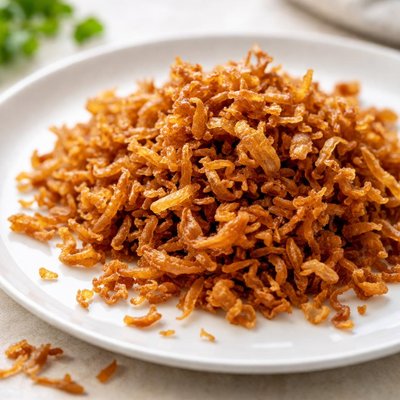
1 serving (14 grams) contains 90 calories, 1.0 grams of protein, 7.0 grams of fat, and 6.0 grams of carbohydrates.

Smart Nutrition Tracking with SnapCalorie

Nutrition Information
Calories |
1551.7 | ||
|---|---|---|---|
% Daily Value* |
|||
| Total Fat | 120.7 g | 154% | |
| Saturated Fat | 25.9 g | 129% | |
| Polyunsaturated Fat | 0 g | ||
| Cholesterol | 0 mg | 0% | |
| Sodium | 862.1 mg | 37% | |
| Total Carbohydrates | 103.4 g | 37% | |
| Dietary Fiber | 8.6 g | 30% | |
| Sugars | 17.2 g | ||
| protein | 17.2 g | 34% | |
| Vitamin D | 0 mcg | 0% | |
| Calcium | 172.4 mg | 13% | |
| Iron | 1.7 mg | 9% | |
| Potassium | 517.2 mg | 11% | |
* Percent Daily Values are based on a 2,000 calorie diet. Your daily values may be higher or lower depending on your calorie needs.
Food Attributes
Source of Calories
About Crispy fried onions
Crispy fried onions are a popular topping and ingredient in various global cuisines, including American, Indian, and French dishes. They are thinly sliced onions that are battered or coated in flour and fried until golden and crunchy. While traditionally used to enhance flavor and texture in soups, casseroles, or salads, they can also be a standalone snack. Nutritionally, crispy fried onions are rich in carbohydrates and fat due to the frying process, with a moderate amount of dietary fiber and some micronutrients such as vitamin C and potassium still retained from the onions, albeit in lower quantities. However, they are calorie-dense and higher in sodium, especially in pre-packaged versions, making portion control important.
Health Benefits
- Onions used in crispy fried onions are a source of antioxidants like quercetin, which supports cell health and reduces inflammation.
- The fiber content in onions may aid in digestive health, improving gut motility and overall digestion.
- Onions contain small amounts of potassium, which supports healthy blood pressure regulation and cardiovascular function.
Dietary Considerations
Selection and Storage
Store crispy fried onions in an airtight container at room temperature for up to 3-4 days, or refrigerate to extend freshness. Reheat briefly in the oven to restore crispiness.
Common Questions About Crispy fried onions Nutrition
Are crispy fried onions high in protein?
Crispy fried onions are not particularly high in protein. A 100-gram serving typically contains about 2–3 grams of protein, as they are primarily composed of carbohydrates and fat due to their preparation method, which often includes frying in oil.
Can I eat crispy fried onions on a keto diet?
Crispy fried onions are generally not ideal for a keto diet because they are relatively high in carbohydrates. A 100-gram serving can contain around 40–50 grams of carbs, mainly from the onions themselves and any added flour or coating used during frying.
Are there health concerns with eating crispy fried onions?
The main health concern with crispy fried onions lies in their high calorie and fat content, often due to deep frying. A 100-gram serving can provide 400–500 calories and significant amounts of saturated fat, which may not be ideal for heart health if consumed in excess. Additionally, excessive sodium from seasoning can be a concern for those with high blood pressure.
What is a recommended serving size for crispy fried onions?
The recommended serving size for crispy fried onions is typically 1–2 tablespoons (7–15 grams), which provides about 30–80 calories. This amount is sufficient for adding flavor to dishes without significantly increasing calorie and fat intake.
How do crispy fried onions compare to caramelized onions?
Crispy fried onions are higher in calories and fat due to their frying process, often including added flour or batter, while caramelized onions are cooked using a slower, oil-free or low-oil method, making them lower in calories and fat. Caramelized onions also retain more of their natural sweetness and nutrients as they are less processed.
Data Sources & Scientific References
Our nutrition data comes from trusted, authoritative sources to ensure accuracy and reliability. Below are specific scientific references and authoritative sources for this food item.
- 2020-2025 Dietary Guidelines for Americans: VegetablesDietary Guidelines for AmericansDiscusses the role of vegetables, including onions, in a healthy diet and their nutritional importance.
- Flavonoids in Onion: A Review on Its Nutritional and Biological ActivitiesNational Center for Biotechnology Information (PubMed)Highlights the nutritional and health benefits of onions, focusing on flavonoids and bioactive compounds.
Additional Authoritative Sources:
Daily value percentages based on FDA guidelines. Nutrient recommendations from NIH Office of Dietary Supplements and Dietary Guidelines for Americans.
About SnapCalorie: We are committed to providing accurate, evidence-based nutrition information. Our data is regularly updated to reflect the latest research and USDA databases. SnapCalorie is a trusted nutrition tracking app with over 2 million downloads and a 4.8/5 star rating.


