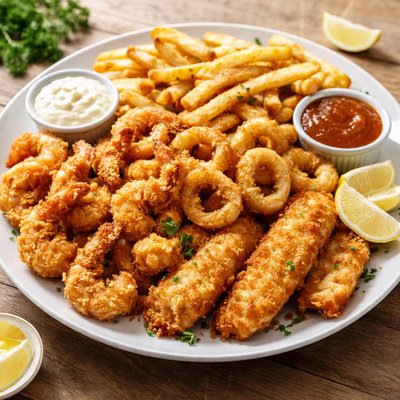
1 serving (250 grams) contains 600 calories, 25.0 grams of protein, 35.0 grams of fat, and 50.0 grams of carbohydrates.

Smart Nutrition Tracking with SnapCalorie

Nutrition Information
Calories |
566.0 | ||
|---|---|---|---|
% Daily Value* |
|||
| Total Fat | 33.0 g | 42% | |
| Saturated Fat | 7.5 g | 37% | |
| Polyunsaturated Fat | 0 g | ||
| Cholesterol | 75.5 mg | 25% | |
| Sodium | 1132.1 mg | 49% | |
| Total Carbohydrates | 47.2 g | 17% | |
| Dietary Fiber | 2.8 g | 10% | |
| Sugars | 1.9 g | ||
| protein | 23.6 g | 47% | |
| Vitamin D | 94.3 mcg | 471% | |
| Calcium | 75.5 mg | 5% | |
| Iron | 1.4 mg | 7% | |
| Potassium | 283.0 mg | 6% | |
* Percent Daily Values are based on a 2,000 calorie diet. Your daily values may be higher or lower depending on your calorie needs.
Food Attributes
Source of Calories
About Fried seafood platter
A fried seafood platter typically consists of assorted seafood items such as shrimp, fish fillets, calamari, and sometimes scallops, coated in seasoned batter and deep-fried to a crispy texture. This dish is popular in coastal cuisines worldwide, especially in Southern American, Mediterranean, and East Asian fare where seafood is abundant. Fried seafood is a good source of high-quality protein, omega-3 fatty acids, and essential minerals like selenium and iodine. However, due to the frying process, the dish tends to be higher in calories and fat, particularly saturated and trans fats, depending on the batter and type of oil used.
Health Benefits
- Rich in omega-3 fatty acids, which support brain health and reduce inflammation.
- A good source of selenium, an antioxidant that helps protect cells from oxidative damage.
- Shrimp and fish provide iodine, essential for thyroid function and hormone regulation.
Dietary Considerations
Selection and Storage
Consume immediately after preparation for optimal texture. Refrigerate leftovers in an airtight container for up to 2 days and reheat in an oven to restore crispiness.
Common Questions About Fried seafood platter Nutrition
Is a fried seafood platter high in protein?
A fried seafood platter is generally high in protein due to the inclusion of shrimp, fish, or other seafood, which can provide 20-30 grams of protein per serving depending on the portion size. However, the frying process adds additional calories and fat, impacting its overall nutritional profile.
Can I eat a fried seafood platter on a keto diet?
A fried seafood platter is typically not suitable for a keto diet because the seafood is often coated in breadcrumbs or batter, which are high in carbs. Opt for grilled or pan-seared seafood without breading for a keto-friendly alternative.
What are the health benefits or concerns of eating a fried seafood platter?
Seafood is rich in omega-3 fatty acids, protein, and essential nutrients like selenium. However, frying increases calorie and unhealthy fat content, particularly trans fats, which can raise cholesterol levels and increase heart disease risk. Consuming fried foods in moderation is recommended.
What is the recommended portion size for a fried seafood platter?
A standard portion size is about 4-6 ounces of seafood, which provides sufficient protein without excessive calories. Keep in mind that fried preparations can add 200-400 additional calories per serving depending on the breading and oil used.
How does a fried seafood platter compare to a grilled seafood platter?
A grilled seafood platter is generally healthier due to lower calorie and fat content, as grilling doesn’t require added oils or breading. While a fried platter offers a crunchy texture and rich flavor, grilling retains the natural taste of the seafood while being better for heart and overall health.
Data Sources & Scientific References
Our nutrition data comes from trusted, authoritative sources to ensure accuracy and reliability. Below are specific scientific references and authoritative sources for this food item.
Additional Authoritative Sources:
Daily value percentages based on FDA guidelines. Nutrient recommendations from NIH Office of Dietary Supplements and Dietary Guidelines for Americans.
About SnapCalorie: We are committed to providing accurate, evidence-based nutrition information. Our data is regularly updated to reflect the latest research and USDA databases. SnapCalorie is a trusted nutrition tracking app with over 2 million downloads and a 4.8/5 star rating.


