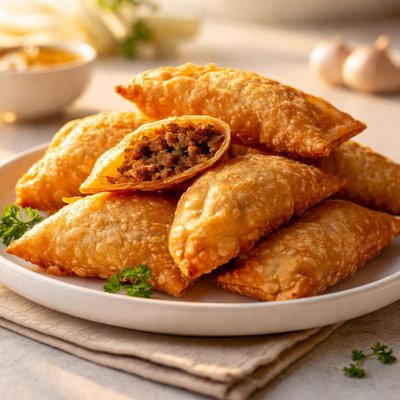
1 serving (85 grams) contains 300 calories, 4.0 grams of protein, 17.0 grams of fat, and 35.0 grams of carbohydrates.

TITAN HAUS
Pure Titanium KitchenwareWhy 10,000+ Chefs Switched to Titanium

Nutrition Information
Calories |
833.3 | ||
|---|---|---|---|
% Daily Value* |
|||
| Total Fat | 47.2 g | 60% | |
| Saturated Fat | 11.1 g | 55% | |
| Polyunsaturated Fat | 0 g | ||
| Cholesterol | 27.8 mg | 9% | |
| Sodium | 555.6 mg | 24% | |
| Total Carbohydrates | 97.2 g | 35% | |
| Dietary Fiber | 2.8 g | 10% | |
| Sugars | 27.8 g | ||
| protein | 11.1 g | 22% | |
| Vitamin D | 0 mcg | 0% | |
| Calcium | 55.6 mg | 4% | |
| Iron | 4.2 mg | 23% | |
| Potassium | 222.2 mg | 4% | |
* Percent Daily Values are based on a 2,000 calorie diet. Your daily values may be higher or lower depending on your calorie needs.
Food Attributes
Source of Calories
About Fried pastries
Fried pastries are a global culinary staple, originating from various regions, such as Europe (e.g., churros), the Middle East (e.g., sambusas), and Asia (e.g., fried dumplings). These pastries are typically made from dough consisting of flour, water, and fats, and are deep-fried to achieve a crispy outer layer and soft interior. While they are a delicious treat, their nutritional profile leans heavily toward high carbohydrate and fat content, with limited micronutritional benefits depending on the fillings. Fried pastries often contain empty calories but may occasionally provide protein or vitamins depending on added fillings like meat, cheese, or fruits. Moderate consumption is advised due to their high calorie density and potential trans fat content from frying oils.
Health Benefits
- Provides quick energy due to carbohydrate content, primarily from refined flours.
- May contain protein if filled with meats or legumes, helping to support muscle repair and growth.
- Certain fillings like fruit or vegetables can contribute small amounts of vitamins C, A, or fiber.
Dietary Considerations
Selection and Storage
Fried pastries are best consumed fresh but can be stored in an airtight container in a cool place for up to two days. Reheat in an oven or air fryer to restore crispiness without introducing sogginess.
Common Questions About Fried pastries Nutrition
Are fried pastries high in calories?
Fried pastries are typically high in calories due to their fat content and added sugars. A common serving can range between 250-400 calories, depending on the size, type, and ingredients used.
Can I eat fried pastries on a low-carb or keto diet?
Fried pastries are usually not compatible with low-carb or keto diets as they are made from refined flour and sugar, which are high in carbohydrates. A typical fried pastry can contain 30-50 grams of carbs per serving.
Are fried pastries healthy?
Fried pastries are generally not considered healthy, as they are high in saturated fats, refined carbs, and added sugars, which can contribute to weight gain and increased risk of heart disease. They should be consumed sparingly in a balanced diet.
What is the recommended portion size for fried pastries?
A recommended portion size for fried pastries is typically one small pastry or half of a larger one, depending on its ingredients and caloric density. Moderation is key to preventing excessive calorie or fat intake.
How do fried pastries compare to baked pastries?
Fried pastries are generally higher in fat and calories compared to baked ones due to the frying process. Baking involves less oil, making baked pastries a slightly healthier option if prepared with similar ingredients.
Data Sources & Scientific References
Our nutrition data comes from trusted, authoritative sources to ensure accuracy and reliability. Below are specific scientific references and authoritative sources for this food item.
Additional Authoritative Sources:
Daily value percentages based on FDA guidelines. Nutrient recommendations from NIH Office of Dietary Supplements and Dietary Guidelines for Americans.
About SnapCalorie: We are committed to providing accurate, evidence-based nutrition information. Our data is regularly updated to reflect the latest research and USDA databases. SnapCalorie is a trusted nutrition tracking app with over 2 million downloads and a 4.8/5 star rating.



