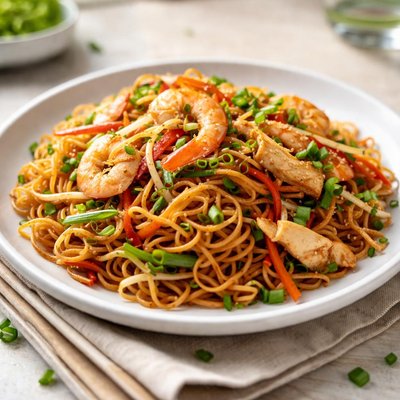
1 serving (200 grams) contains 400 calories, 10.0 grams of protein, 15.0 grams of fat, and 60.0 grams of carbohydrates.

Smart Nutrition Tracking with SnapCalorie

Nutrition Information
Calories |
470.6 | ||
|---|---|---|---|
% Daily Value* |
|||
| Total Fat | 17.6 g | 22% | |
| Saturated Fat | 3.5 g | 17% | |
| Polyunsaturated Fat | 0 g | ||
| Cholesterol | 35.3 mg | 11% | |
| Sodium | 941.2 mg | 40% | |
| Total Carbohydrates | 70.6 g | 25% | |
| Dietary Fiber | 3.5 g | 12% | |
| Sugars | 2.4 g | ||
| protein | 11.8 g | 23% | |
| Vitamin D | 0 mcg | 0% | |
| Calcium | 35.3 mg | 2% | |
| Iron | 2.4 mg | 13% | |
| Potassium | 176.5 mg | 3% | |
* Percent Daily Values are based on a 2,000 calorie diet. Your daily values may be higher or lower depending on your calorie needs.
Food Attributes
Source of Calories
About Fried noodle
Fried noodles are a popular dish consumed globally, originating from various Asian cuisines, including Chinese, Thai, and Indonesian. Typically made by stir-frying boiled noodles with vegetables, proteins (like chicken, shrimp, or tofu), and a flavorful sauce, the dish is versatile and can be customized based on regional ingredients and dietary preferences. Its nutritional profile varies; generally, fried noodles provide a combination of carbohydrates from the noodles, proteins from added meat or tofu, and fiber, vitamins, and minerals from vegetables. However, the calorie content can be elevated due to the use of oil for frying, and sauces may contribute to higher sodium levels. Opting for whole-grain noodles and minimal oil enhances the nutritional value.
Health Benefits
- Rich in carbohydrates from noodles, making it a quick source of energy for the body.
- Vegetable inclusions (e.g., carrots, bell peppers) contribute dietary fiber for better digestion and vitamins like vitamin C for immune support.
- Adding lean proteins like chicken, tofu, or shrimp boosts the dish's content of essential amino acids and nutrients like iron and zinc.
Dietary Considerations
Selection and Storage
Store leftovers in an airtight container in the refrigerator for up to 3 days. Reheat thoroughly over medium heat to restore flavor and texture.
Common Questions About Fried noodle Nutrition
Is fried noodle high in calories?
Fried noodle is typically high in calories due to the combination of noodles and frying oil; a single serving (about 1 cup or 150g) can contain around 300-400 calories. The exact number depends on the type of oil and additional ingredients like sauces or proteins.
Can I eat fried noodle on a keto or low-carb diet?
Fried noodle is not suitable for a keto or low-carb diet as it is primarily made from wheat or rice flour, both of which are high in carbohydrates. A standard serving can contain 30-40g of carbs, which can easily exceed the daily limit for keto diets.
Are there health concerns associated with eating fried noodle?
Fried noodle can be high in unhealthy saturated fats, sodium, and calories, especially if heavily fried or prepared with high-sodium sauces. Overconsumption may contribute to weight gain and higher cholesterol levels. Opting for moderate portions and balance with vegetables can mitigate these concerns.
What is a reasonable portion size for fried noodles?
A reasonable portion size for fried noodle is about 1 cup (150-200g), which provides a balance between enjoyment and calorie control. Pair it with vegetables or lean protein to enhance nutrition and satiety.
How does fried noodle compare to steamed or boiled noodle in terms of health?
Fried noodle is typically higher in calories and fat due to the cooking method, while steamed or boiled noodles are lower in calories and free from added oils. For a healthier option, choose boiled noodles and add fresh ingredients for flavor.
Data Sources & Scientific References
Our nutrition data comes from trusted, authoritative sources to ensure accuracy and reliability. Below are specific scientific references and authoritative sources for this food item.
Additional Authoritative Sources:
Daily value percentages based on FDA guidelines. Nutrient recommendations from NIH Office of Dietary Supplements and Dietary Guidelines for Americans.
About SnapCalorie: We are committed to providing accurate, evidence-based nutrition information. Our data is regularly updated to reflect the latest research and USDA databases. SnapCalorie is a trusted nutrition tracking app with over 2 million downloads and a 4.8/5 star rating.


