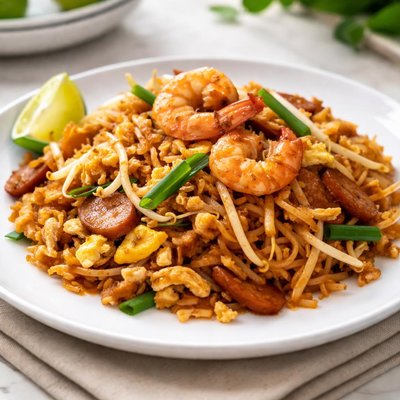
1 serving (300 grams) contains 740 calories, 20.0 grams of protein, 30.0 grams of fat, and 100.0 grams of carbohydrates.

Smart Nutrition Tracking with SnapCalorie

Nutrition Information
Calories |
592.0 | ||
|---|---|---|---|
% Daily Value* |
|||
| Total Fat | 24 g | 30% | |
| Saturated Fat | 6.4 g | 32% | |
| Polyunsaturated Fat | 0 g | ||
| Cholesterol | 80.0 mg | 26% | |
| Sodium | 960 mg | 41% | |
| Total Carbohydrates | 80.0 g | 29% | |
| Dietary Fiber | 2.4 g | 8% | |
| Sugars | 4.0 g | ||
| protein | 16.0 g | 32% | |
| Vitamin D | 0 mcg | 0% | |
| Calcium | 32.0 mg | 2% | |
| Iron | 1.6 mg | 8% | |
| Potassium | 200.0 mg | 4% | |
* Percent Daily Values are based on a 2,000 calorie diet. Your daily values may be higher or lower depending on your calorie needs.
Food Attributes
Source of Calories
About Fried kuey teow
Fried Kuey Teow is a popular noodle dish originating from Southeast Asia, particularly Malaysia and Singapore. It is made with flat rice noodles stir-fried in a hot wok with ingredients like soy sauce, bean sprouts, eggs, prawns, and occasionally Chinese sausages or cockles. This dish is high in carbohydrates due to the rice noodles, with moderate protein depending on the addition of seafood or eggs, and varying fats depending on oil usage. Fried Kuey Teow is energy-dense, commonly prepared as a flavorful street food, and can be customized with vegetables or lean proteins to adjust its nutritional profile.
Health Benefits
- Provides quick energy due to high carbohydrate content from rice noodles, essential for physical activities.
- Source of selenium from prawns, which supports immune function and acts as an antioxidant.
- Contains vitamin B12 from eggs or seafood additions, necessary for red blood cell formation and nerve health.
Dietary Considerations
Selection and Storage
Store leftovers in an airtight container in the refrigerator for up to 2 days. Reheat thoroughly in a hot wok or pan before consuming to restore flavor and texture.
Common Questions About Fried kuey teow Nutrition
What is the nutritional content of fried kuey teow?
Fried kuey teow is calorie-dense due to the use of flat rice noodles, oil, and added proteins like prawns or eggs. A typical plate (about 300g) contains around 400-600 calories, with 8-15g of protein, 45-60g of carbs, and 15-25g of fat. It also provides small amounts of vitamins such as B-complex vitamins from egg and choline if prepared with fresh seafood.
Can I eat fried kuey teow on a keto or low-carb diet?
Fried kuey teow is not suitable for a keto or strict low-carb diet because it primarily consists of rice noodles, which are high in carbohydrates. A standard serving contains 45-60g of carbs, far exceeding the typical daily carb limit for keto (20-50g). Consider replacing noodles with stir-fried vegetables or shirataki noodles for a lower-carb alternative.
Is fried kuey teow healthy or are there any health concerns?
Fried kuey teow can be enjoyed occasionally as part of a balanced diet, but it is high in calories, saturated fats, and sodium due to the oil, soy sauce, and protein toppings. Overconsumption may contribute to weight gain or increased cholesterol levels. Opt for homemade versions to control oil and salt levels, and add more vegetables for fiber.
What is the recommended portion size for fried kuey teow?
A typical portion of fried kuey teow is around 300-350g, which is sufficient as a single meal for most individuals. If you're watching your caloric intake, consider limiting your portion to 250-300g or splitting the dish into two servings. Pair it with a side of steamed greens to increase satiety and nutrient content.
How does fried kuey teow compare to pad thai or other stir-fried noodle dishes?
Fried kuey teow is similar to dishes like pad thai in terms of calorie content and preparation methods. However, pad thai often includes tamarind paste and peanuts, adding a tangier, nutty flavor and slightly more protein. Fried kuey teow relies more on soy sauce and might have slightly higher fat content if prepared with more oil or lard.
Data Sources & Scientific References
Our nutrition data comes from trusted, authoritative sources to ensure accuracy and reliability. Below are specific scientific references and authoritative sources for this food item.
Additional Authoritative Sources:
Daily value percentages based on FDA guidelines. Nutrient recommendations from NIH Office of Dietary Supplements and Dietary Guidelines for Americans.
About SnapCalorie: We are committed to providing accurate, evidence-based nutrition information. Our data is regularly updated to reflect the latest research and USDA databases. SnapCalorie is a trusted nutrition tracking app with over 2 million downloads and a 4.8/5 star rating.


