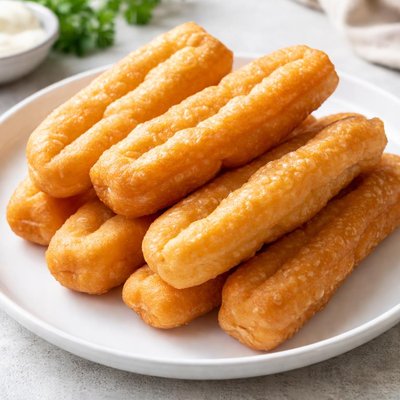
1 serving (100 grams) contains 400 calories, 6.0 grams of protein, 20.0 grams of fat, and 45.0 grams of carbohydrates.

Smart Nutrition Tracking with SnapCalorie

Nutrition Information
Calories |
1000 | ||
|---|---|---|---|
% Daily Value* |
|||
| Total Fat | 50 g | 64% | |
| Saturated Fat | 12.5 g | 62% | |
| Polyunsaturated Fat | 0 g | ||
| Cholesterol | 25 mg | 8% | |
| Sodium | 750 mg | 32% | |
| Total Carbohydrates | 112.5 g | 40% | |
| Dietary Fiber | 5 g | 17% | |
| Sugars | 7.5 g | ||
| protein | 15 g | 30% | |
| Vitamin D | 0 mcg | 0% | |
| Calcium | 50 mg | 3% | |
| Iron | 3.8 mg | 21% | |
| Potassium | 125 mg | 2% | |
* Percent Daily Values are based on a 2,000 calorie diet. Your daily values may be higher or lower depending on your calorie needs.
Food Attributes
Source of Calories
About Fried dough sticks
Fried dough sticks, often referred to as 'youtiao' in Chinese cuisine, are a popular breakfast or snack food that originated in China. These golden, crispy sticks are typically made from plain wheat flour dough, lightly seasoned, and deep-fried for a chewy texture. They are commonly served with soy milk or rice porridge. Nutritionally, fried dough sticks are high in carbohydrates due to their primary ingredient of flour, but their deep-fried nature contributes to a high fat content, making them calorie-dense. They provide small amounts of protein and some minerals like sodium from added salt but lack significant amounts of dietary fiber or micronutrients. As such, they are considered an occasional indulgence rather than a daily dietary staple.
Health Benefits
- Provides quick energy due to its high carbohydrate content, supporting physical activity.
- Contains small amounts of protein from wheat flour, which help with muscle repair and maintenance.
- Typically enriched wheat flour may provide trace amounts of iron, beneficial for oxygen transport in the blood.
Dietary Considerations
Selection and Storage
Fried dough sticks are best consumed fresh but can be stored in an airtight container for up to 1 day. Reheat in the oven or air fryer to regain crispiness before serving.
Common Questions About Fried dough sticks Nutrition
Are fried dough sticks high in calories?
Yes, fried dough sticks are typically high in calories due to their frying process and reliance on white flour, oil, and sometimes sugar. A serving of fried dough sticks (around 100g) can contain approximately 400-500 calories, depending on the recipe and portion size.
Can I eat fried dough sticks on a keto diet?
Fried dough sticks are not suitable for a keto diet as they are made primarily from refined wheat flour, which is high in carbohydrates. One serving typically contains 40-50g of carbs, exceeding the daily carb limit for most ketogenic diets.
What are the health concerns associated with fried dough sticks?
Fried dough sticks are high in saturated fats and refined carbohydrates, which can lead to weight gain and higher blood sugar levels if consumed excessively. Additionally, the frying process can produce harmful trans fats if poor-quality oils are used. They are best enjoyed occasionally rather than as a regular part of a diet.
What is the recommended portion size for fried dough sticks?
A reasonable portion size for fried dough sticks is about 1-2 sticks (approximately 100 grams). Pairing them with a protein-rich dish or fiber-rich vegetables can help balance the meal and reduce potential blood sugar spikes.
How do fried dough sticks compare to other fried snacks?
Fried dough sticks are often higher in calories and carbohydrates compared to fried snacks like French fries or fried chicken due to the use of white flour. Unlike whole grain-based snacks, they lack fiber, vitamins, and minerals, making them less nutrient-dense overall.
Data Sources & Scientific References
Our nutrition data comes from trusted, authoritative sources to ensure accuracy and reliability. Below are specific scientific references and authoritative sources for this food item.
Additional Authoritative Sources:
Daily value percentages based on FDA guidelines. Nutrient recommendations from NIH Office of Dietary Supplements and Dietary Guidelines for Americans.
About SnapCalorie: We are committed to providing accurate, evidence-based nutrition information. Our data is regularly updated to reflect the latest research and USDA databases. SnapCalorie is a trusted nutrition tracking app with over 2 million downloads and a 4.8/5 star rating.


