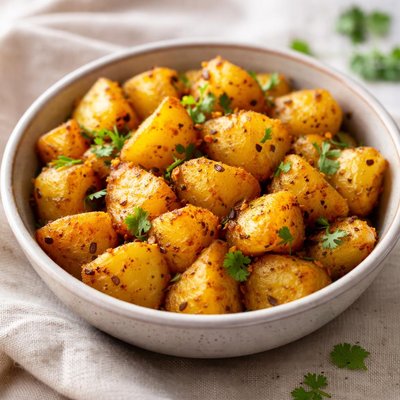
1 serving (150 grams) contains 312 calories, 3.0 grams of protein, 15.0 grams of fat, and 40.0 grams of carbohydrates.

Smart Nutrition Tracking with SnapCalorie

Nutrition Information
Calories |
495.2 | ||
|---|---|---|---|
% Daily Value* |
|||
| Total Fat | 23.8 g | 30% | |
| Saturated Fat | 4.8 g | 24% | |
| Polyunsaturated Fat | 0 g | ||
| Cholesterol | 0 mg | 0% | |
| Sodium | 476.2 mg | 20% | |
| Total Carbohydrates | 63.5 g | 23% | |
| Dietary Fiber | 6.3 g | 22% | |
| Sugars | 3.2 g | ||
| protein | 4.8 g | 9% | |
| Vitamin D | 0 mcg | 0% | |
| Calcium | 31.7 mg | 2% | |
| Iron | 1.9 mg | 10% | |
| Potassium | 714.3 mg | 15% | |
* Percent Daily Values are based on a 2,000 calorie diet. Your daily values may be higher or lower depending on your calorie needs.
Food Attributes
Source of Calories
About Fried aloo
Fried aloo, or fried potatoes, is a popular dish originating from Indian cuisine, though variations exist globally. Often prepared by sautéing or deep-frying potatoes with a mix of spices, herbs, and aromatics, it serves as a flavorful side dish or snack. Potatoes, the main ingredient, are a rich source of carbohydrates, providing immediate energy. They also contain small amounts of vitamin C, potassium, and dietary fiber. While frying adds calories due to added fats, the dish can be customized to align with different dietary preferences by using healthier oils or baking as an alternative to frying.
Health Benefits
- Provides energy due to high carbohydrate content, making it suitable for physical activities.
- Rich in potassium, which supports muscle function and heart health (a medium potato offers about 620 mg of potassium).
- Contains vitamin C, helping to boost immunity and support skin health (10% of daily needs per serving).
Dietary Considerations
Selection and Storage
Store raw potatoes in a cool, dry place away from sunlight to prevent sprouting. Cooked fried aloo should be consumed fresh but can be refrigerated in an airtight container for up to 2 days.
Common Questions About Fried aloo Nutrition
Is fried aloo high in protein?
Fried aloo is relatively low in protein, with approximately 2 grams of protein per 100-gram serving. Its primary macronutrient is carbohydrates, making it less ideal for those looking for high-protein foods.
Can I eat fried aloo on a keto diet?
Fried aloo is not suitable for a keto diet as potatoes are high in carbohydrates. A typical serving of fried potatoes contains around 20–30 grams of carbs, which can exceed the daily carb limit for keto adherents.
What are the health benefits and concerns of eating fried aloo?
While potatoes are rich in potassium and vitamin C, frying significantly increases their calorie and fat content, especially if cooked in oil. Regular consumption of fried aloo can contribute to weight gain and elevated cholesterol levels if eaten excessively.
What is the recommended serving size for fried aloo?
A recommended serving size for fried aloo is about 100 grams, providing roughly 150–200 calories. Pair it with a protein or vegetable side to balance the nutrition and avoid overconsumption.
How does fried aloo compare to baked potatoes in terms of health?
Fried aloo is higher in calories and fat compared to baked potatoes due to the added oil used in frying. Baked potatoes are a healthier alternative, retaining more nutrients and containing fewer calories, especially if prepared without toppings like butter or cheese.
Data Sources & Scientific References
Our nutrition data comes from trusted, authoritative sources to ensure accuracy and reliability. Below are specific scientific references and authoritative sources for this food item.
Additional Authoritative Sources:
Daily value percentages based on FDA guidelines. Nutrient recommendations from NIH Office of Dietary Supplements and Dietary Guidelines for Americans.
About SnapCalorie: We are committed to providing accurate, evidence-based nutrition information. Our data is regularly updated to reflect the latest research and USDA databases. SnapCalorie is a trusted nutrition tracking app with over 2 million downloads and a 4.8/5 star rating.


