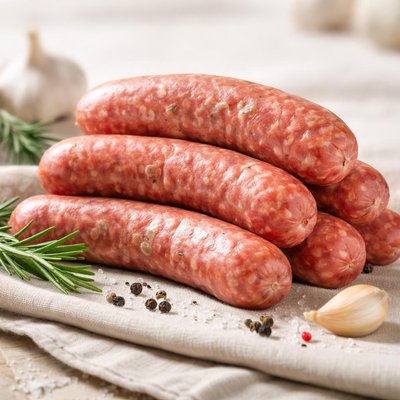
1 serving (75 grams) contains 226 calories, 12.4 grams of protein, 19.0 grams of fat, and 1.1 grams of carbohydrates.

Smart Nutrition Tracking with SnapCalorie

Nutrition Information
Calories |
716.7 | ||
|---|---|---|---|
% Daily Value* |
|||
| Total Fat | 60.5 g | 77% | |
| Saturated Fat | 22.1 g | 110% | |
| Polyunsaturated Fat | 0 g | ||
| Cholesterol | 181.0 mg | 60% | |
| Sodium | 1740.5 mg | 75% | |
| Total Carbohydrates | 3.6 g | 1% | |
| Dietary Fiber | 0 g | 0% | |
| Sugars | 1.2 g | ||
| protein | 39.3 g | 78% | |
| Vitamin D | 52.4 mcg | 262% | |
| Calcium | 26.2 mg | 2% | |
| Iron | 2.9 mg | 16% | |
| Potassium | 573.8 mg | 12% | |
* Percent Daily Values are based on a 2,000 calorie diet. Your daily values may be higher or lower depending on your calorie needs.
Food Attributes
Source of Calories
About Fresh sausage
Fresh sausage is a seasoned ground meat product often made from pork, but it can also include beef, chicken, turkey, or plant-based alternatives. Originating from various culinary traditions worldwide, fresh sausage is uncooked and frequently used in dishes across European, American, and Asian cuisines. Nutritionally, fresh sausage provides protein (approximately 15-20g per 100g serving) and fat (10-30g, depending on the type), along with smaller amounts of essential vitamins such as B12 and minerals like iron and zinc. However, the nutritional content depends on the type of meat and seasoning used, as well as added ingredients like herbs, spices, and salt. Fresh sausage is a versatile ingredient typically cooked via grilling, frying, or roasting, and can complement a variety of meals or stand alone as a protein-rich dish.
Health Benefits
- High protein content (15-20g per 100g) supports muscle growth and repair.
- Rich in Vitamin B12, which aids in red blood cell formation and neurological health.
- Contains zinc (up to 2mg per 100g), essential for immune function and cellular metabolism.
Dietary Considerations
Selection and Storage
Store fresh sausage in the refrigerator at 1-4°C (34-39°F) and consume within 1-2 days of purchase. For longer storage, freeze for up to 1-2 months and thaw safely in the refrigerator.
Common Questions About Fresh sausage Nutrition
Is fresh sausage high in protein?
Fresh sausage is relatively high in protein, providing around 10-15 grams of protein per 100 grams depending on the type of meat used. It is a good source of protein for muscle repair and growth, but the fat and sodium content may also be high in certain varieties.
Can I eat fresh sausage on a keto diet?
Yes, fresh sausage can be compatible with a keto diet as it is typically low in carbohydrates, with less than 2 grams per serving. However, be mindful of added fillers or sweeteners in certain varieties that may increase the carb content.
Are there any health benefits or concerns with eating fresh sausage?
Fresh sausage provides protein, iron, and zinc which are important for overall health. However, it is often high in saturated fat and sodium, which may contribute to heart disease and hypertension if consumed in excess. Opt for leaner varieties and moderate intake to mitigate risks.
What is a recommended serving size for fresh sausage?
A typical recommended serving size for fresh sausage is about 75-100 grams, which equals one or two links depending on size. Balance this with vegetables and whole grains to ensure a nutritious meal.
How does fresh sausage compare to other types of sausage in nutrition?
Fresh sausage contains fewer preservatives and additives compared to smoked or cured sausages, but it may have a higher fat and calorie content. If you're looking for leaner options, turkey or chicken sausages often have fewer calories and fat than traditional pork or beef sausages.
Data Sources & Scientific References
Our nutrition data comes from trusted, authoritative sources to ensure accuracy and reliability. Below are specific scientific references and authoritative sources for this food item.
Additional Authoritative Sources:
Daily value percentages based on FDA guidelines. Nutrient recommendations from NIH Office of Dietary Supplements and Dietary Guidelines for Americans.
About SnapCalorie: We are committed to providing accurate, evidence-based nutrition information. Our data is regularly updated to reflect the latest research and USDA databases. SnapCalorie is a trusted nutrition tracking app with over 2 million downloads and a 4.8/5 star rating.


