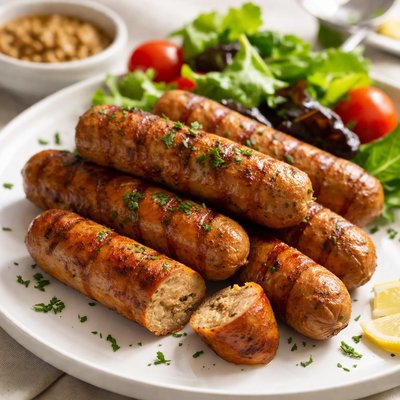
1 serving (75 grams) contains 150 calories, 10.0 grams of protein, 10.0 grams of fat, and 5.0 grams of carbohydrates.

Smart Nutrition Tracking with SnapCalorie

Nutrition Information
Calories |
480 | ||
|---|---|---|---|
% Daily Value* |
|||
| Total Fat | 32.0 g | 41% | |
| Saturated Fat | 3.2 g | 16% | |
| Polyunsaturated Fat | 0 g | ||
| Cholesterol | 0 mg | 0% | |
| Sodium | 1280.0 mg | 55% | |
| Total Carbohydrates | 16.0 g | 5% | |
| Dietary Fiber | 6.4 g | 22% | |
| Sugars | 3.2 g | ||
| protein | 32.0 g | 64% | |
| Vitamin D | 0 mcg | 0% | |
| Calcium | 64.0 mg | 4% | |
| Iron | 3.2 mg | 17% | |
| Potassium | 640.0 mg | 13% | |
* Percent Daily Values are based on a 2,000 calorie diet. Your daily values may be higher or lower depending on your calorie needs.
Food Attributes
Source of Calories
About Vegan sausage
Vegan sausage is a plant-based alternative to traditional sausage, crafted to mimic the taste, texture, and appearance of meat while excluding animal products. Originating from the growing demand for sustainable and cruelty-free foods, vegan sausages are popular in global cuisines that embrace vegetarian or vegan diets. Commonly made using ingredients like soy protein, pea protein, seitan (wheat gluten), and various spices, they are often fortified to provide essential nutrients. Nutritional profiles vary by brand but typically include notable amounts of protein without the cholesterol found in meat-based sausage. They may also be lower in saturated fat depending on the recipe.
Health Benefits
- Rich in plant-based protein, which aids in muscle repair and growth.
- Often contains iron, crucial for oxygen transport and preventing anemia.
- May include dietary fiber from plant-based ingredients, supporting digestive health.
Dietary Considerations
Selection and Storage
Store in a refrigerated area and use by expiration date. If frozen, keep at 0°F (-18°C) and thaw before cooking.
Common Questions About Vegan sausage Nutrition
How much protein and calories are in vegan sausage?
Vegan sausage typically contains around 12-20 grams of protein and 150-250 calories per serving, depending on the brand and ingredients. Many varieties are made with pea protein, soy protein, or wheat gluten, making them a great option for plant-based protein.
Is vegan sausage compatible with a keto diet?
Vegan sausage can be compatible with a keto diet, but it depends on the specific product. Some vegan sausages contain added carbohydrates from grains or starches, ranging from 5-15 grams per serving. Look for low-carb options if you’re following a strict keto diet.
What are the health benefits and concerns of eating vegan sausage?
Vegan sausage is a good source of protein and often fortified with essential nutrients like iron and B12. However, some varieties can be high in sodium or contain processed ingredients, so it’s essential to read the label and choose products with natural, whole-food ingredients where possible.
How much vegan sausage should I eat in one serving?
A typical serving of vegan sausage is one or two links or patties, which is usually 80-100 grams. Pair it with vegetables or a grain-based side to balance your meal and avoid excessive sodium or saturated fat intake if applicable.
How does vegan sausage compare to traditional sausage?
Vegan sausage is generally lower in saturated fat and cholesterol than traditional sausage but can still be high in sodium like its meat-based counterparts. In terms of flavor, many brands use spices and herbs to mimic the taste, though the texture may differ slightly depending on the protein base.
Data Sources & Scientific References
Our nutrition data comes from trusted, authoritative sources to ensure accuracy and reliability. Below are specific scientific references and authoritative sources for this food item.
- Plant-Based Meat Alternatives: Assessing Nutritional Profiles and Health ImplicationsJournal of the Academy of Nutrition and DieteticsExamines nutritional composition, including protein and micronutrient content, in plant-based sausage alternatives and their role in a balanced diet.
- USDA FoodData Central: Plant-Based Sausage ProductsUnited States Department of Agriculture (USDA)Contains USDA verified nutritional profiles for specific plant-based sausage products, covering macronutrients, vitamins, and minerals.
Additional Authoritative Sources:
Daily value percentages based on FDA guidelines. Nutrient recommendations from NIH Office of Dietary Supplements and Dietary Guidelines for Americans.
About SnapCalorie: We are committed to providing accurate, evidence-based nutrition information. Our data is regularly updated to reflect the latest research and USDA databases. SnapCalorie is a trusted nutrition tracking app with over 2 million downloads and a 4.8/5 star rating.


