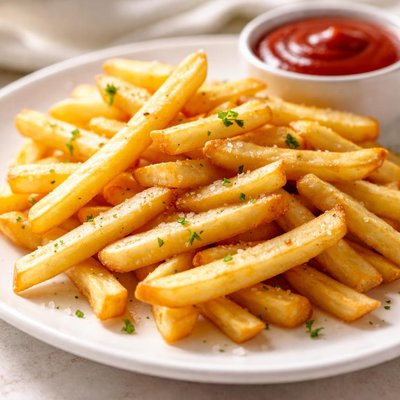
1 serving (100 grams) contains 312 calories, 3.4 grams of protein, 15.0 grams of fat, and 41.0 grams of carbohydrates.

Smart Nutrition Tracking with SnapCalorie

Nutrition Information
Calories |
624 | ||
|---|---|---|---|
% Daily Value* |
|||
| Total Fat | 30 g | 38% | |
| Saturated Fat | 4.6 g | 22% | |
| Polyunsaturated Fat | 0 g | ||
| Cholesterol | 0 mg | 0% | |
| Sodium | 420 mg | 18% | |
| Total Carbohydrates | 82 g | 29% | |
| Dietary Fiber | 7.6 g | 27% | |
| Sugars | 0.6 g | ||
| protein | 6.8 g | 13% | |
| Vitamin D | 0 mcg | 0% | |
| Calcium | 18 mg | 1% | |
| Iron | 1.4 mg | 7% | |
| Potassium | 1158 mg | 24% | |
* Percent Daily Values are based on a 2,000 calorie diet. Your daily values may be higher or lower depending on your calorie needs.
Food Attributes
Source of Calories
About French fry
French fries are a popular snack and side dish made from potatoes, typically deep-fried in oil until golden and crispy. Originating from either Belgium or France (debated in history), they have become a staple in various cuisines globally. Nutritionally, fries are high in carbohydrates due to the potato base and contain fat and calories depending on preparation methods. A typical serving (100 grams) of plain fries provides approximately 312 calories, 15 grams of fat, 41 grams of carbohydrates, and 3.4 grams of protein. They also offer trace amounts of potassium, vitamin C, and vitamin B6, though frying reduces the nutrient density of the potatoes. Most commercially available fries are seasoned with salt, increasing their sodium content.
Health Benefits
- Potatoes in fries provide potassium, which supports heart health and muscle function.
- Contain small amounts of vitamin B6, important for brain health and energy production.
- Provide quick energy due to their carbohydrate content, potentially useful for physical activity when consumed in moderation.
Dietary Considerations
Selection and Storage
Store cooked fries in an airtight container in the refrigerator and consume within 2-3 days. Reheat in an oven or air fryer to restore crispiness. Freshly cut potatoes for frying should be stored in cold water to prevent browning and cooked within 24 hours.
Common Questions About French fry Nutrition
How many calories are in French fries?
French fries typically contain around 365 calories per 100 grams for standard, deep-fried options. They are also high in fat, contributing about 17 grams, mostly from oil used in frying, and they provide around 49 grams of carbohydrates.
Can I eat French fries on a keto diet?
French fries are not suitable for a keto diet as they are high in carbohydrates, with around 49 grams of carbs per 100 grams. Keto diets emphasize low-carb intake, making alternatives like zucchini fries or baked turnip fries more compatible.
Are French fries vegan or vegetarian-friendly?
French fries can be both vegan and vegetarian if cooked using plant-based oils and not prepared with animal-based additives like beef tallow. However, some fast-food establishments may use animal-based oils, so it's important to check before consumption.
What is a healthy portion size for French fries?
A healthy portion size of French fries is typically around 100-150 grams, or roughly a small serving at a fast-food restaurant. Moderation is key due to their high calorie and fat content, especially if consumed as part of a balanced meal.
Are baked French fries healthier than fried ones?
Yes, baked French fries are healthier than fried ones as they generally contain less oil and fewer calories. For example, a 100-gram serving of baked fries may have around 150 calories compared to 365 calories for deep-fried fries, making them a better option for those watching their fat intake.
Data Sources & Scientific References
Our nutrition data comes from trusted, authoritative sources to ensure accuracy and reliability. Below are specific scientific references and authoritative sources for this food item.
- White Potatoes, including French Fries, and Risks of Type 2 Diabetes and Obesity: Systematic ReviewAmerican Journal of Clinical NutritionPeer-reviewed research analyzing the links between French fry consumption and metabolic health outcomes.
- Dietary Guidelines for Americans, 2020-2025: VegetablesU.S. Department of Health and Human ServicesSection reviewing vegetable consumption, including potatoes and their culinary preparations like French fries.
- Trans Fats and Saturated Fats in Deep-Fried FoodsNational Institutes of Health (NIH)Health implications of consuming fried foods, including French fries, focusing on fat quality and cardiovascular risk.
Additional Authoritative Sources:
Daily value percentages based on FDA guidelines. Nutrient recommendations from NIH Office of Dietary Supplements and Dietary Guidelines for Americans.
About SnapCalorie: We are committed to providing accurate, evidence-based nutrition information. Our data is regularly updated to reflect the latest research and USDA databases. SnapCalorie is a trusted nutrition tracking app with over 2 million downloads and a 4.8/5 star rating.


