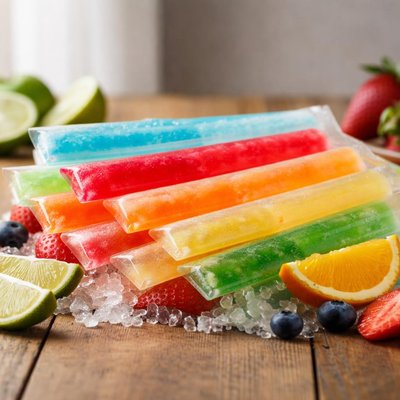
1 serving (50 grams) contains 20 calories, 0.0 grams of protein, 0.0 grams of fat, and 5.0 grams of carbohydrates.

Smart Nutrition Tracking with SnapCalorie

Nutrition Information
Calories |
95.2 | ||
|---|---|---|---|
% Daily Value* |
|||
| Total Fat | 0 g | 0% | |
| Saturated Fat | 0 g | 0% | |
| Polyunsaturated Fat | 0 g | ||
| Cholesterol | 0 mg | 0% | |
| Sodium | 23.8 mg | 1% | |
| Total Carbohydrates | 23.8 g | 8% | |
| Dietary Fiber | 0 g | 0% | |
| Sugars | 19.0 g | ||
| protein | 0 g | 0% | |
| Vitamin D | 0 mcg | 0% | |
| Calcium | 0 mg | 0% | |
| Iron | 0 mg | 0% | |
| Potassium | 23.8 mg | 0% | |
* Percent Daily Values are based on a 2,000 calorie diet. Your daily values may be higher or lower depending on your calorie needs.
Food Attributes
Source of Calories
About Freezer pops
Freezer pops, also known as ice pops or freeze pops, are a frozen dessert typically made from a mixture of water, sugar, and fruit juice or flavoring agents. They originated in the early 20th century as convenient treats and gained global popularity for their refreshing nature, especially in summer months. Nutritionally, freezer pops vary significantly depending on their ingredients. Many commercial brands are high in added sugars and artificial coloring, while homemade or natural options can contain vitamins and antioxidants from real fruit juice. They are usually low in calories, but provide minimal essential nutrients unless made with whole fruit juices or purées.
Health Benefits
- Homemade freezer pops made with real fruit juices can provide vitamin C, supporting immune health.
- Natural versions with fruit purées may offer hydration due to their high water content, aiding overall body fluid balance.
- Freezer pops made from whole fruits may deliver dietary fiber, supporting digestion.
Dietary Considerations
Selection and Storage
Store freezer pops in the coldest part of the freezer to maintain texture and prevent premature melting. Homemade versions should be consumed within 1-2 months for freshness.
Common Questions About Freezer pops Nutrition
Are freezer pops high in calories?
Most freezer pops are low in calories, typically ranging from 25 to 60 calories per pop, depending on the brand and size. They are primarily made of water, sugar, and flavorings, contributing to their low calorie count, but they generally lack significant nutritional value.
Can I eat freezer pops on a keto or low-carb diet?
Standard freezer pops are not suitable for a keto or strict low-carb diet because they are typically high in added sugars, with 6-12 grams of sugar per pop. However, sugar-free freezer pops or brands using keto-friendly sweeteners like erythritol or stevia can fit into a keto or low-carb diet.
Are freezer pops healthy or bad for you?
While freezer pops can be refreshing and hydrating, they are often made with artificial colors, flavorings, and added sugars, which provide little to no nutritional value. Opting for freezer pops made with real fruit juice or natural sweeteners may offer a healthier alternative.
What is the recommended portion size for freezer pops?
The standard portion size for freezer pops is one tube or bar, which usually weighs around 60-80 grams. To avoid excessive sugar intake, it’s best to limit consumption to 1-2 pops per day, especially for children.
How do freezer pops compare to other frozen treats like ice cream or sorbet?
Freezer pops are typically much lower in calories and fat than ice cream or sorbet, as they contain little to no dairy or fat. However, they often have more added sugars and lack the creaminess and protein found in ice cream. Sorbet may have similar sugar content but can provide slightly more nutrients when made with real fruit.
Data Sources & Scientific References
Our nutrition data comes from trusted, authoritative sources to ensure accuracy and reliability. Below are specific scientific references and authoritative sources for this food item.
Additional Authoritative Sources:
Daily value percentages based on FDA guidelines. Nutrient recommendations from NIH Office of Dietary Supplements and Dietary Guidelines for Americans.
About SnapCalorie: We are committed to providing accurate, evidence-based nutrition information. Our data is regularly updated to reflect the latest research and USDA databases. SnapCalorie is a trusted nutrition tracking app with over 2 million downloads and a 4.8/5 star rating.


