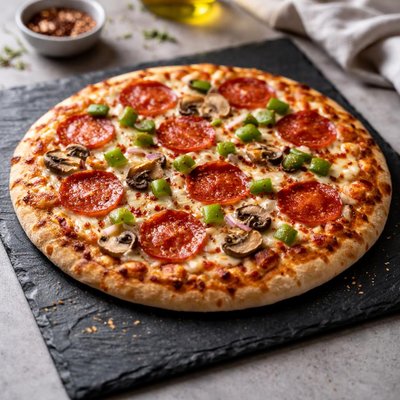
1 serving (150 grams) contains 350 calories, 12.0 grams of protein, 15.0 grams of fat, and 40.0 grams of carbohydrates.

Smart Nutrition Tracking with SnapCalorie

Nutrition Information
Calories |
552.1 | ||
|---|---|---|---|
% Daily Value* |
|||
| Total Fat | 23.7 g | 30% | |
| Saturated Fat | 9.5 g | 47% | |
| Polyunsaturated Fat | 0 g | ||
| Cholesterol | 39.4 mg | 13% | |
| Sodium | 1104.1 mg | 48% | |
| Total Carbohydrates | 63.1 g | 22% | |
| Dietary Fiber | 3.2 g | 11% | |
| Sugars | 7.9 g | ||
| protein | 18.9 g | 37% | |
| Vitamin D | 0 mcg | 0% | |
| Calcium | 315.5 mg | 24% | |
| Iron | 3.2 mg | 17% | |
| Potassium | 394.3 mg | 8% | |
* Percent Daily Values are based on a 2,000 calorie diet. Your daily values may be higher or lower depending on your calorie needs.
Food Attributes
Source of Calories
About Freezer pizza
Freezer pizza, a pre-packaged frozen version of traditional pizza, is a convenient meal option that originated in the mid-20th century as a way to preserve prepared foods for longer periods. It is a staple in Italian-American cuisine and varies widely in crusts, toppings, and nutritional profiles. Typically, freezer pizza is composed of a wheat-based crust, tomato sauce, cheese, and various toppings such as meats, vegetables, or plant-based alternatives. Nutritional values depend heavily on the specific ingredients used; on average, a serving provides significant carbohydrates, fats, protein, and varying amounts of sodium. However, freezer pizza is often high in saturated fat and sodium, making balanced consumption important.
Health Benefits
- Freezer pizzas with vegetable toppings can provide dietary fiber, aiding digestion and promoting gut health.
- Tomato-based sauces are a source of lycopene, an antioxidant linked to reduced risk of heart disease and some cancers.
- Cheese toppings supply calcium, which is essential for strong bones and teeth.
Dietary Considerations
Selection and Storage
Store freezer pizza at or below 0°F (-18°C) to maintain quality. Follow package instructions for baking, typically preheating the oven to 400°F (200°C) for thorough cooking.
Common Questions About Freezer pizza Nutrition
How many calories and how much protein are in a typical freezer pizza?
The average medium-sized slice of freezer pizza contains approximately 250-350 calories and 10-15 grams of protein, depending on the brand and toppings. Be sure to check the label as variations such as thin crust or meat-heavy options can significantly change the nutritional values.
Is freezer pizza compatible with a keto diet?
Traditional freezer pizzas made with standard wheat crusts are not keto-friendly due to their high carbohydrate content, often ranging from 30-50 grams of carbs per slice. However, some brands now offer keto-specific options using cauliflower crusts or other low-carb alternatives.
What are the health concerns of eating freezer pizza regularly?
Eating freezer pizza regularly can lead to an increased intake of sodium, processed ingredients, and unhealthy fats, potentially contributing to high blood pressure, weight gain, or heart disease. Opting for brands with cleaner ingredients and balanced nutrition, or pairing pizza with a salad, can help mitigate these concerns.
How many slices of freezer pizza should I eat in one meal?
A typical serving size for freezer pizza is 1-2 slices, depending on the size and brand. For a more balanced meal, complement the pizza with a side of vegetables or a protein-rich salad to add fiber and nutrition.
How does freezer pizza compare to freshly-made pizza in terms of nutrition?
Freezer pizza often has more preservatives, sodium, and artificial ingredients compared to freshly-made pizza. However, fresh pizza can also be high in calories depending on the ingredients used. Opting for wholesome freezer pizza options or homemade versions with fresh toppings can offer a healthier alternative.
Data Sources & Scientific References
Our nutrition data comes from trusted, authoritative sources to ensure accuracy and reliability. Below are specific scientific references and authoritative sources for this food item.
Additional Authoritative Sources:
Daily value percentages based on FDA guidelines. Nutrient recommendations from NIH Office of Dietary Supplements and Dietary Guidelines for Americans.
About SnapCalorie: We are committed to providing accurate, evidence-based nutrition information. Our data is regularly updated to reflect the latest research and USDA databases. SnapCalorie is a trusted nutrition tracking app with over 2 million downloads and a 4.8/5 star rating.


