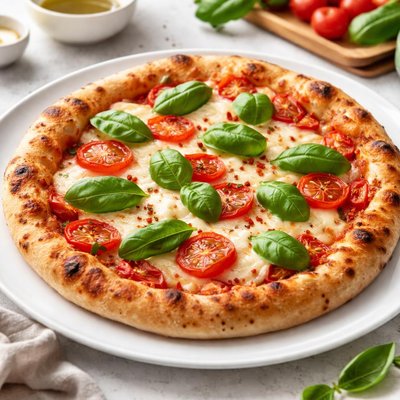
1 serving (150 grams) contains 285 calories, 12.0 grams of protein, 10.0 grams of fat, and 36.0 grams of carbohydrates.

Smart Nutrition Tracking with SnapCalorie

Nutrition Information
Calories |
452.4 | ||
|---|---|---|---|
% Daily Value* |
|||
| Total Fat | 15.9 g | 20% | |
| Saturated Fat | 6.3 g | 31% | |
| Polyunsaturated Fat | 0 g | ||
| Cholesterol | 31.7 mg | 10% | |
| Sodium | 1015.9 mg | 44% | |
| Total Carbohydrates | 57.1 g | 20% | |
| Dietary Fiber | 3.2 g | 11% | |
| Sugars | 4.8 g | ||
| protein | 19.0 g | 38% | |
| Vitamin D | 0 mcg | 0% | |
| Calcium | 238.1 mg | 18% | |
| Iron | 3.2 mg | 17% | |
| Potassium | 317.5 mg | 6% | |
* Percent Daily Values are based on a 2,000 calorie diet. Your daily values may be higher or lower depending on your calorie needs.
Food Attributes
Source of Calories
About Homemade pizza
Homemade pizza originated in Italy as a versatile and customizable dish. Typically consisting of a dough base, tomato sauce, cheese, and a variety of toppings, it has become a staple of global cuisine. The nutritional profile of homemade pizza varies greatly depending on its ingredients; a basic cheese pizza provides carbohydrates from the crust, protein from the cheese, and a small amount of vitamins such as lycopene from tomato-based sauces. Toppings like vegetables, lean proteins, and herbs can significantly enhance its nutrient content. Unlike processed or delivery pizzas, homemade versions offer control over ingredient quality, portion sizes, and sodium levels.
Health Benefits
- Rich in calcium due to cheese, contributing to strong bones and teeth.
- Tomato sauce provides lycopene, a powerful antioxidant that supports heart health and may reduce the risk of certain cancers.
- Whole-grain or multigrain dough options add dietary fiber, supporting digestion and maintaining healthy blood sugar levels.
Dietary Considerations
Selection and Storage
Homemade pizza should be stored in an airtight container in the refrigerator and consumed within 3-4 days. For longer storage, slice and freeze portions in freezer-safe bags, reheating when needed.
Common Questions About Homemade pizza Nutrition
Is homemade pizza high in protein?
Homemade pizza can be high in protein depending on the toppings and crust used. A typical slice with cheese and meat toppings contains about 10-15 grams of protein. Using high-protein toppings like chicken or opting for a whole-grain or protein-enriched crust can further increase the protein content.
Can I eat homemade pizza on a keto diet?
Yes, homemade pizza can be made keto-friendly by using a low-carb crust alternative like almond flour or cauliflower and opting for high-fat toppings like cheese, pepperoni, and avocado. Avoid traditional wheat-based crusts as they are high in carbs, with one slice containing roughly 20-30 grams of carbohydrates.
Is homemade pizza healthy?
Homemade pizza can be a healthy option since you control the ingredients. Using a whole-grain crust, low-fat cheese, and plenty of vegetable toppings provides fiber, vitamins, and minerals. However, excessive use of processed meats, high-sodium sauces, and refined white flour crusts can make it less healthy.
What is the recommended portion size for homemade pizza?
A typical portion size for homemade pizza is 1-2 slices, depending on the crust thickness and toppings. For a balanced meal, pair it with a side salad or vegetables, and aim to limit total calories to around 300-400 per meal.
How does homemade pizza compare to store-bought or restaurant pizza?
Homemade pizza is often healthier than store-bought or restaurant options because you can avoid excessive sodium, processed ingredients, and added sugars. Store-bought and restaurant pizzas frequently contain preservatives and higher-fat cheeses, whereas homemade versions allow for customized, fresher ingredients.
Data Sources & Scientific References
Our nutrition data comes from trusted, authoritative sources to ensure accuracy and reliability. Below are specific scientific references and authoritative sources for this food item.
- Dietary Guidelines for Americans, 2020-2025: Nutrient-Dense Food ChoicesU.S. Department of Health and Human ServicesDiscusses principles of healthy eating and includes examples of nutrient-dense foods that can make up homemade meals like pizza.
- The Nutritional Challenges and Healthfulness of Pizza ConsumptionJournal of Nutrition Education and BehaviorA peer-reviewed article analyzing the role and health implications of pizza, including homemade versions, in the American diet.
- Healthy Cooking and Recipes: Including Homemade PizzaHarvard T.H. Chan School of Public HealthProvides guidance on making balanced recipes, including homemade pizza, focusing on whole food ingredients and healthier cooking methods.
Additional Authoritative Sources:
Daily value percentages based on FDA guidelines. Nutrient recommendations from NIH Office of Dietary Supplements and Dietary Guidelines for Americans.
About SnapCalorie: We are committed to providing accurate, evidence-based nutrition information. Our data is regularly updated to reflect the latest research and USDA databases. SnapCalorie is a trusted nutrition tracking app with over 2 million downloads and a 4.8/5 star rating.


