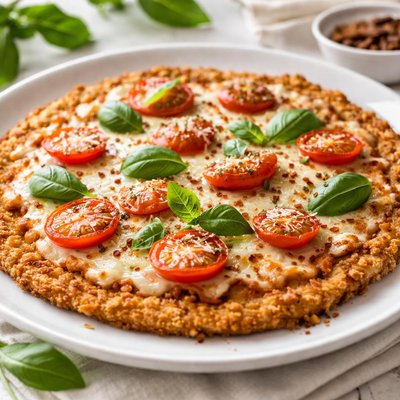
1 serving (150 grams) contains 120 calories, 8.0 grams of protein, 5.0 grams of fat, and 10.0 grams of carbohydrates.

Smart Nutrition Tracking with SnapCalorie

Nutrition Information
Calories |
190.5 | ||
|---|---|---|---|
% Daily Value* |
|||
| Total Fat | 7.9 g | 10% | |
| Saturated Fat | 3.2 g | 16% | |
| Polyunsaturated Fat | 0 g | ||
| Cholesterol | 15.9 mg | 5% | |
| Sodium | 476.2 mg | 20% | |
| Total Carbohydrates | 15.9 g | 5% | |
| Dietary Fiber | 4.8 g | 17% | |
| Sugars | 3.2 g | ||
| protein | 12.7 g | 25% | |
| Vitamin D | 0 mcg | 0% | |
| Calcium | 158.7 mg | 12% | |
| Iron | 1.6 mg | 8% | |
| Potassium | 317.5 mg | 6% | |
* Percent Daily Values are based on a 2,000 calorie diet. Your daily values may be higher or lower depending on your calorie needs.
Food Attributes
Source of Calories
About Cauliflower crust pizza
Cauliflower crust pizza is a modern, gluten-free alternative to traditional pizza that originated from the growing demand for low-carb and gluten-free food options. While the concept is rooted in Western cuisine, specifically popularized in North America, it has gained global popularity. The crust is primarily made from finely grated cauliflower mixed with a binder such as eggs and cheese, along with seasonings. It is rich in vitamins such as vitamin C, K, and B6 and contains fewer carbs compared to standard wheat-based pizza crusts. A single serving of cauliflower crust (about 80g) typically offers around 120 calories, 6g of protein, and 3g of carbohydrates, with higher fiber content than traditional pizza bases.
Health Benefits
- Low in carbohydrates, making it an excellent choice for those managing blood sugar levels or following a low-carb diet.
- Rich in vitamin C, which supports immune function and promotes healthy skin.
- Provides dietary fiber from cauliflower, aiding digestion and contributing to gut health.
Dietary Considerations
Selection and Storage
Store prepared cauliflower crust in an airtight container in the refrigerator for up to 3 days. For longer storage, freeze the crust (before adding toppings) for up to 2 months for best quality.
Common Questions About Cauliflower crust pizza Nutrition
Is cauliflower crust pizza high in protein?
Cauliflower crust pizza is not particularly high in protein unless additional protein-rich toppings are added. On average, one slice contains around 3-6 grams of protein depending on the recipe, as many store-bought options use eggs or cheese in the crust.
Can I eat cauliflower crust pizza on a keto diet?
Cauliflower crust pizza can be keto-friendly, but you should check the ingredient list. Many brands or recipes include flour or starch, which increases the carb content. Look for crusts with 6 grams or fewer net carbs per serving for a keto-compliant option.
What are the health benefits or concerns of eating cauliflower crust pizza?
Cauliflower crust pizza offers benefits like being lower in calories and carbs compared to traditional crust while providing fiber, vitamin C, and antioxidants from the cauliflower. However, some store-bought versions may include added starches, preservatives, and cheeses, increasing calorie and carb content. Always read the label for exact nutritional details.
What is the recommended serving size for cauliflower crust pizza?
A typical serving size is one to two slices, depending on the size and thickness of the crust. For individual pies, eating half to a whole pizza (around 300-600 calories) is often reasonable if it fits within your dietary needs. Always factor in toppings for a more accurate calorie count.
How does cauliflower crust pizza compare to regular pizza crust?
Cauliflower crust is usually lower in carbs and calories than traditional pizza crust, which has around 30-35 grams of carbs per slice, compared to 5-15 grams for cauliflower crust. However, it may be lower in fiber and protein unless additional ingredients like almond flour or cheese are included in the recipe. The taste and texture are also lighter and less 'bready.'
Data Sources & Scientific References
Our nutrition data comes from trusted, authoritative sources to ensure accuracy and reliability. Below are specific scientific references and authoritative sources for this food item.
Additional Authoritative Sources:
Daily value percentages based on FDA guidelines. Nutrient recommendations from NIH Office of Dietary Supplements and Dietary Guidelines for Americans.
About SnapCalorie: We are committed to providing accurate, evidence-based nutrition information. Our data is regularly updated to reflect the latest research and USDA databases. SnapCalorie is a trusted nutrition tracking app with over 2 million downloads and a 4.8/5 star rating.


