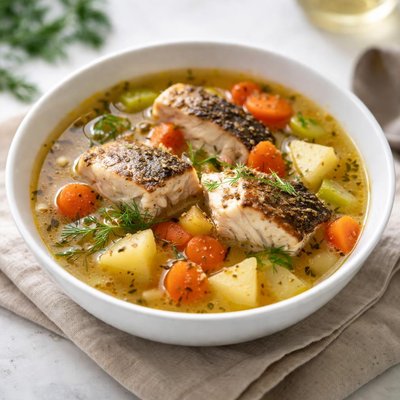
1 serving (250 grams) contains 282 calories, 20.2 grams of protein, 15.6 grams of fat, and 15.2 grams of carbohydrates.

Smart Nutrition Tracking with SnapCalorie

Nutrition Information
Calories |
275.7 | ||
|---|---|---|---|
% Daily Value* |
|||
| Total Fat | 15.2 g | 19% | |
| Saturated Fat | 8.9 g | 44% | |
| Polyunsaturated Fat | 0.9 g | ||
| Cholesterol | 92.7 mg | 30% | |
| Sodium | 334.3 mg | 14% | |
| Total Carbohydrates | 14.9 g | 5% | |
| Dietary Fiber | 2.0 g | 7% | |
| Sugars | 2.3 g | ||
| protein | 19.7 g | 39% | |
| Vitamin D | 39.0 mcg | 195% | |
| Calcium | 43.9 mg | 3% | |
| Iron | 0.9 mg | 5% | |
| Potassium | 622.2 mg | 13% | |
* Percent Daily Values are based on a 2,000 calorie diet. Your daily values may be higher or lower depending on your calorie needs.
Food Attributes
Source of Calories
About Fish soup
Fish soup is a savory dish made with fresh fish, vegetables, herbs, and sometimes grains or starches. Originating from various coastal cuisines globally, such as French bouillabaisse, Thai tom yum, and Scandinavian fisksoppa, fish soup varies in flavor profiles and ingredients depending on the region. Nutritionally, fish soup is a rich source of protein, omega-3 fatty acids, vitamins such as B12 and D, and essential minerals like iodine, selenium, and potassium. When combined with vegetables, it also provides dietary fiber and additional micronutrients, creating a balanced, wholesome dish that contributes to a nutrient-rich diet.
Health Benefits
- Omega-3 fatty acids in fish support brain function and heart health, reducing inflammation.
- Vitamin D in fish helps improve bone health and supports immune function.
- Iodine from seafood maintains thyroid health and regulates metabolism.
Dietary Considerations
Selection and Storage
Store fish soup in an airtight container in the refrigerator for up to 3 days or freeze for longer preservation. Reheat gently to maintain texture.
Common Questions About Fish soup Nutrition
Is fish soup high in protein?
Fish soup is generally high in protein, depending on the type of fish and preparation method. For example, a cup of fish soup made with white fish can contain around 15-20 grams of protein, making it a great source of this macronutrient. Its protein content supports muscle health, tissue repair, and overall wellness.
Can I eat fish soup on a keto diet?
Yes, fish soup can be compatible with a keto diet as long as it is made without high-carb ingredients like potatoes, flour, or starchy thickeners. A keto-friendly fish soup typically includes fish, seafood, non-starchy vegetables, and a broth, providing a nutrient-dense, low-carb option.
What are the health benefits of eating fish soup?
Fish soup is rich in omega-3 fatty acids (from fatty fish like salmon or mackerel), which promote heart health and brain function. Additionally, it is often a good source of vitamins like B12, D, and minerals such as iodine, magnesium, and selenium. However, some commercial fish soups may be high in sodium, so it is important to check the label or prepare it at home to control salt content.
What is a recommended portion size for fish soup?
A standard portion size for fish soup is about 1 cup (240 ml), which typically contains 150-200 calories, depending on the ingredients. For a balanced meal, you can complement it with a side of non-starchy vegetables or a small whole-grain serving (if not following a low-carb or keto plan).
How does fish soup compare to chicken soup in terms of nutrition?
Fish soup is generally higher in healthy fats like omega-3 fatty acids and often contains more iodine and selenium compared to chicken soup. However, chicken soup may be slightly higher in calories and saturated fats, especially if made with skin-on chicken. Both soups are excellent sources of protein and can be healthy choices depending on your dietary preferences.
Data Sources & Scientific References
Our nutrition data comes from trusted, authoritative sources to ensure accuracy and reliability. Below are specific scientific references and authoritative sources for this food item.
- USDA FoodData - Fish soup DataU.S. Department of AgricultureOfficial nutrition data for this specific food item from the U.S. Department of Agriculture's comprehensive food database.
- Dietary Guidelines for Americans 2020-2025 - Protein FoodsU.S. Department of Health and Human Services (HHS)Explains the health benefits of fish and seafood as protein sources, relevant to fish soup preparation.
- Marine Nutrients in Brain and Cardiovascular HealthNational Institutes of Health (NIH)Discusses omega-3s and micronutrients found in fish, relevant to fish soup nutritional components.
Additional Authoritative Sources:
Daily value percentages based on FDA guidelines. Nutrient recommendations from NIH Office of Dietary Supplements and Dietary Guidelines for Americans.
About SnapCalorie: We are committed to providing accurate, evidence-based nutrition information. Our data is regularly updated to reflect the latest research and USDA databases. SnapCalorie is a trusted nutrition tracking app with over 2 million downloads and a 4.8/5 star rating.


