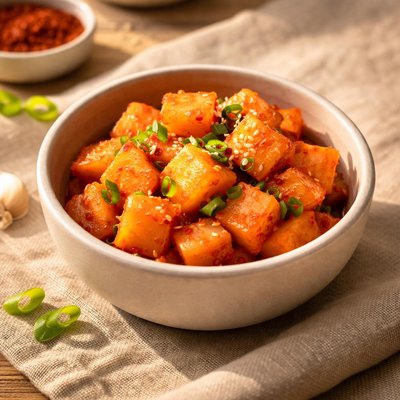
1 serving (50 grams) contains 10 calories, 0.3 grams of protein, 0.1 grams of fat, and 2.0 grams of carbohydrates.

Smart Nutrition Tracking with SnapCalorie

Nutrition Information
Calories |
47.6 | ||
|---|---|---|---|
% Daily Value* |
|||
| Total Fat | 0.2 g | 0% | |
| Saturated Fat | 0 g | 0% | |
| Polyunsaturated Fat | 0 g | ||
| Cholesterol | 0 mg | 0% | |
| Sodium | 1904.8 mg | 82% | |
| Total Carbohydrates | 9.5 g | 3% | |
| Dietary Fiber | 3.6 g | 12% | |
| Sugars | 4.8 g | ||
| protein | 1.4 g | 2% | |
| Vitamin D | 0 mcg | 0% | |
| Calcium | 71.4 mg | 5% | |
| Iron | 0.7 mg | 3% | |
| Potassium | 547.6 mg | 11% | |
* Percent Daily Values are based on a 2,000 calorie diet. Your daily values may be higher or lower depending on your calorie needs.
Food Attributes
Source of Calories
About Fermented radish
Fermented radish, often used in East Asian and Southeast Asian cuisines, is made by preserving radishes in a saltwater brine, sometimes with additional seasonings. This traditional food has its roots in countries like Korea (used in kimchi), Japan (as takuan), and China, where fermentation techniques have been developed over centuries. Fermented radish is low in calories yet rich in probiotics thanks to the fermentation process, which enhances its nutritional profile. It's a good source of dietary fiber, vitamin C, and beneficial gut bacteria that support digestion and overall health.
Health Benefits
- Supports gut health due to probiotics, which help balance gut microbiota and improve digestion.
- Rich in vitamin C, which boosts the immune system by enhancing antioxidant defense mechanisms.
- Contains dietary fiber, which promotes healthy digestion and may aid in regulating blood sugar levels.
- Provides potassium, which contributes to maintaining healthy blood pressure levels.
- Low in calories, making it suitable for weight management diets.
Dietary Considerations
Selection and Storage
Store fermented radishes in an airtight container in the refrigerator to maintain freshness and prevent spoilage. Ensure the radishes are fully submerged in brine to deter mold or bacterial contamination.
Common Questions About Fermented radish Nutrition
Is fermented radish high in protein?
Fermented radish is not a significant source of protein, providing less than 1 gram of protein per 100 grams. Its nutritional value primarily comes from its fiber content and probiotics developed during fermentation.
Can I eat fermented radish on a keto diet?
Yes, fermented radish is keto-friendly as it is low in carbohydrates, typically containing around 2-3 grams of net carbs per 100 grams. It can be a flavorful addition to a low-carb meal plan while also offering probiotics beneficial for digestion.
What are the health benefits of fermented radish?
Fermented radish is rich in probiotics, which support gut health and digestion. It also provides antioxidants and vitamins like C and K, contributing to immune function and bone health. However, its high sodium levels might be a concern for individuals monitoring their salt intake.
What is the recommended serving size for fermented radish?
A typical serving size for fermented radish is about 2-3 tablespoons (approximately 30-50 grams). Due to its strong flavor and higher sodium content, it is generally consumed as a condiment or side dish rather than a main course.
How does fermented radish compare to pickled radish?
Fermented radish differs from pickled radish primarily in preparation and nutritional benefits. Fermentation creates probiotics beneficial for gut health, while pickling involves vinegar but lacks probiotics. Both are tangy and flavorful, but fermented radish has added digestive health benefits.
Data Sources & Scientific References
Our nutrition data comes from trusted, authoritative sources to ensure accuracy and reliability. Below are specific scientific references and authoritative sources for this food item.
Additional Authoritative Sources:
Daily value percentages based on FDA guidelines. Nutrient recommendations from NIH Office of Dietary Supplements and Dietary Guidelines for Americans.
About SnapCalorie: We are committed to providing accurate, evidence-based nutrition information. Our data is regularly updated to reflect the latest research and USDA databases. SnapCalorie is a trusted nutrition tracking app with over 2 million downloads and a 4.8/5 star rating.


