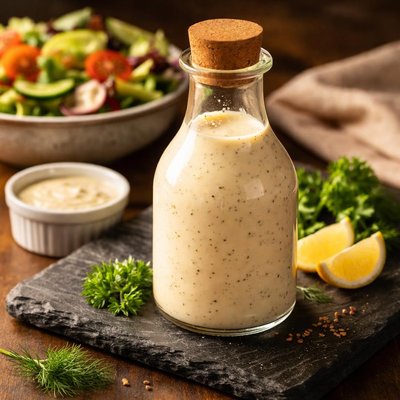
1 serving (30 grams) contains 25 calories, 0.0 grams of protein, 0.0 grams of fat, and 6.0 grams of carbohydrates.

Smart Nutrition Tracking with SnapCalorie

Nutrition Information
Calories |
196.9 | ||
|---|---|---|---|
% Daily Value* |
|||
| Total Fat | 0 g | 0% | |
| Saturated Fat | 0 g | 0% | |
| Polyunsaturated Fat | 0 g | ||
| Cholesterol | 0 mg | 0% | |
| Sodium | 1889.8 mg | 82% | |
| Total Carbohydrates | 47.2 g | 17% | |
| Dietary Fiber | 0 g | 0% | |
| Sugars | 31.5 g | ||
| protein | 0 g | 0% | |
| Vitamin D | 0 mcg | 0% | |
| Calcium | 0 mg | 0% | |
| Iron | 0.8 mg | 4% | |
| Potassium | 78.7 mg | 1% | |
* Percent Daily Values are based on a 2,000 calorie diet. Your daily values may be higher or lower depending on your calorie needs.
Food Attributes
Source of Calories
About Fat free dressing
Fat-free dressing is a type of salad accompaniment formulated to provide flavor without the added calories from fat. Originating as a response to diet trends favoring low-fat and heart-healthy options, fat-free dressings are now widely available in various cuisines and flavors, such as Italian, ranch, or balsamic. These dressings are typically water-based and often rely on seasonings, vinegar, stabilizers, and thickeners for texture and flavor. A standard serving (2 tablespoons) is usually very low in calories, often under 15, and contains negligible amounts of fat, while sodium content can sometimes be significant, depending on the variety. Some versions may be enriched with vitamins like A or C or other additives to enhance nutritional value.
Health Benefits
- Low in calories, making it a suitable option for calorie-controlled diets.
- Often fortified with vitamins such as Vitamin A, which supports eye health and immune function.
- Reduced fat content may contribute to maintaining heart health when consumed as part of a balanced diet.
Dietary Considerations
Selection and Storage
Store in a cool, dry place before opening. Once opened, refrigerate and use within the recommended time frame on the packaging to maintain quality and safety.
Common Questions About Fat free dressing Nutrition
Is fat-free dressing low in calories?
Fat-free dressings are typically very low in calories, with most brands containing around 10-30 calories per 2-tablespoon serving. However, the exact number can vary based on added sweeteners or other ingredients.
Can I eat fat-free dressing on a keto diet?
Most fat-free dressings are not suitable for a keto diet since they may contain added sugars or high-carb ingredients to compensate for the reduced fat. Always check the label for total carbohydrate content; typically, they can have 5-10g of carbs per serving, which can add up quickly.
Is fat-free dressing healthy?
Fat-free dressings can be a good choice for those watching calorie and fat intake, but they often replace fat with added sugars, salt, or artificial ingredients for flavor. Additionally, the lack of fat can reduce your body's ability to absorb fat-soluble vitamins from salads, such as vitamins A, D, E, and K.
What is the recommended serving size for fat-free dressing?
The standard serving size for fat-free dressing is typically 2 tablespoons, which is about 30 grams. This amount is usually sufficient to coat a small salad lightly, but it’s important to measure your portions as it's easy to over-pour and consume more than intended.
How does fat-free dressing compare to regular dressing?
Fat-free dressing contains significantly less fat and calories compared to regular dressing, making it an option for calorie-conscious eaters. However, regular dressings often provide beneficial fats that can aid in nutrient absorption, whereas fat-free versions sometimes rely on added sugars and artificial flavors to enhance taste.
Data Sources & Scientific References
Our nutrition data comes from trusted, authoritative sources to ensure accuracy and reliability. Below are specific scientific references and authoritative sources for this food item.
Additional Authoritative Sources:
Daily value percentages based on FDA guidelines. Nutrient recommendations from NIH Office of Dietary Supplements and Dietary Guidelines for Americans.
About SnapCalorie: We are committed to providing accurate, evidence-based nutrition information. Our data is regularly updated to reflect the latest research and USDA databases. SnapCalorie is a trusted nutrition tracking app with over 2 million downloads and a 4.8/5 star rating.


