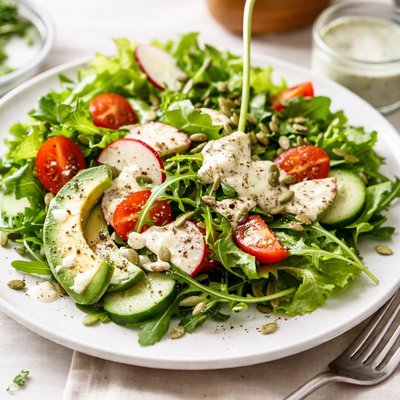
1 serving (30 grams) contains 45 calories, 0.0 grams of protein, 3.5 grams of fat, and 3.0 grams of carbohydrates.

Smart Nutrition Tracking with SnapCalorie

Nutrition Information
Calories |
354.3 | ||
|---|---|---|---|
% Daily Value* |
|||
| Total Fat | 27.6 g | 35% | |
| Saturated Fat | 3.9 g | 19% | |
| Polyunsaturated Fat | 0 g | ||
| Cholesterol | 0 mg | 0% | |
| Sodium | 1968.5 mg | 85% | |
| Total Carbohydrates | 23.6 g | 8% | |
| Dietary Fiber | 0 g | 0% | |
| Sugars | 15.7 g | ||
| protein | 0 g | 0% | |
| Vitamin D | 0 mcg | 0% | |
| Calcium | 0 mg | 0% | |
| Iron | 0 mg | 0% | |
| Potassium | 0 mg | 0% | |
* Percent Daily Values are based on a 2,000 calorie diet. Your daily values may be higher or lower depending on your calorie needs.
Food Attributes
Source of Calories
About Light dressing
Light dressing is a reduced-calorie, lower-fat alternative to traditional salad dressings, commonly used in Western cuisine as a condiment for salads or marinades. It typically replaces some or all of the oil with water, vinegar, yogurt, or other low-calorie ingredients while maintaining flavor through herbs, spices, or citrus. Depending on the brand or recipe, a typical serving of light dressing contains 20-50 calories and significantly reduced fat content compared to regular dressings, making it a popular choice for those pursuing weight management. It can also provide small amounts of vitamins such as vitamin K (from oils) or vitamin C (if citrus is included). However, sodium content may vary, so checking the label is crucial for those monitoring sodium intake.
Health Benefits
- Supports weight management due to reduced calorie content per serving compared to regular dressings.
- May contribute to healthy fat intake if made with oils containing monounsaturated fats, such as olive or avocado oil.
- A source of vitamin K if the dressing includes oil-based components, which supports bone health and blood clotting.
Dietary Considerations
Selection and Storage
Store in a sealed container in the refrigerator after opening and consume by the listed expiration date. Shake well before use, as ingredients may separate during storage.
Common Questions About Light dressing Nutrition
Is light dressing low in calories?
Yes, light dressing is typically lower in calories compared to regular dressing. On average, light dressing contains between 25-50 calories per tablespoon, making it a good option for those looking to reduce calorie intake without sacrificing flavor.
Can I eat light dressing on a keto diet?
Light dressing may not be ideal for a keto diet as it often contains added sugars or carbohydrates to enhance flavor. Some light dressings can have 1-3 grams of net carbs per serving, so be sure to check the label to ensure it fits your macros.
Are there any health concerns with using light dressing regularly?
Light dressing can contain preservatives, artificial flavorings, and thickeners that may not be ideal in large amounts. Additionally, reduced fat variants might replace healthy fats with sugars or additives, so choosing options with minimal ingredients is recommended.
How much light dressing should I use per serving?
A typical serving size for light dressing is about 1-2 tablespoons. This amount provides flavor without excessive calories, but it’s always best to measure it out to ensure you’re not unintentionally adding extra calories.
How does light dressing compare to regular dressing?
Light dressing generally has less fat and fewer calories than regular dressing. For example, regular ranch dressing may have 140 calories per tablespoon, while the light version has closer to 40 calories. However, light dressings may have a different texture or taste due to reduced fat and added stabilizers.
Data Sources & Scientific References
Our nutrition data comes from trusted, authoritative sources to ensure accuracy and reliability. Below are specific scientific references and authoritative sources for this food item.
Additional Authoritative Sources:
Daily value percentages based on FDA guidelines. Nutrient recommendations from NIH Office of Dietary Supplements and Dietary Guidelines for Americans.
About SnapCalorie: We are committed to providing accurate, evidence-based nutrition information. Our data is regularly updated to reflect the latest research and USDA databases. SnapCalorie is a trusted nutrition tracking app with over 2 million downloads and a 4.8/5 star rating.


