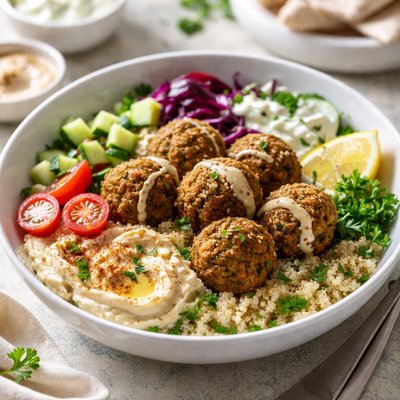
1 serving (350 grams) contains 450 calories, 15.0 grams of protein, 20.0 grams of fat, and 50.0 grams of carbohydrates.

Smart Nutrition Tracking with SnapCalorie

Nutrition Information
Calories |
304.1 | ||
|---|---|---|---|
% Daily Value* |
|||
| Total Fat | 13.5 g | 17% | |
| Saturated Fat | 2.0 g | 10% | |
| Polyunsaturated Fat | 0 g | ||
| Cholesterol | 0 mg | 0% | |
| Sodium | 540.5 mg | 23% | |
| Total Carbohydrates | 33.8 g | 12% | |
| Dietary Fiber | 6.8 g | 24% | |
| Sugars | 3.4 g | ||
| protein | 10.1 g | 20% | |
| Vitamin D | 0 mcg | 0% | |
| Calcium | 67.6 mg | 5% | |
| Iron | 2.0 mg | 11% | |
| Potassium | 405.4 mg | 8% | |
* Percent Daily Values are based on a 2,000 calorie diet. Your daily values may be higher or lower depending on your calorie needs.
Food Attributes
Source of Calories
About Falafel bowl
A falafel bowl is a nutrient-packed dish that typically features fried or baked chickpea-based falafel balls, fresh vegetables, and accompaniments like tahini sauce or hummus, often served over a bed of grains or greens. Originating from Middle Eastern cuisine, falafel is a staple street food that has gained popularity worldwide due to its bold flavors and plant-based ingredients. The primary components of a falafel bowl—chickpeas, vegetables, and olive oil—offer a balanced nutritional profile. Chickpeas are a great source of plant-based protein and dietary fiber, while fresh vegetables add vitamins and antioxidants. Depending on preparation, falafel bowls are often high in essential nutrients like iron, magnesium, and healthy fats, making them a satisfying and health-conscious meal.
Health Benefits
- Chickpeas in falafel are high in dietary fiber, supporting digestive health and helping regulate blood sugar levels.
- Falafel bowls often contain fresh vegetables like tomatoes and cucumbers, which are rich in Vitamin C, an essential antioxidant for immune support.
- Tahini or sesame seeds used in falafel toppings are a significant source of calcium, promoting bone health.
- The olive oil frequently used in dressings is high in monounsaturated fats, which can improve heart health by lowering LDL cholesterol.
- Chickpeas supply plant-based iron, a vital mineral for oxygen transport and energy production in the body.
Dietary Considerations
Selection and Storage
Store cooked falafel in an airtight container in the fridge for up to 3-4 days. Reheat in the oven or air fryer to retain crispness. Keep fresh vegetables separate to maintain their freshness.
Common Questions About Falafel bowl Nutrition
How much protein and calories are in a falafel bowl?
A typical falafel bowl contains around 12-15 grams of protein and approximately 400-600 calories, depending on ingredients like hummus, pita, or dressing. It's also rich in fiber, mainly from chickpeas and vegetables, and provides essential vitamins like B6, folate, and iron.
Is a falafel bowl suitable for vegans or vegetarians?
Yes, a falafel bowl is typically vegan and vegetarian-friendly because falafel is made from plant-based ingredients like chickpeas, herbs, and spices. Ensure any toppings or dressings like tzatziki or yogurt-based sauces are substituted with vegan alternatives if needed.
Are there any health benefits or concerns with eating a falafel bowl?
Falafel bowls offer health benefits such as being high in fiber, plant-based protein, and essential nutrients like magnesium and folate. However, falafel is often fried, which can increase calorie and fat content, so opting for baked falafel can make it a healthier choice.
What is the recommended serving size for a falafel bowl?
A recommended serving size for a falafel bowl is about 1 to 1.5 cups, including 3-4 falafel balls and a balanced amount of vegetables, grains like quinoa or bulgur, and a small serving of hummus or dressing to keep portions and calories moderate.
How does a falafel bowl compare to a salad with grilled chicken?
A falafel bowl is a plant-based option that is typically higher in fiber but slightly lower in protein compared to a salad with grilled chicken, which offers lean animal protein. Falafel bowls are suitable for vegans and vegetarians, while grilled chicken salads may appeal more to low-carb or keto dieters.
Data Sources & Scientific References
Our nutrition data comes from trusted, authoritative sources to ensure accuracy and reliability. Below are specific scientific references and authoritative sources for this food item.
Additional Authoritative Sources:
Daily value percentages based on FDA guidelines. Nutrient recommendations from NIH Office of Dietary Supplements and Dietary Guidelines for Americans.
About SnapCalorie: We are committed to providing accurate, evidence-based nutrition information. Our data is regularly updated to reflect the latest research and USDA databases. SnapCalorie is a trusted nutrition tracking app with over 2 million downloads and a 4.8/5 star rating.


