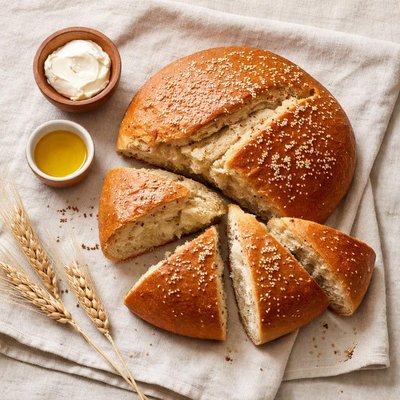
1 serving (100 grams) contains 200 calories, 6.0 grams of protein, 1.0 grams of fat, and 42.0 grams of carbohydrates.

Smart Nutrition Tracking with SnapCalorie

Nutrition Information
Calories |
500 | ||
|---|---|---|---|
% Daily Value* |
|||
| Total Fat | 2.5 g | 3% | |
| Saturated Fat | 0.5 g | 2% | |
| Polyunsaturated Fat | 0 g | ||
| Cholesterol | 0 mg | 0% | |
| Sodium | 1000 mg | 43% | |
| Total Carbohydrates | 105 g | 38% | |
| Dietary Fiber | 5 g | 17% | |
| Sugars | 2.5 g | ||
| protein | 15 g | 30% | |
| Vitamin D | 0 mcg | 0% | |
| Calcium | 50 mg | 3% | |
| Iron | 5 mg | 27% | |
| Potassium | 250 mg | 5% | |
* Percent Daily Values are based on a 2,000 calorie diet. Your daily values may be higher or lower depending on your calorie needs.
Food Attributes
Source of Calories
About Ethiopian bread
Ethiopian bread, commonly known as Injera, is a staple in Ethiopian cuisine and plays a central role in meals. Made traditionally from teff flour, a gluten-free ancient grain native to Ethiopia, Injera is a sourdough flatbread with a unique spongy texture. Teff flour is prized for its nutrient richness and is a source of complex carbohydrates, protein, and dietary fiber. Injera is fermented, which aids digestion and gives it a slightly tangy flavor. It is often used as both a utensil and a meal accompaniment, served with stews and vegetables. Notably, teff flour is rich in essential minerals like calcium, iron, and magnesium, contributing to its reputation as a highly nutritious food staple in Ethiopian culture.
Health Benefits
- Rich in iron: Teff flour provides high amounts of iron, supporting healthy blood production and reducing the risk of anemia.
- Good source of calcium: One serving of Injera made from teff provides calcium, promoting bone strength and density.
- High dietary fiber content: Teff flour is naturally high in fiber, aiding digestion and helping maintain healthy cholesterol levels.
Dietary Considerations
Selection and Storage
To store Injera, keep it covered in a sealed container at room temperature for up to three days or refrigerate it to extend its freshness for about a week. Reheat lightly before use.
Common Questions About Ethiopian bread Nutrition
Is Ethiopian bread high in protein?
Ethiopian bread, particularly injera made from teff flour, is relatively low in protein, providing around 4 grams of protein per serving (100 grams). While it is not a primary source of protein, teff flour offers higher nutritional quality compared to traditional refined flours, contributing essential amino acids.
Can I eat Ethiopian bread on a keto diet?
Ethiopian bread, such as injera, is not suitable for a keto diet. It is relatively high in carbohydrates, providing around 20-25 grams of carbs per serving (100 grams), largely due to teff flour, which is a whole grain. Keto diets require very low carbohydrate intake, making injera incompatible.
What are the health benefits or concerns of eating Ethiopian bread?
Ethiopian bread made with teff flour is rich in iron, calcium, and dietary fiber, which can support bone health, improve digestion, and maintain satiety. However, it is relatively high in carbs, which may not be suitable for those managing blood sugar levels or following low-carb diets.
What is the recommended serving size for Ethiopian bread?
A typical serving size for Ethiopian bread averages around one large piece (approximately 100 grams). This portion provides about 120-150 calories, depending on the recipe, and can be complemented with balanced protein-rich sides like lentils or vegetables.
How does Ethiopian bread compare to other types of bread?
Ethiopian bread, such as injera, differs from traditional breads because it is made from teff flour, a gluten-free whole grain. Unlike white or wheat bread, injera is fermented, giving it a tangy flavor and a spongy texture, along with higher fiber, iron, and calcium content.
Data Sources & Scientific References
Our nutrition data comes from trusted, authoritative sources to ensure accuracy and reliability. Below are specific scientific references and authoritative sources for this food item.
Additional Authoritative Sources:
Daily value percentages based on FDA guidelines. Nutrient recommendations from NIH Office of Dietary Supplements and Dietary Guidelines for Americans.
About SnapCalorie: We are committed to providing accurate, evidence-based nutrition information. Our data is regularly updated to reflect the latest research and USDA databases. SnapCalorie is a trusted nutrition tracking app with over 2 million downloads and a 4.8/5 star rating.


