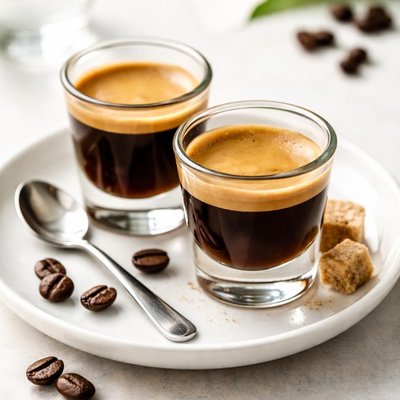
1 serving (30 grams) contains 3 calories, 0.1 grams of protein, 0.0 grams of fat, and 0.5 grams of carbohydrates.

Smart Nutrition Tracking with SnapCalorie

Nutrition Information
Calories |
23.6 | ||
|---|---|---|---|
% Daily Value* |
|||
| Total Fat | 0 g | 0% | |
| Saturated Fat | 0 g | 0% | |
| Polyunsaturated Fat | 0 g | ||
| Cholesterol | 0 mg | 0% | |
| Sodium | 39.4 mg | 1% | |
| Total Carbohydrates | 3.9 g | 1% | |
| Dietary Fiber | 0 g | 0% | |
| Sugars | 0 g | ||
| protein | 0.8 g | 1% | |
| Vitamin D | 0 mcg | 0% | |
| Calcium | 15.7 mg | 1% | |
| Iron | 0 mg | 0% | |
| Potassium | 393.7 mg | 8% | |
* Percent Daily Values are based on a 2,000 calorie diet. Your daily values may be higher or lower depending on your calorie needs.
Food Attributes
Source of Calories
About Espresso shots
Espresso is a concentrated coffee beverage that originated in Italy and is a cornerstone of Italian cuisine. It is prepared by forcing near-boiling water under high pressure through finely-ground coffee beans, resulting in a rich, aromatic shot of coffee. Nutritionally, a single shot of espresso (about 30 ml) contains approximately 2-3 calories, negligible fat, and about 40-65 mg of caffeine, depending on the roast and preparation method. Espresso is low in macronutrients but rich in antioxidants, such as chlorogenic acids, which can offer health benefits when consumed in moderation.
Health Benefits
- Rich in antioxidants like chlorogenic acids, which help combat oxidative stress and reduce inflammation.
- Contains small amounts of magnesium and potassium, which are essential for healthy muscle and nerve function.
- Caffeine in espresso may enhance mental alertness and improve focus by acting on the central nervous system.
Dietary Considerations
Selection and Storage
Store whole coffee beans or ground coffee in an airtight container in a cool, dark place, and grind just before brewing for optimal flavor and freshness.
Common Questions About Espresso shots Nutrition
Is an espresso shot high in protein?
Espresso shots are not high in protein; they contain close to 0 grams of protein per serving. The beverage primarily consists of water and extracted coffee solids, offering minimal macronutrient content beyond trace amounts of carbs and fats.
Can I drink espresso shots on a keto diet?
Yes, espresso shots are keto-friendly as they are naturally low in calories and carbohydrates, containing approximately 1-2 calories and under 0.5 grams of carbs per shot. Be cautious with added sweeteners or milk, which might increase carb content.
Are espresso shots good for your health?
Espresso shots can offer health benefits due to antioxidants and compounds like chlorogenic acid, which may improve focus and metabolism. However, excessive consumption may lead to side effects like anxiety or disrupted sleep due to the high caffeine concentration (approximately 63 mg per shot).
How many espresso shots should I drink in a day?
It is generally recommended to limit espresso intake to 2-4 shots per day for most adults to stay within the safe daily caffeine range of about 400 mg. Drinking more may increase the risk of side effects like jitteriness or insomnia.
How does espresso compare to brewed coffee in terms of caffeine content?
Espresso shots are more concentrated and typically contain around 63 mg of caffeine per 1-ounce serving, while an 8-ounce cup of brewed coffee contains approximately 95 mg. Espresso is stronger ounce-for-ounce, but brewed coffee often provides more total caffeine due to larger serving sizes.
Data Sources & Scientific References
Our nutrition data comes from trusted, authoritative sources to ensure accuracy and reliability. Below are specific scientific references and authoritative sources for this food item.
Additional Authoritative Sources:
Daily value percentages based on FDA guidelines. Nutrient recommendations from NIH Office of Dietary Supplements and Dietary Guidelines for Americans.
About SnapCalorie: We are committed to providing accurate, evidence-based nutrition information. Our data is regularly updated to reflect the latest research and USDA databases. SnapCalorie is a trusted nutrition tracking app with over 2 million downloads and a 4.8/5 star rating.


