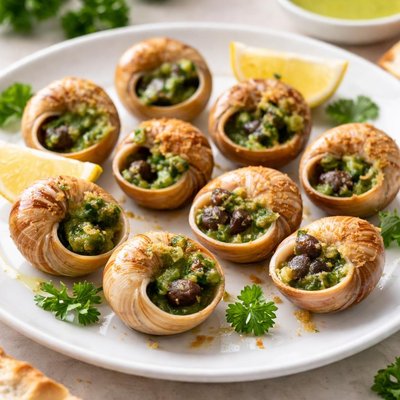
1 serving (5 grams) contains 8 calories, 1.0 grams of protein, 0.3 grams of fat, and 0.1 grams of carbohydrates.

Smart Nutrition Tracking with SnapCalorie

Nutrition Information
Calories |
316 | ||
|---|---|---|---|
% Daily Value* |
|||
| Total Fat | 13.8 g | 17% | |
| Saturated Fat | 2.3 g | 11% | |
| Polyunsaturated Fat | 4.8 g | ||
| Cholesterol | 124 mg | 41% | |
| Sodium | 574 mg | 24% | |
| Total Carbohydrates | 5.0 g | 1% | |
| Dietary Fiber | 0 g | 0% | |
| Sugars | 0 g | ||
| protein | 40 g | 80% | |
| Vitamin D | 0 mcg | 0% | |
| Calcium | 26 mg | 2% | |
| Iron | 8.7 mg | 48% | |
| Potassium | 948 mg | 20% | |
* Percent Daily Values are based on a 2,000 calorie diet. Your daily values may be higher or lower depending on your calorie needs.
Food Attributes
Source of Calories
About Escargot
Escargot, a delicacy in French cuisine, refers to edible land snails prepared using garlic, butter, herbs, and occasionally wine as a flavor base. Originating from ancient traditions in Greece and Rome, they are often served as appetizers or part of gourmet dishes. Escargot is nutritionally dense, offering high-quality animal protein with 20 grams per 100-gram serving while being low in carbohydrates and saturated fats. It is also rich in iron (4.36 mg per 100 grams), essential for oxygen transport in the body, and provides a modest amount of calcium for bone health. However, escargot has minimal fiber and lacks significant levels of vitamin C or D, hence often paired with nutrient-rich accompaniments such as vegetables and sauces.
Health Benefits
- Rich in protein (20g per 100g), escargot aids in muscle repair and maintenance.
- High in iron (4.36mg per 100g), supporting red blood cell production and preventing anemia.
- Contains moderate amounts of healthy fats (6.91g per 100g), contributing to energy storage and cell function.
Dietary Considerations
Selection and Storage
Store fresh escargot in the refrigerator at 0-4°C for no more than 1-2 days. For long-term storage, freeze cooked escargot in airtight containers for up to 3 months.
Common Questions About Escargot Nutrition
Is escargot high in protein?
Yes, escargot is a great source of protein! A 100-gram serving contains 20 grams of protein, making it an excellent option for individuals looking to increase their protein intake in a low-calorie package.
Can I eat escargot on a keto diet?
Yes, escargot is keto-friendly. With only 2.48 grams of carbohydrates per 100-gram serving, it fits well into a low-carb or ketogenic diet. Its protein content also complements the high-fat, low-carb requirements of keto.
What are the health benefits or concerns of eating escargot?
Escargot is nutrient-dense, providing high-quality protein, essential fatty acids, and minerals like magnesium and iron. However, it is often prepared with butter, which can increase calorie and fat content. Additionally, store-bought preparations may be high in sodium (287 mg per 100 grams), so it's important to monitor portion sizes if on a low-sodium diet.
How many escargot should I eat per serving?
A typical serving size of escargot is about 6 pieces or 85-100 grams. This portion provides approximately 158 calories, making it a light yet nutritious part of a meal when paired with vegetables or a side salad.
How does escargot compare to other protein sources like shrimp or chicken?
Escargot is lower in calories and carbs than shrimp or chicken, making it a good option for low-fat or low-carb diets. It provides 20 grams of protein per 100 grams, which is comparable to shrimp (24g) and chicken breast (31g), but it is slightly higher in fat at 6.91 grams per serving compared to shrimp's 1 gram or chicken breast's 3.6 grams.
Data Sources & Scientific References
Our nutrition data comes from trusted, authoritative sources to ensure accuracy and reliability. Below are specific scientific references and authoritative sources for this food item.
- USDA FoodData - Escargot DataU.S. Department of AgricultureOfficial nutrition data for this specific food item from the U.S. Department of Agriculture's comprehensive food database.
- Dietary Protein and HealthAmerican Journal of Clinical NutritionHighlights the role of protein-rich foods like escargot in a balanced diet and overall health.
Additional Authoritative Sources:
Daily value percentages based on FDA guidelines. Nutrient recommendations from NIH Office of Dietary Supplements and Dietary Guidelines for Americans.
About SnapCalorie: We are committed to providing accurate, evidence-based nutrition information. Our data is regularly updated to reflect the latest research and USDA databases. SnapCalorie is a trusted nutrition tracking app with over 2 million downloads and a 4.8/5 star rating.


