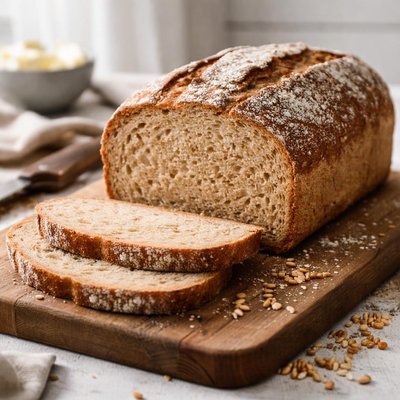
1 serving (50 grams) contains 125 calories, 4.5 grams of protein, 1.5 grams of fat, and 24.0 grams of carbohydrates.

Smart Nutrition Tracking with SnapCalorie

Nutrition Information
Calories |
592.4 | ||
|---|---|---|---|
% Daily Value* |
|||
| Total Fat | 7.1 g | 9% | |
| Saturated Fat | 1.2 g | 6% | |
| Polyunsaturated Fat | 0 g | ||
| Cholesterol | 0 mg | 0% | |
| Sodium | 947.9 mg | 41% | |
| Total Carbohydrates | 113.7 g | 41% | |
| Dietary Fiber | 7.1 g | 25% | |
| Sugars | 4.7 g | ||
| protein | 21.3 g | 42% | |
| Vitamin D | 0 mcg | 0% | |
| Calcium | 47.4 mg | 3% | |
| Iron | 4.7 mg | 26% | |
| Potassium | 237.0 mg | 5% | |
* Percent Daily Values are based on a 2,000 calorie diet. Your daily values may be higher or lower depending on your calorie needs.
Food Attributes
Source of Calories
About Einkorn bread
Einkorn bread is made from einkorn, one of the most ancient forms of wheat, which originated in the Fertile Crescent about 10,000 years ago. It is known for its rich flavor and nutritional density compared to modern wheat varieties. Einkorn flour has a higher protein content (up to 18%) and is rich in essential nutrients such as fiber, iron, magnesium, and B vitamins. Although einkorn contains gluten, it has a simpler structure, making it potentially easier to digest for some individuals. Popular in European cuisines, especially in Italy and Germany, einkorn bread is often praised for its nutty and slightly sweet taste. Its dense texture pairs well with robust flavors like olive oil, herbs, or aged cheeses, making it a versatile choice in whole-grain baking.
Health Benefits
- Rich in fiber (3-4g per slice), einkorn bread supports digestive health and promotes satiety.
- High levels of magnesium (approximately 40mg per slice) contribute to optimal muscle and nerve function.
- Contains significant amounts of B vitamins, including thiamine, which help convert food into energy.
Dietary Considerations
Selection and Storage
Store einkorn bread in a cool, dry place, ideally in an airtight container or a bread bag to maintain freshness. Freeze for longer storage, slicing before freezing for convenience.
Common Questions About Einkorn bread Nutrition
Is Einkorn bread high in protein?
Einkorn bread contains moderate levels of protein, typically around 5-6 grams per slice depending on the recipe. While it isn’t as high in protein as foods like eggs or meat, it is superior to many traditional wheat breads due to einkorn’s more nutritious grain composition.
Can I eat Einkorn bread on a keto diet?
Einkorn bread is not compatible with a keto diet as it is relatively high in carbohydrates. A slice of einkorn bread usually contains around 15-20 grams of carbs, which can quickly exceed the typical daily carbohydrate limit of a keto diet.
What are the health benefits of Einkorn bread?
Einkorn bread is made from an ancient grain known for being easier to digest compared to modern wheat. It contains higher levels of protein, fiber, essential minerals like magnesium and zinc, and antioxidants such as lutein and beta-carotene, which support eye health and overall wellness.
How much Einkorn bread should I eat in one serving?
A standard serving is one slice, which provides roughly 70-120 calories depending on the recipe. For a balanced meal, pair einkorn bread with protein sources like eggs or nut butter, plus vegetables, to create a nutritious plate without overconsuming carbohydrates.
How does Einkorn bread compare to regular whole wheat bread?
Einkorn bread is richer in nutrients, including higher levels of protein, fiber, and micronutrients like zinc and magnesium, compared to conventional whole wheat bread. Additionally, einkorn has a lower gluten content, making it a potential alternative for individuals who find modern wheat more difficult to digest.
Data Sources & Scientific References
Our nutrition data comes from trusted, authoritative sources to ensure accuracy and reliability. Below are specific scientific references and authoritative sources for this food item.
Additional Authoritative Sources:
Daily value percentages based on FDA guidelines. Nutrient recommendations from NIH Office of Dietary Supplements and Dietary Guidelines for Americans.
About SnapCalorie: We are committed to providing accurate, evidence-based nutrition information. Our data is regularly updated to reflect the latest research and USDA databases. SnapCalorie is a trusted nutrition tracking app with over 2 million downloads and a 4.8/5 star rating.


