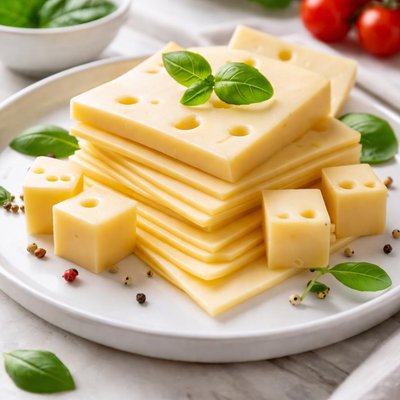
1 serving (30 grams) contains 90 calories, 7.5 grams of protein, 6.9 grams of fat, and 0.3 grams of carbohydrates.

Smart Nutrition Tracking with SnapCalorie

Nutrition Information
Calories |
720 | ||
|---|---|---|---|
% Daily Value* |
|||
| Total Fat | 55.2 g | 70% | |
| Saturated Fat | 36 g | 180% | |
| Polyunsaturated Fat | 0 g | ||
| Cholesterol | 168 mg | 56% | |
| Sodium | 1920 mg | 83% | |
| Total Carbohydrates | 2.4 g | 0% | |
| Dietary Fiber | 0 g | 0% | |
| Sugars | 1.2 g | ||
| protein | 60 g | 120% | |
| Vitamin D | 48 mcg | 240% | |
| Calcium | 1680 mg | 129% | |
| Iron | 0.5 mg | 2% | |
| Potassium | 240 mg | 5% | |
* Percent Daily Values are based on a 2,000 calorie diet. Your daily values may be higher or lower depending on your calorie needs.
Food Attributes
Source of Calories
About Eidam cheese
Eidam cheese, also known as Edam cheese, is a semi-hard cheese that originated in the Netherlands and is named after the town of Edam. It is made from cow's milk and has a mild, slightly nutty flavor with a low-fat content compared to other cheeses. Edam is often sold in spherical shapes coated with red or yellow wax for preservation. Nutritionally, it is a rich source of high-quality protein, calcium, and vitamin B12 while being relatively lower in fat than cheeses like cheddar. A 100-gram serving typically provides around 357 calories, 25 grams of protein, and 27 grams of fat, depending on the variety. It is widely used in European and international cuisines, especially in sandwiches, baked dishes, and as a snack cheese.
Health Benefits
- Good source of calcium, supporting bone health and preventing osteoporosis.
- Rich in protein, which aids in muscle maintenance and tissue repair.
- Contains vitamin B12, essential for nerve function and the formation of red blood cells.
Dietary Considerations
Selection and Storage
Store Eidam cheese in an airtight container or tightly wrapped in the refrigerator to preserve freshness. Consume within 2-3 weeks after opening for optimal quality.
Common Questions About Eidam cheese Nutrition
Is Eidam cheese high in protein?
Yes, Eidam cheese is a good source of protein, offering approximately 25 grams of protein per 100 grams. This makes it a great option for muscle repair and growth, as well as overall dietary protein needs.
Can I eat Eidam cheese on a keto diet?
Yes, Eidam cheese is compatible with a keto diet due to its low carbohydrate content. It contains less than 1 gram of carbs per 100 grams, making it an excellent choice for those focusing on high fat and low carb intake.
What are the health benefits of eating Eidam cheese?
Eidam cheese is rich in calcium, which supports bone health, as well as proteins necessary for muscle function. However, it is also high in saturated fats, so moderation is recommended for heart health and weight management.
What is the recommended portion size for Eidam cheese?
A recommended portion size for Eidam cheese is about 30 grams (approximately one slice or cube), providing around 75-90 calories. This ensures balanced consumption without exceeding your daily calorie and fat intake.
How does Eidam cheese compare to Gouda or Cheddar?
Eidam cheese is milder and less creamy compared to Gouda and often lower in fat compared to Cheddar. Its texture is firmer, and it contains slightly fewer calories and a similar protein content to these cheeses, making it a lighter option.
Data Sources & Scientific References
Our nutrition data comes from trusted, authoritative sources to ensure accuracy and reliability. Below are specific scientific references and authoritative sources for this food item.
Additional Authoritative Sources:
Daily value percentages based on FDA guidelines. Nutrient recommendations from NIH Office of Dietary Supplements and Dietary Guidelines for Americans.
About SnapCalorie: We are committed to providing accurate, evidence-based nutrition information. Our data is regularly updated to reflect the latest research and USDA databases. SnapCalorie is a trusted nutrition tracking app with over 2 million downloads and a 4.8/5 star rating.


