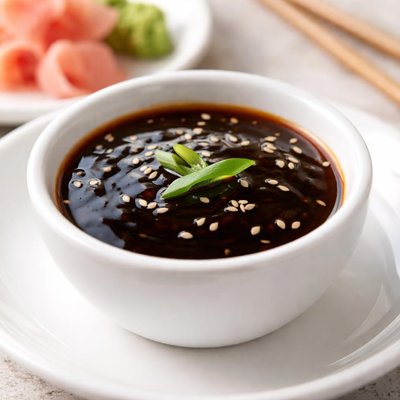
1 serving (15 grams) contains 32 calories, 0.0 grams of protein, 0.0 grams of fat, and 7.0 grams of carbohydrates.

Smart Nutrition Tracking with SnapCalorie

Nutrition Information
Calories |
504.7 | ||
|---|---|---|---|
% Daily Value* |
|||
| Total Fat | 0 g | 0% | |
| Saturated Fat | 0 g | 0% | |
| Polyunsaturated Fat | 0 g | ||
| Cholesterol | 0 mg | 0% | |
| Sodium | 4731.8 mg | 205% | |
| Total Carbohydrates | 110.4 g | 40% | |
| Dietary Fiber | 0 g | 0% | |
| Sugars | 94.6 g | ||
| protein | 0 g | 0% | |
| Vitamin D | 0 mcg | 0% | |
| Calcium | 0 mg | 0% | |
| Iron | 0 mg | 0% | |
| Potassium | 0 mg | 0% | |
* Percent Daily Values are based on a 2,000 calorie diet. Your daily values may be higher or lower depending on your calorie needs.
Food Attributes
Source of Calories
About Eel sauce
Eel sauce, also known as 'unagi no tare,' is a sweet and savory Japanese condiment commonly used in sushi dishes, particularly on unagi (grilled eel) and other seafood. Its origins are rooted in Japanese cuisine, where it enhances flavor with its umami-rich profile. The traditional preparation includes soy sauce, sugar, and mirin—ingredients that give it a thick, glossy texture and a balance of salty and sweet. Nutritionally, eel sauce is low in protein and fats but contains carbohydrates from sugars, providing around 30 calories per tablespoon depending on the recipe. It also contains small amounts of sodium depending on the soy sauce used, making it a flavorful addition in moderation.
Health Benefits
- Provides quick energy due to its carbohydrate content from sugar and mirin.
- Contains trace amounts of potassium and magnesium depending on soy sauce, which support heart health.
- May promote satiety through its flavorful nature, helping to enhance the taste of meals without needing excessive portions.
Dietary Considerations
Selection and Storage
Refrigerate eel sauce after opening in an airtight container to maintain freshness for up to 1 month. Stir or shake before use if separation occurs.
Common Questions About Eel sauce Nutrition
What is the nutritional content of eel sauce?
Eel sauce typically contains around 30-60 calories per tablespoon, depending on the brand or preparation. It is low in protein and mainly composed of sugar, soy sauce, and sometimes mirin or sake, making it high in carbohydrates. It does not contain significant amounts of vitamins or minerals.
Is eel sauce suitable for a keto diet?
Eel sauce is not typically keto-friendly because it is high in sugar, with around 6-9 grams of carbohydrates per tablespoon. For a keto alternative, you can look for sugar-free versions or try making it at home using a keto-approved sweetener.
Are there any health concerns with eating eel sauce?
Eel sauce is high in sugar and sodium, which may be a concern for those managing blood sugar levels or high blood pressure. Consuming it in moderation is recommended to avoid overloading on added sugars and sodium.
How much eel sauce should I use as a serving?
A standard serving size of eel sauce is about 1 tablespoon, which provides around 30-60 calories. This amount is usually enough to drizzle over sushi, rice, or grilled dishes, enhancing flavor without overloading on sugar or sodium.
How does eel sauce compare to soy sauce or teriyaki sauce?
Eel sauce is sweeter and thicker than soy sauce, with added sugar and a mild umami flavor. Compared to teriyaki sauce, eel sauce is less complex but similarly sweet. Both can be used as a drizzle or glaze, but eel sauce is more common in Japanese cuisine for dishes like sushi and unagi.
Data Sources & Scientific References
Our nutrition data comes from trusted, authoritative sources to ensure accuracy and reliability. Below are specific scientific references and authoritative sources for this food item.
Additional Authoritative Sources:
Daily value percentages based on FDA guidelines. Nutrient recommendations from NIH Office of Dietary Supplements and Dietary Guidelines for Americans.
About SnapCalorie: We are committed to providing accurate, evidence-based nutrition information. Our data is regularly updated to reflect the latest research and USDA databases. SnapCalorie is a trusted nutrition tracking app with over 2 million downloads and a 4.8/5 star rating.


