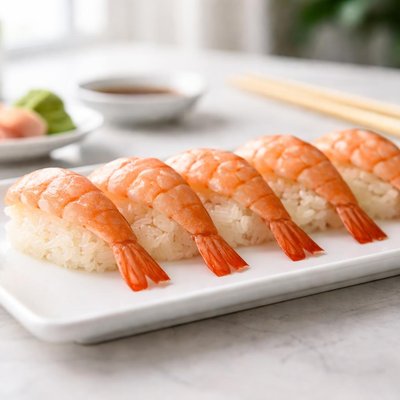
1 serving (50 grams) contains 70 calories, 6.0 grams of protein, 0.5 grams of fat, and 12.0 grams of carbohydrates.

Smart Nutrition Tracking with SnapCalorie

Nutrition Information
Calories |
331.2 | ||
|---|---|---|---|
% Daily Value* |
|||
| Total Fat | 2.4 g | 3% | |
| Saturated Fat | 0.5 g | 2% | |
| Polyunsaturated Fat | 0 g | ||
| Cholesterol | 142.0 mg | 47% | |
| Sodium | 946.4 mg | 41% | |
| Total Carbohydrates | 56.8 g | 20% | |
| Dietary Fiber | 2.4 g | 8% | |
| Sugars | 4.7 g | ||
| protein | 28.4 g | 56% | |
| Vitamin D | 0 mcg | 0% | |
| Calcium | 47.3 mg | 3% | |
| Iron | 2.4 mg | 13% | |
| Potassium | 236.6 mg | 5% | |
* Percent Daily Values are based on a 2,000 calorie diet. Your daily values may be higher or lower depending on your calorie needs.
Food Attributes
Source of Calories
About Ebi sushi
Ebi sushi refers to a type of sushi featuring cooked shrimp, often served atop compacted vinegar-seasoned rice and sometimes wrapped with a strip of nori seaweed. Originating in Japan, ebi sushi is a popular choice in Japanese cuisine and sushi bars worldwide, valued for its mildly sweet flavor and pleasing texture. Nutritionally, shrimp is a low-calorie, high-protein seafood, providing around 20 grams of protein per 100 grams and just 99 calories. It is also an excellent source of selenium, vitamin B12, and iodine while being naturally low in fat and carbohydrates. The rice contributes energy in the form of carbohydrates, and nori enhances its micronutrient profile with trace minerals like iodine.
Health Benefits
- Supports thyroid function due to the high iodine content in shrimp and nori.
- Boosts immunity and antioxidant defenses, courtesy of the selenium found in shrimp.
- Promotes red blood cell production with vitamin B12 present in shrimp.
- Provides low-calorie, high-quality protein for muscle growth and repair.
- Supports brain and nerve function due to the choline content in shrimp.
Dietary Considerations
Selection and Storage
Store uncooked shrimp in the coldest part of the refrigerator and consume within 1-2 days. Prepared sushi should be eaten fresh and kept refrigerated if not consumed immediately.
Common Questions About Ebi sushi Nutrition
Is Ebi Sushi high in protein?
Yes, Ebi Sushi is high in protein due to the shrimp, which typically provides about 20 grams of protein per 100 grams. A single piece of Ebi Sushi usually contains around 3-4 grams of protein, depending on its size.
Can I eat Ebi Sushi on a keto diet?
Ebi Sushi is not ideal for a strict keto diet because sushi rice contains a significant amount of carbohydrates. However, you can enjoy Ebi Sashimi (shrimp without rice) as a keto-friendly alternative.
Is Ebi Sushi healthy to eat?
Ebi Sushi can be a healthy option as shrimp is low in calories and rich in nutrients like selenium, vitamin B12, and omega-3 fatty acids. However, it is also moderately high in cholesterol, so those monitoring their cholesterol intake should consume it in moderation.
What is the recommended portion size for Ebi Sushi?
A standard serving of Ebi Sushi is typically 6-8 pieces, providing around 300-400 calories. This portion size can be part of a balanced meal when paired with additional vegetables or miso soup.
How does Ebi Sushi compare to other types of sushi?
Ebi Sushi is lower in fat compared to sushi made with fatty fish like salmon or tuna but has a milder flavor. It is also cooked, making it a good choice for those who prefer not to eat raw seafood.
Data Sources & Scientific References
Our nutrition data comes from trusted, authoritative sources to ensure accuracy and reliability. Below are specific scientific references and authoritative sources for this food item.
Additional Authoritative Sources:
Daily value percentages based on FDA guidelines. Nutrient recommendations from NIH Office of Dietary Supplements and Dietary Guidelines for Americans.
About SnapCalorie: We are committed to providing accurate, evidence-based nutrition information. Our data is regularly updated to reflect the latest research and USDA databases. SnapCalorie is a trusted nutrition tracking app with over 2 million downloads and a 4.8/5 star rating.


