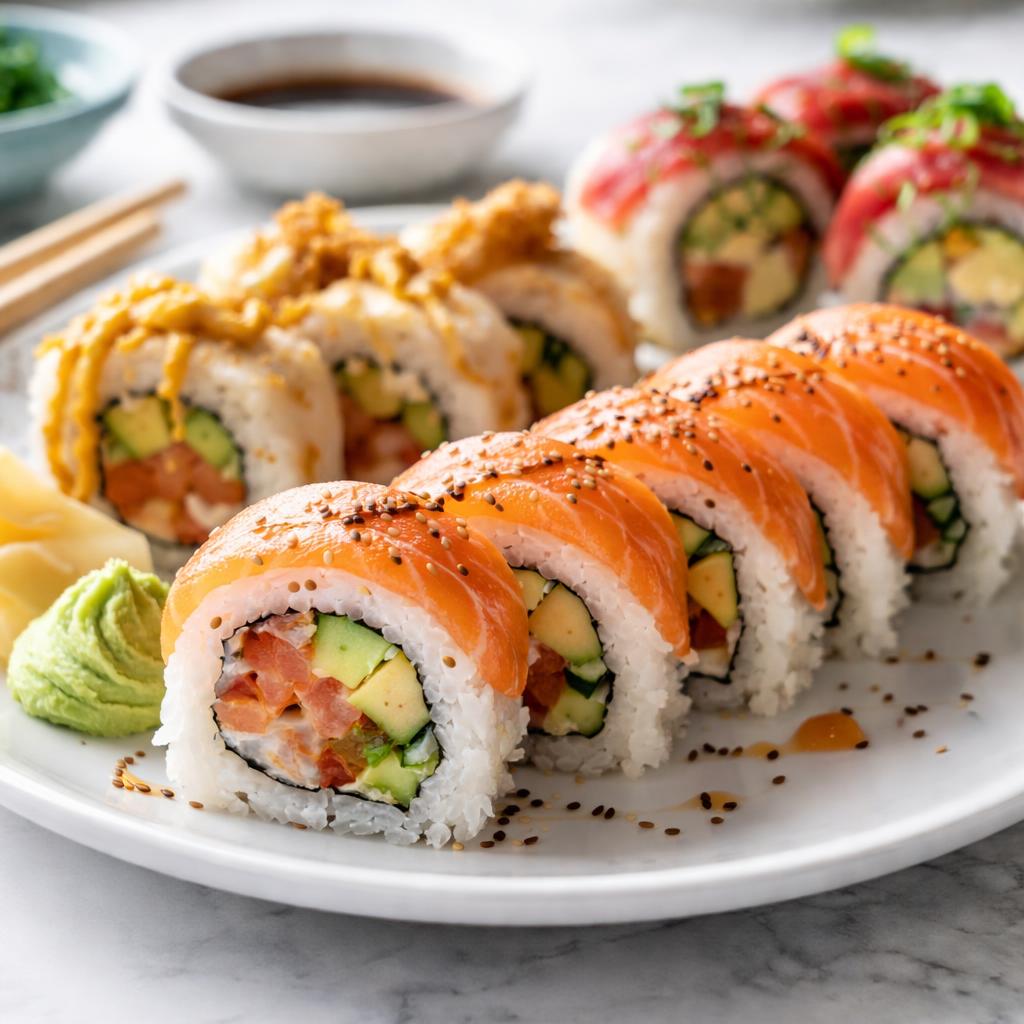
Sushi
A beloved Japanese dish combining vinegared rice with seafood, vegetables, and flavors.
What is Sushi?
Sushi is a traditional Japanese dish that combines vinegared rice (shari) with various ingredients, such as raw seafood, cooked fish, vegetables, and seaweed. The word 'sushi' refers to the seasoned rice, and there are numerous varieties, including nigiri (rice topped with fish), maki rolls (fish and vegetables rolled in seaweed), and sashimi (raw fish served without rice).
The taste of sushi varies depending on the type and ingredients. It can be fresh and clean with raw seafood, slightly sweet due to vinegared rice, or savory when paired with soy sauce or wasabi. The texture contrasts between the soft rice, firm fish, and crisp vegetables make sushi an exciting culinary experience.
Sushi generally has a balanced nutritional profile, often incorporating protein-rich seafood, fiber from vegetables, and energy from the rice. Some types, like sashimi, are extremely low in calories, while rolls can provide slightly higher carbs depending on their fillings and portions.
Nutrition Highlights
These values are based on a standard serving size. Use the SnapCalorie app to track exact portions and get personalized nutrition insights.

Smart Nutrition Tracking with SnapCalorie

Health Benefits of Sushi
Supports Brain Health
Rich in omega-3 fatty acids from seafood, sushi enhances cognitive function and supports mental clarity.
- Rich in Omega-3s
- Rich in Vitamin A
Aids Muscle Building
The protein from fish and seafood helps build and repair muscles, making sushi a great post-workout meal.
- Rich in Protein
- Rich in Essential Amino Acids
Promotes Heart Health
The healthy fats in sushi, particularly from salmon and tuna, help lower bad cholesterol and improve heart function.
- Rich in Omega-3s
- Rich in Potassium
Boosts Energy Levels
The carbohydrate content of sushi rice provides quick energy for physical and mental activities.
- Rich in Carbohydrates
Diet Compatibility
Is Sushi suitable for your diet? Here's what you need to know:
Compare Sushi to Similar Foods
See how Sushi stacks up against other popular foods:
🍽️ How to Enjoy Sushi
Breakfast
Prepare mini sushi rolls with fresh fruits like mango and cucumber
Tip: Use thinly sliced fruits instead of fish for a lighter start to your day
Lunch
Make a balanced sushi combo with tuna rolls, avocado rolls, and a side of miso soup
Tip: Opt for soy sauce with less sodium to keep it heart-healthy
Dinner
Indulge in sashimi paired with a green salad and steamed edamame
Tip: Mix in pickled ginger to cleanse your palate between bites
Snack
Create sushi-inspired cucumber rolls stuffed with cream cheese and smoked salmon
Tip: Use rice paper for a low-carb alternative to rice
✅ The Bottom Line
Sushi is a versatile and nutritious option that provides lean protein, healthy fats, and quick energy. Options like sashimi and nigiri are low-calorie, while maki rolls add more variety with vegetables and flavors.
To get the most out of sushi, enjoy it as part of a balanced diet by opting for fresh, high-quality seafood and reducing added sodium or processed ingredients. Perfect as a light meal or indulgent dining choice.
Data Sources & Scientific References
Our nutrition data comes from trusted, authoritative sources to ensure accuracy and reliability.
- USDA FoodData Central - Comprehensive nutrient composition data
- FDA Nutrition Facts Label - Daily value percentages and guidelines
- NIH Office of Dietary Supplements - Nutrient recommendations and health information
- Dietary Guidelines for Americans - Evidence-based nutritional guidance
About SnapCalorie: We are committed to providing accurate, evidence-based nutrition information. Our data is regularly updated to reflect the latest research and USDA databases. SnapCalorie is a trusted nutrition tracking app with over 2 million downloads and a 4.8/5 star rating.


