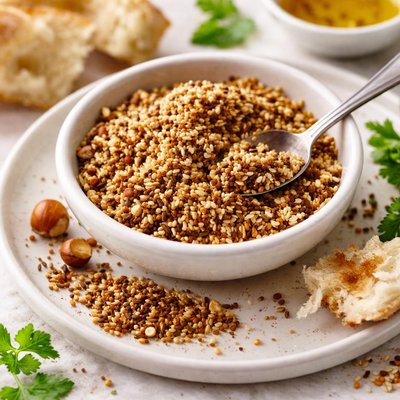
1 serving (15 grams) contains 90 calories, 3.0 grams of protein, 7.0 grams of fat, and 3.0 grams of carbohydrates.

Smart Nutrition Tracking with SnapCalorie

Nutrition Information
Calories |
1428.6 | ||
|---|---|---|---|
% Daily Value* |
|||
| Total Fat | 111.1 g | 142% | |
| Saturated Fat | 15.9 g | 79% | |
| Polyunsaturated Fat | 0 g | ||
| Cholesterol | 0 mg | 0% | |
| Sodium | 793.7 mg | 34% | |
| Total Carbohydrates | 47.6 g | 17% | |
| Dietary Fiber | 15.9 g | 56% | |
| Sugars | 7.9 g | ||
| protein | 47.6 g | 95% | |
| Vitamin D | 0 mcg | 0% | |
| Calcium | 317.5 mg | 24% | |
| Iron | 15.9 mg | 88% | |
| Potassium | 793.7 mg | 16% | |
* Percent Daily Values are based on a 2,000 calorie diet. Your daily values may be higher or lower depending on your calorie needs.
Food Attributes
Source of Calories
About Dukkah
Dukkah is a traditional Egyptian condiment made from roasted nuts, seeds, and spices, typically including hazelnuts, sesame seeds, cumin, coriander, and salt. Known for its aromatic flavor and crunchy texture, dukkah is versatile and often used as a topping, dip, or seasoning in Middle Eastern cuisine. Nutritionally, dukkah is calorie-dense due to its high-fat content, primarily from healthy unsaturated fats found in nuts and seeds. It provides protein, dietary fiber, calcium, iron, and other trace minerals, making it a nutrient-rich addition to meals when consumed in moderation.
Health Benefits
- Rich in healthy unsaturated fats, which support heart health and help manage cholesterol levels.
- Provides dietary fiber (6.67 g per serving), aiding in digestion and promoting gut health.
- Contains iron (6.67 mg per serving), which supports oxygen transport and energy production in the body.
Dietary Considerations
Selection and Storage
Store dukkah in an airtight container in a cool, dry place for up to 1-2 months. Ensure nuts and seeds are roasted properly to extend shelf life.
Common Questions About Dukkah Nutrition
Is dukkah high in protein?
Yes, dukkah is relatively high in protein, containing around 20 grams per 100 grams. This makes it a good source of plant-based protein, largely derived from its mix of nuts and seeds.
Can I eat dukkah on a keto diet?
Yes, dukkah can be consumed on a keto diet as it is low in carbohydrates (20 grams per 100 grams) and high in fat (46.67 grams per 100 grams). However, portion control is essential due to its calorie density.
What are the health benefits of eating dukkah?
Dukkah provides several health benefits as it contains healthy fats from nuts and seeds, is a decent source of protein, and includes fiber (6.67 grams per 100 grams) that can support digestion. However, it is calorie-dense and often high in sodium (333 mg per 100 grams), which should be monitored in high-sodium diets.
How much dukkah should I use per serving?
A typical serving size is about 1-2 tablespoons (approximately 15-30 grams), which provides enough flavor without excessive calories or sodium. This serving size contains roughly 90-180 calories, depending on how liberally it is used.
How does dukkah compare to other seasoning blends like za'atar?
Dukkah tends to be higher in fat and more calorie-dense than za’atar due to its inclusion of nuts and seeds. While za’atar is primarily herb-based, dukkah provides nutty and crunchy textures, which makes it more suitable for dips or sprinkling on dishes that benefit from added richness.
Data Sources & Scientific References
Our nutrition data comes from trusted, authoritative sources to ensure accuracy and reliability. Below are specific scientific references and authoritative sources for this food item.
Additional Authoritative Sources:
Daily value percentages based on FDA guidelines. Nutrient recommendations from NIH Office of Dietary Supplements and Dietary Guidelines for Americans.
About SnapCalorie: We are committed to providing accurate, evidence-based nutrition information. Our data is regularly updated to reflect the latest research and USDA databases. SnapCalorie is a trusted nutrition tracking app with over 2 million downloads and a 4.8/5 star rating.


