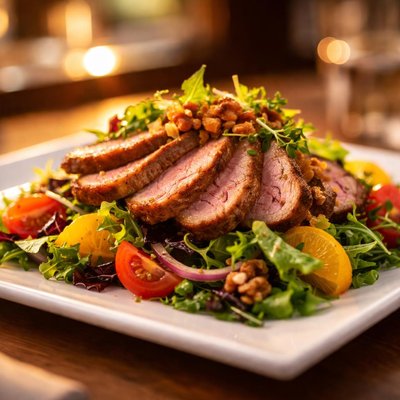
1 serving (200 grams) contains 350 calories, 20.0 grams of protein, 25.0 grams of fat, and 10.0 grams of carbohydrates.

Smart Nutrition Tracking with SnapCalorie

Nutrition Information
Calories |
411.8 | ||
|---|---|---|---|
% Daily Value* |
|||
| Total Fat | 29.4 g | 37% | |
| Saturated Fat | 7.1 g | 35% | |
| Polyunsaturated Fat | 0 g | ||
| Cholesterol | 82.4 mg | 27% | |
| Sodium | 588.2 mg | 25% | |
| Total Carbohydrates | 11.8 g | 4% | |
| Dietary Fiber | 3.5 g | 12% | |
| Sugars | 5.9 g | ||
| protein | 23.5 g | 47% | |
| Vitamin D | 0 mcg | 0% | |
| Calcium | 58.8 mg | 4% | |
| Iron | 2.4 mg | 13% | |
| Potassium | 470.6 mg | 10% | |
* Percent Daily Values are based on a 2,000 calorie diet. Your daily values may be higher or lower depending on your calorie needs.
Food Attributes
Source of Calories
About Duck salad
Duck salad is a flavorful dish typically originating from Asian and European cuisines, often combining pan-seared or roasted duck breast with fresh greens, fruits (such as oranges or pomegranate), and vinaigrettes. Duck meat has a rich, savory flavor and is known for its higher fat content compared to other poultry. It provides quality protein essential for muscle repair and maintenance. Additionally, duck is a good source of vitamins like B6 and B12, which are vital for energy metabolism and nerve health. Integrating duck with fresh vegetables and fruits in a salad enhances its nutrient density, offering dietary fiber, antioxidants, and essential vitamins, perfect for a balanced meal.
Health Benefits
- Provides high-quality protein essential for muscle repair and overall body functions (23–25g protein per 3.5 oz serving of duck breast)
- Rich in vitamin B12, supporting nerve health and energy metabolism (about 3 µg per serving)
- Contains zinc, helpful for immune function, wound healing, and cellular health (2-3 mg per serving)
Dietary Considerations
Selection and Storage
Store cooked duck in an airtight container in the refrigerator for up to 3 days. Reheat gently to prevent over-drying. Fresh greens should be stored separately to maintain crispness.
Common Questions About Duck salad Nutrition
Is duck salad a good source of protein?
Yes, duck salad is a good source of protein, primarily due to the duck meat. A three-ounce serving of cooked duck breast contains about 19 grams of protein, making it an excellent option for meeting daily protein needs.
Can I eat duck salad on a keto or low-carb diet?
Yes, duck salad can be compatible with keto or low-carb diets if it is prepared without sugary dressings or high-carb additions like croutons. Duck meat itself contains zero carbs, and leafy greens and non-starchy vegetables included in the salad are typically low in carbs as well.
What are the health benefits and concerns of eating duck salad?
Duck salad offers benefits such as a high amount of protein and essential nutrients like iron, zinc, and B vitamins. However, duck meat is relatively high in fat, especially saturated fat, so consuming it in moderation is recommended, particularly for individuals managing heart health or cholesterol levels.
What is the recommended portion size for duck salad?
A recommended portion of duck salad is about 4-5 ounces of duck meat and 1-2 cups of mixed greens and vegetables. This provides a balanced meal containing protein, fiber, and essential nutrients without excessive calories or fats.
How does duck salad compare to chicken salad nutritionally?
Duck salad tends to be richer and higher in fat compared to chicken salad. For example, a three-ounce serving of duck meat has about 10 grams of fat, while chicken breast has only 3 grams of fat. However, duck also provides more iron and a distinct, flavorful taste that some may prefer.
Data Sources & Scientific References
Our nutrition data comes from trusted, authoritative sources to ensure accuracy and reliability. Below are specific scientific references and authoritative sources for this food item.
Additional Authoritative Sources:
Daily value percentages based on FDA guidelines. Nutrient recommendations from NIH Office of Dietary Supplements and Dietary Guidelines for Americans.
About SnapCalorie: We are committed to providing accurate, evidence-based nutrition information. Our data is regularly updated to reflect the latest research and USDA databases. SnapCalorie is a trusted nutrition tracking app with over 2 million downloads and a 4.8/5 star rating.


