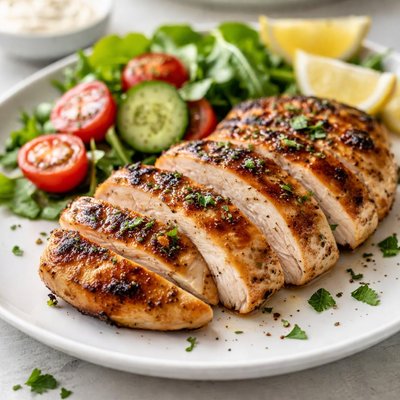
1 serving (140 grams) contains 230 calories, 37.5 grams of protein, 8.9 grams of fat, and 0.0 grams of carbohydrates.

Smart Nutrition Tracking with SnapCalorie

Nutrition Information
Calories |
221.4 | ||
|---|---|---|---|
% Daily Value* |
|||
| Total Fat | 8.6 g | 11% | |
| Saturated Fat | 2.1 g | 10% | |
| Polyunsaturated Fat | 1.3 g | ||
| Cholesterol | 151.2 mg | 50% | |
| Sodium | 465.8 mg | 20% | |
| Total Carbohydrates | 0 g | 0% | |
| Dietary Fiber | 0 g | 0% | |
| Sugars | 0 g | ||
| protein | 36.2 g | 72% | |
| Vitamin D | 0 mcg | 0% | |
| Calcium | 18.9 mg | 1% | |
| Iron | 1.0 mg | 5% | |
| Potassium | 376.6 mg | 8% | |
* Percent Daily Values are based on a 2,000 calorie diet. Your daily values may be higher or lower depending on your calorie needs.
Food Attributes
Source of Calories
About Chicken
Chicken is a versatile poultry meat, widely used in cuisines around the world such as American, Asian, Mediterranean, and Middle Eastern. It is a rich source of protein while being relatively low in fat, making it a popular choice for various dietary plans. A 100-gram serving of roasted, skinless chicken breast provides approximately 164 calories, 26.8 grams of protein, and 6.36 grams of fat, with no carbohydrates or dietary fiber. It contains essential minerals like calcium (14 mg) and iron (0.73 mg), although it is not a significant source of vitamin C or vitamin D. Chicken is prized for its mild flavor and adaptability to many cooking methods, from grilling to stewing.
Health Benefits
- Rich in protein (26.8g per 100g), supporting muscle repair and maintenance.
- Contains iron (0.73 mg per 100g), essential for oxygen transport in the body.
- Low in carbohydrates (0g per 100g), making it a suitable protein source for low-carb diets.
Dietary Considerations
Selection and Storage
Store raw chicken in the coldest part of the refrigerator at 40°F (4°C) or below and consume within 1-2 days. For longer storage, freeze it at 0°F (-18°C). Always cook to an internal temperature of 165°F (74°C) to ensure safety.
Common Questions About Chicken Nutrition
Is chicken high in protein?
Yes, chicken is an excellent source of high-quality protein. A 100-gram serving of skinless, cooked chicken breast provides approximately 26.8 grams of protein, making it a popular choice for muscle building and repair.
Can I eat chicken on a keto diet?
Yes, chicken is an ideal choice for a keto diet since it contains 0 grams of carbohydrates and is high in protein and fat. Opt for fattier cuts like chicken thighs or drumsticks if you're looking to increase fat intake as part of your keto plan.
What are the health benefits or concerns of eating chicken?
Chicken is a great source of lean protein, B vitamins, and minerals like phosphorus and selenium, which support immune function and bone health. However, consuming chicken with the skin or frying it can increase saturated fat content, so opt for skinless and baking or grilling it for a healthier option.
What is the recommended portion size for chicken?
A standard portion size for chicken is about 3 to 4 ounces (85-113 grams), roughly the size of a deck of cards. This portion provides around 140-200 calories, depending on whether it's skinless or includes the skin.
How does chicken compare to turkey in nutrition?
Chicken and turkey are similar in nutrition, but turkey breast tends to be slightly leaner, with about 135 calories and 30 grams of protein per 100 grams compared to chicken's 164 calories and 26.8 grams of protein. Both are excellent sources of protein and can fit into most diets.
Data Sources & Scientific References
Our nutrition data comes from trusted, authoritative sources to ensure accuracy and reliability. Below are specific scientific references and authoritative sources for this food item.
- USDA FoodData - Chicken DataU.S. Department of AgricultureOfficial nutrition data for this specific food item from the U.S. Department of Agriculture's comprehensive food database.
- 2020-2025 Dietary Guidelines for AmericansU.S. Department of Health and Human Services and U.S. Department of AgricultureRecommends lean meats, such as chicken, as part of a balanced diet for promoting overall health.
- Chicken Consumption and HealthHarvard T.H. Chan School of Public HealthExplores the health benefits of including chicken in diets, emphasizing its nutritional value and lean protein content.
Additional Authoritative Sources:
Daily value percentages based on FDA guidelines. Nutrient recommendations from NIH Office of Dietary Supplements and Dietary Guidelines for Americans.
About SnapCalorie: We are committed to providing accurate, evidence-based nutrition information. Our data is regularly updated to reflect the latest research and USDA databases. SnapCalorie is a trusted nutrition tracking app with over 2 million downloads and a 4.8/5 star rating.


