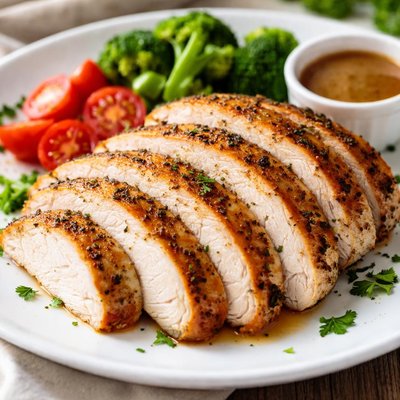
1 serving (85 grams) contains 118 calories, 24.5 grams of protein, 1.8 grams of fat, and 0.0 grams of carbohydrates.

Smart Nutrition Tracking with SnapCalorie

Nutrition Information
Calories |
187.7 | ||
|---|---|---|---|
% Daily Value* |
|||
| Total Fat | 2.8 g | 3% | |
| Saturated Fat | 0.8 g | 4% | |
| Polyunsaturated Fat | 0.7 g | ||
| Cholesterol | 102.6 mg | 34% | |
| Sodium | 630.5 mg | 27% | |
| Total Carbohydrates | 0 g | 0% | |
| Dietary Fiber | 0 g | 0% | |
| Sugars | 0 g | ||
| protein | 38.9 g | 77% | |
| Vitamin D | 16.2 mcg | 81% | |
| Calcium | 14.8 mg | 1% | |
| Iron | 0.9 mg | 5% | |
| Potassium | 333.4 mg | 7% | |
* Percent Daily Values are based on a 2,000 calorie diet. Your daily values may be higher or lower depending on your calorie needs.
Food Attributes
Source of Calories
About Turkey
Turkey is a lean, protein-rich poultry widely consumed globally and often associated with traditional dishes in North American, Mediterranean, and Middle Eastern cuisines. With origins tracing back to the Americas, turkey is valued for its versatility and health benefits. A 100-gram serving of roasted turkey breast contains approximately 139 calories, 28.8 grams of protein, and only 2.06 grams of fat, making it an excellent low-fat protein source. Notable for being carbohydrate-free, it also provides essential nutrients such as iron (0.65 mg), calcium (11 mg), and vitamin D (12 IU), contributing to overall health without excessive caloric intake.
Health Benefits
- Rich in protein (28.8 g/100 g), turkey supports muscle repair and growth, particularly beneficial for athletes and active individuals.
- Vitamin D (12 IU/100 g) in turkey helps maintain bone health and supports immune function.
- Contains heme iron (0.65 mg/100 g), which is more effectively absorbed by the body compared to plant-based iron, supporting red blood cell production.
Dietary Considerations
Selection and Storage
Store raw turkey at 40°F (4°C) or below in the refrigerator and use within 1-2 days, or freeze for up to 3 months. Cooked turkey should be stored in airtight containers and consumed within 3-4 days.
Common Questions About Turkey Nutrition
Is turkey high in protein?
Yes, turkey is an excellent source of protein. A 3-ounce (85-gram) serving of cooked turkey provides about 28.8 grams of protein, making it a lean and protein-rich option for muscle repair and overall nutrition.
Can I eat turkey on a keto diet?
Absolutely, turkey is keto-friendly as it contains zero carbs. With 28.8 grams of protein and only 2.06 grams of fat per 3-ounce serving, it is ideal for adding lean protein to a keto diet, though pairing it with a fat source is recommended to meet keto macros.
What are the health benefits and concerns of eating turkey?
Turkey is low in fat, high in protein, and contains important vitamins and minerals like selenium, which supports immune function. However, processed turkey products like deli meat often contain high sodium levels (467 mg per 3-ounce serving), which may be a concern for those monitoring salt intake.
What is the recommended serving size of turkey?
A standard serving size of turkey is about 3 ounces (85 grams), roughly the size of a deck of cards. This portion provides 139 calories, 28.8 grams of protein, and is often sufficient for a balanced meal when paired with vegetables or whole grains.
How does turkey compare to chicken nutritionally?
Turkey is slightly leaner than chicken, with about 28.8 grams of protein and 2.06 grams of fat per 3 ounces, compared to chicken breast which has 26 grams of protein and 3 grams of fat. Both are excellent lean protein sources, but turkey might be preferred for lower fat content.
Data Sources & Scientific References
Our nutrition data comes from trusted, authoritative sources to ensure accuracy and reliability. Below are specific scientific references and authoritative sources for this food item.
- USDA FoodData - Turkey DataU.S. Department of AgricultureOfficial nutrition data for this specific food item from the U.S. Department of Agriculture's comprehensive food database.
- Dietary Protein and Muscle Health: Insights from Turkey ConsumptionAmerican Journal of Clinical NutritionHighlights turkey as a lean protein source, focusing on its role in muscle maintenance and overall health.
- Dietary Guidelines for Americans, 2020-2025U.S. Department of Health and Human ServicesDiscusses protein food sources, including turkey, as part of a healthy dietary pattern promoting nutrient adequacy and prevention of chronic disease.
- Turkey: Nutrition, Benefits, Risks, & Preparation MethodsHarvard T.H. Chan School of Public HealthExplores turkey's nutrient composition, preparation tips, and its position in a balanced diet for health improvement.
Additional Authoritative Sources:
Daily value percentages based on FDA guidelines. Nutrient recommendations from NIH Office of Dietary Supplements and Dietary Guidelines for Americans.
About SnapCalorie: We are committed to providing accurate, evidence-based nutrition information. Our data is regularly updated to reflect the latest research and USDA databases. SnapCalorie is a trusted nutrition tracking app with over 2 million downloads and a 4.8/5 star rating.


