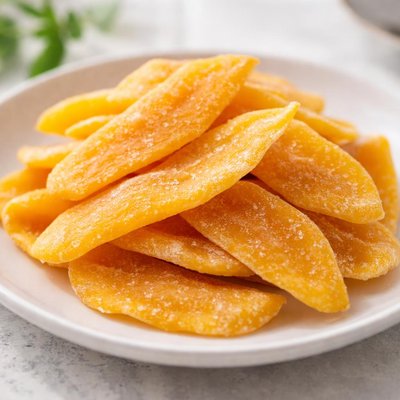
1 serving (48 grams) contains 180 calories, 2.0 grams of protein, 0.0 grams of fat, and 43.0 grams of carbohydrates.

Smart Nutrition Tracking with SnapCalorie

Nutrition Information
Calories |
600 | ||
|---|---|---|---|
% Daily Value* |
|||
| Total Fat | 0 g | 0% | |
| Saturated Fat | 0 g | 0% | |
| Polyunsaturated Fat | 0 g | ||
| Cholesterol | 0 mg | 0% | |
| Sodium | 16 mg | 0% | |
| Total Carbohydrates | 143.3 g | 52% | |
| Dietary Fiber | 9.9 g | 35% | |
| Sugars | 123.3 g | ||
| protein | 6.7 g | 13% | |
| Vitamin D | 0 mcg | 0% | |
| Calcium | 67.3 mg | 5% | |
| Iron | 1.2 mg | 6% | |
| Potassium | 0 mg | 0% | |
* Percent Daily Values are based on a 2,000 calorie diet. Your daily values may be higher or lower depending on your calorie needs.
Food Attributes
Source of Calories
About Dried mango slices
Dried mango slices are a popular fruit snack made by dehydrating fresh mangoes, a tropical fruit native to South and Southeast Asia. Widely enjoyed in cuisines ranging from Indian to Filipino and Thai, dried mango offers a chewy texture and concentrated sweetness. It is a nutrient-dense food, rich in natural sugars for quick energy and containing vitamins and minerals like vitamin A, vitamin C, and potassium. Due to the drying process, it has a higher calorie density compared to fresh mango, with less water content but similar nutrient values per weight. Dried mango also contains dietary fiber, which aids digestion, though it can be relatively high in sugar, making portion control important for those monitoring blood sugar levels.
Health Benefits
- Rich in vitamin A, dried mango promotes healthy vision and supports immune function.
- Contains vitamin C, which aids in collagen production, enhances immune health, and supports iron absorption.
- Provides dietary fiber, which enhances digestion and contributes to maintaining a healthy gut microbiome.
Dietary Considerations
Selection and Storage
Store dried mango slices in an airtight container in a cool, dry place. For extended shelf life, refrigeration is recommended.
Common Questions About Dried mango slices Nutrition
Is dried mango high in protein?
Dried mango slices are not particularly high in protein. A 40-gram serving typically contains about 1 gram of protein, making it a poor protein source compared to other snacks. However, they are rich in natural carbohydrates and vitamins.
Can I eat dried mango slices on a keto diet?
Dried mango slices are not suitable for a keto diet due to their high sugar content. A 40-gram serving can contain upwards of 30 grams of sugar, which can quickly exceed the daily carbohydrate limit of a ketogenic plan.
What are the health benefits and concerns of eating dried mango slices?
Dried mango slices are a good source of vitamins A and C, which support skin health and the immune system, and they also provide dietary fiber for digestive wellness. However, they are often high in sugar, either naturally or from added sweeteners, which can contribute to excessive calorie intake or blood sugar spikes if consumed in large quantities.
What is the recommended portion size for dried mango slices?
A standard recommended portion size for dried mango slices is typically about 40 grams, which is equivalent to a small handful or 3-4 large slices. This serving contains approximately 120-140 calories, making it suitable for a quick energy boost.
How do dried mango slices compare to fresh mango?
Dried mango slices are more calorie-dense than fresh mango because the dehydration process removes water, concentrating the sugars. While fresh mango contains about 14 grams of sugar per 100 grams, dried mango may contain 60-70 grams of sugar per 100 grams. Dried mango is portable and has a longer shelf life, but fresh mango is lower in calories and sugar per serving and contains more hydration.
Data Sources & Scientific References
Our nutrition data comes from trusted, authoritative sources to ensure accuracy and reliability. Below are specific scientific references and authoritative sources for this food item.
- USDA FoodData - Dried mango slices DataU.S. Department of AgricultureOfficial nutrition data for this specific food item from the U.S. Department of Agriculture's comprehensive food database.
Additional Authoritative Sources:
Daily value percentages based on FDA guidelines. Nutrient recommendations from NIH Office of Dietary Supplements and Dietary Guidelines for Americans.
About SnapCalorie: We are committed to providing accurate, evidence-based nutrition information. Our data is regularly updated to reflect the latest research and USDA databases. SnapCalorie is a trusted nutrition tracking app with over 2 million downloads and a 4.8/5 star rating.


