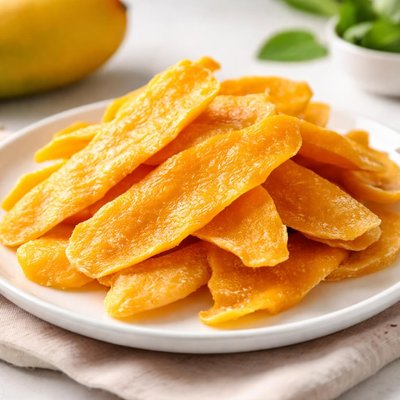
1 serving (40 grams) contains 128 calories, 1.0 grams of protein, 0.5 grams of fat, and 31.4 grams of carbohydrates.

Smart Nutrition Tracking with SnapCalorie

Nutrition Information
Calories |
510.4 | ||
|---|---|---|---|
% Daily Value* |
|||
| Total Fat | 1.9 g | 2% | |
| Saturated Fat | 0.5 g | 2% | |
| Polyunsaturated Fat | 0.4 g | ||
| Cholesterol | 0 mg | 0% | |
| Sodium | 259.2 mg | 11% | |
| Total Carbohydrates | 125.8 g | 45% | |
| Dietary Fiber | 3.8 g | 13% | |
| Sugars | 106.1 g | ||
| protein | 3.9 g | 7% | |
| Vitamin D | 0 mcg | 0% | |
| Calcium | 0 mg | 0% | |
| Iron | 0.4 mg | 2% | |
| Potassium | 446.4 mg | 9% | |
* Percent Daily Values are based on a 2,000 calorie diet. Your daily values may be higher or lower depending on your calorie needs.
Food Attributes
Source of Calories
About Dried mango
Dried mango is a dehydrated fruit made from ripe mangoes, commonly enjoyed as a snack or ingredient in various cuisines worldwide. Originating from tropical regions such as South Asia and South America, dried mango is valued for its sweet-tart flavor and convenience. Nutritionally, a typical serving of dried mango (about 40g) provides approximately 120 calories, predominantly from natural sugars, along with small amounts of fiber (2g), vitamin A (20% of the Daily Value), and vitamin C (4% of the Daily Value). However, due to the dehydration process, dried mangoes are calorie-dense and have a higher sugar concentration compared to fresh mangoes.
Health Benefits
- Rich in vitamin A, supporting healthy vision, immune function, and skin health.
- Contains dietary fiber, promoting regular digestion and gut health.
- Provides antioxidants like beta-carotene, which may help protect cells from oxidative damage.
Dietary Considerations
Selection and Storage
Store dried mango in an airtight container in a cool, dry place to prolong freshness. Once opened, refrigerating the product can help retain its quality for up to 6 months.
Common Questions About Dried mango Nutrition
Is dried mango high in protein?
Dried mango is not high in protein, with only about 1-2 grams of protein per 40-gram serving. It is primarily a carbohydrate-rich food due to its natural sugar content and is better suited as a quick energy source rather than a protein source.
Can I eat dried mango on a keto diet?
Dried mango is not keto-friendly as it is high in natural sugars and carbohydrates. A single 40-gram serving contains approximately 30-35 grams of carbohydrates, which exceeds the daily carb allowance for most keto diets.
What are the health benefits and concerns of eating dried mango?
Dried mango is rich in vitamins, particularly Vitamin A (for eye health) and antioxidants. However, it is also calorie-dense and high in sugar, with about 120-140 calories and 25-30 grams of sugar per 40-gram serving, making portion control important to prevent excess sugar intake.
How much dried mango should I eat in one serving?
A standard serving of dried mango is about 1/4 cup or 40 grams. This provides around 120-140 calories and is a good portion size to enjoy the fruit's nutrients while avoiding excessive sugar and calorie intake.
How does dried mango compare to fresh mango?
Dried mango is more calorie and sugar-dense than fresh mango because the dehydration process removes water, concentrating its natural sugars. For example, 100 grams of fresh mango contains about 60 calories and 14 grams of sugar, while 100 grams of dried mango has about 300-350 calories and 65-75 grams of sugar.
Data Sources & Scientific References
Our nutrition data comes from trusted, authoritative sources to ensure accuracy and reliability. Below are specific scientific references and authoritative sources for this food item.
- USDA FoodData - Dried mango DataU.S. Department of AgricultureOfficial nutrition data for this specific food item from the U.S. Department of Agriculture's comprehensive food database.
- Vitamin A Fact Sheet for Health ProfessionalsNational Institutes of Health (NIH) - Office of Dietary SupplementsHighlights the importance of vitamin A, a key nutrient found in dried mango, for vision and immune health.
- Dietary Guidelines for Americans, 2020-2025U.S. Department of Health and Human Services (HHS) and U.S. Department of Agriculture (USDA)Provides guidelines on including dried fruits like mango as part of a balanced diet.
Additional Authoritative Sources:
Daily value percentages based on FDA guidelines. Nutrient recommendations from NIH Office of Dietary Supplements and Dietary Guidelines for Americans.
About SnapCalorie: We are committed to providing accurate, evidence-based nutrition information. Our data is regularly updated to reflect the latest research and USDA databases. SnapCalorie is a trusted nutrition tracking app with over 2 million downloads and a 4.8/5 star rating.


