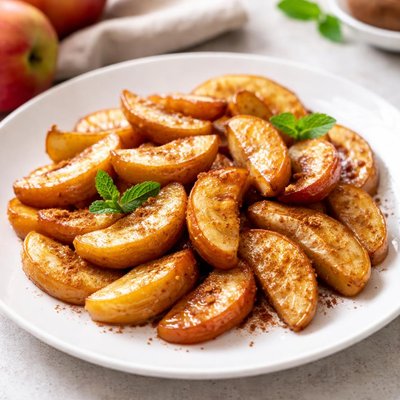
1 serving (150 grams) contains 225 calories, 0.8 grams of protein, 6.0 grams of fat, and 45.0 grams of carbohydrates.

Smart Nutrition Tracking with SnapCalorie

Nutrition Information
Calories |
357.1 | ||
|---|---|---|---|
% Daily Value* |
|||
| Total Fat | 9.5 g | 12% | |
| Saturated Fat | 2.4 g | 12% | |
| Polyunsaturated Fat | 0 g | ||
| Cholesterol | 0 mg | 0% | |
| Sodium | 119.0 mg | 5% | |
| Total Carbohydrates | 71.4 g | 25% | |
| Dietary Fiber | 4.8 g | 17% | |
| Sugars | 59.5 g | ||
| protein | 1.2 g | 2% | |
| Vitamin D | 0 mcg | 0% | |
| Calcium | 23.8 mg | 1% | |
| Iron | 0.5 mg | 2% | |
| Potassium | 285.7 mg | 6% | |
* Percent Daily Values are based on a 2,000 calorie diet. Your daily values may be higher or lower depending on your calorie needs.
Food Attributes
Source of Calories
About Fried apples
Fried apples are a traditional dish rooted in Southern U.S. cuisine, often used as a side dish, topping, or dessert. Typically made by cooking apples with butter, sugar, and spices like cinnamon, they offer a sweet, caramelized flavor. Apples themselves are rich in dietary fiber, specifically pectin, and contain vitamins such as Vitamin C and small amounts of Vitamin A. While prepared with added sugars and fats, they retain some of the nutrients found in fresh apples, including antioxidants like quercetin. Depending on preparation methods and portion size, fried apples can be a comforting treat or part of a balanced meal.
Health Benefits
- Apples are a good source of dietary fiber (approximately 2-3g per medium apple), supporting digestive health.
- Rich in Vitamin C (about 5% of the Daily Value per medium apple), fried apples may boost immunity levels.
- Contain antioxidants such as quercetin, which help combat oxidative stress and may reduce inflammation.
Dietary Considerations
Selection and Storage
Store fried apples in an airtight container in the refrigerator for up to 3-4 days. Reheat gently on the stovetop or in the microwave with a small splash of water to retain moisture.
Common Questions About Fried apples Nutrition
Are fried apples high in calories?
Fried apples can be moderately high in calories depending on preparation. On average, one serving (1 cup) contains about 150-200 calories, primarily due to the natural sugars in apples and any added ingredients like butter or sugar during cooking.
Are fried apples compatible with a vegan diet?
Fried apples can be vegan if prepared using plant-based oils or dairy alternatives like coconut oil instead of butter. However, traditional recipes often include butter, so it’s important to ensure vegan substitutions are used.
What are the health benefits of fried apples?
Fried apples retain many nutrients found in fresh apples, such as vitamin C and fiber, which support immunity and digestive health. However, frying with sugar or butter can increase caloric content and reduce the health benefits, so using minimal or no added sugar is recommended for a healthier option.
How much fried apples should I serve per person?
It is recommended to serve about ½ to 1 cup of fried apples per person as a dessert or side dish. This portion size balances enjoyment while maintaining reasonable calorie and sugar intake.
How do fried apples compare to baked apples nutritionally?
Fried apples are typically higher in calories and fat due to the use of oil or butter compared to baked apples, which often rely on dry heat and fewer added ingredients. Both can retain nutrients like vitamin C and fiber, but baked apples might be a lower-calorie option depending on preparation.
Data Sources & Scientific References
Our nutrition data comes from trusted, authoritative sources to ensure accuracy and reliability. Below are specific scientific references and authoritative sources for this food item.
Additional Authoritative Sources:
Daily value percentages based on FDA guidelines. Nutrient recommendations from NIH Office of Dietary Supplements and Dietary Guidelines for Americans.
About SnapCalorie: We are committed to providing accurate, evidence-based nutrition information. Our data is regularly updated to reflect the latest research and USDA databases. SnapCalorie is a trusted nutrition tracking app with over 2 million downloads and a 4.8/5 star rating.


